Report finds construction company got $42M in excess claims on Winnipeg police HQ
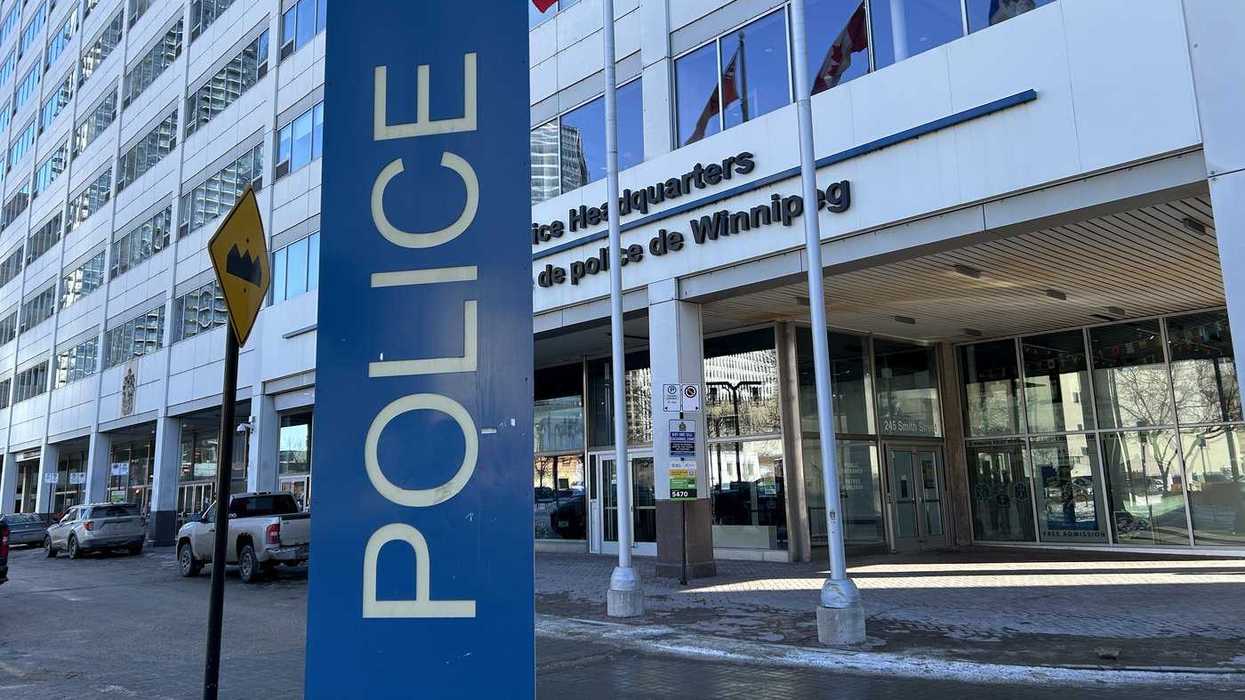
The commissioner of a public inquiry into the development of Winnipeg's police headquarters has found that the former mayor and chief executive officer displayed "severe" levels of misconduct and the city overpaid tens of millions on the final project.
Garth Smorang's final report released Monday also found that Armik Babakhanians, principal owner of Caspian Construction, engaged in "unethical conduct" when his company misrepresented construction costs resulting in the city being overcharged $42 million.
Another $1.3 million was paid to an employee of a consulting firm for project costs but was diverted elsewhere.
"Former mayor (Sam) Katz violated the public trust and violated his obligations under the code of conduct that applies to council members and the mayor," Smorang said at a news conference.
"Mr. (Phil) Sheegl, the evidence that we have received led me to conclude a lack of moral compass."
Smorang said the way it was managed "was not to the level that one would expect a municipality to handle a construction project of that magnitude in so many respects, never mind the ethical breaches and the conflicts."
The inquiry, which began in February, examined the city's development of the headquarters for the Winnipeg Police Service, which ran approximately $70 million over its $135-million budget by the time it was completed in 2016.
Caspian Construction had been awarded the project in 2011 and, at around the same time, companies owned by Katz and Sheegl received $327,000 from a Caspian executive.
Katz and Sheegl told the inquiry that the money was for an unrelated land transaction in Arizona, where they sold their interests in a property to the executive.
The sale was not disclosed to city council.
A judge in a civil court case, launched by the city, found in 2022 that Sheegl, who had been given authority to grant the contract to Caspian, accepted a bribe from the contractor.
Katz was not the subject of the city's lawsuit against Sheegl and others.
The three men involved, Katz, Sheegl and Babakhanians, all described the dealing as a "handshake agreement" and did not include a written agreement.
In his report, Smorang described the transaction as something that was later "papered over and explained by all three as a land transaction."
"Money exchanged hands," he told reporters. "There was an explanation given to me about what that was for. It was for a land deal in Arizona and, at the end of the day, I don't accept that evidence."
The commissioner added the financial transactions were inappropriate given Babakhanians was attempting to secure the development contract, and later was trying to increase project funding, at the time. Smorang said Katz and Sheegl should have immediately disclosed the dealing to the city.
Katz told the inquiry that he should have disclosed the sale.
He said the money he received had no influence on his votes on the project, and he was hurt by the description of the land sale as a bribe.
Sheegl told the inquiry he takes great offence to accusations he accepted a bribe, and worked hard to make Winnipeg a better place.
Lawyers for Katz, Sheegl and Babakhanians did not respond to an immediate request for comment on Smorang's findings.
RCMP investigated the police headquarters project but no charges were laid. The Manitoba government agreed last year to a request from city council to call the inquiry.
Sheegl appealed the civil court ruling and lost. The Manitoba Court of Appeal said his actions amounted to "disgraceful, unethical behaviour by a public servant."
He repaid the city $1.1 million last year.
Babakhanians admitted during the inquiry that hundreds of invoices were altered and then submitted to the city in order to receive full payment and make a profit, but denied overcharging.
Smorang said had the city not been overcharged, the project's final costs would have fallen well within the total that was approved by council in 2011.
The report included 25 recommendations relating to procurement policies and how the city handles major projects. Some of those include having lawyers draft requests for proposal documents on large-scale projects, hiring an oversight manager to monitor the procurement process and for the Manitoba government to review the process of appointing executive policy committee members.
Smorang also urged the province's prosecution service to be more forthcoming on how it comes to decisions not to lay charges.
The service said in a statement it reviewed evidence following the RCMP investigation and the civil action, and it concluded the Crown would be unable to obtain a criminal conviction beyond a reasonable doubt.
It went on to say additional information and evidence "came to light" through the public inquiry and a further review is underway.
"The purpose of a public inquiry is very different than a criminal trial, which operates under more stringent legal rules of evidence, must respect Charter rights and requires a much higher burden of proof," the statement said.
Justice Minister Matt Wiebe said in a statement the government accepts all the recommendations and "will be implementing them going forward."
This report by The Canadian Press was first published Oct. 19, 2026.
By Brittany Hobson | Copyright 2026, The Canadian Press. All rights reserved.