'Perfect storm': Extreme weather fuelled Wainwright military base fire, expert says
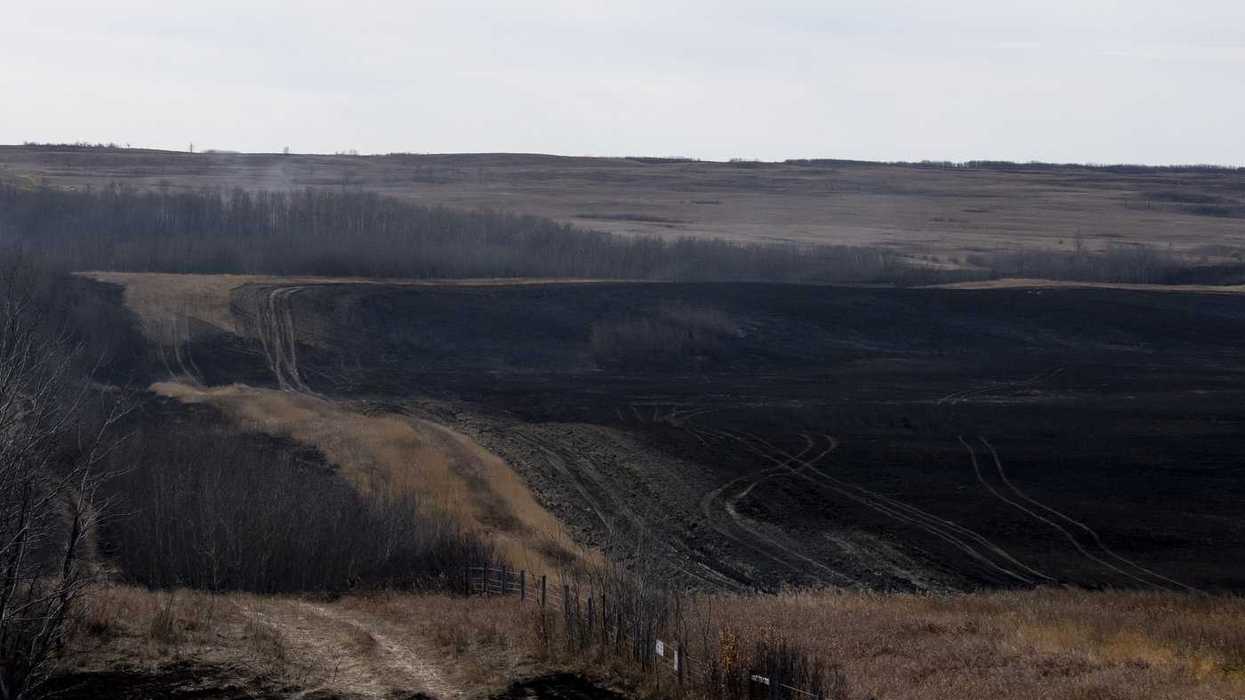
Powerful winds with shifting directions and dry weather contributed to rapid expansion of the grass fire at a military base in Wainwright, Alta., that left four soldiers dead and 39 others wounded, a wildfire expert said.
Environment and Climate Change Canada had issued a severe weather alert for swaths of Alberta on Saturday, warning of powerful wind gusts of up to 90 kilometres per hour in the region where the base is located, 200 kilometres southeast of Edmonton.
The agency said a strong cold front also passed through the area at the time of the windstorm.
Jen Beverly, an associate professor of wildland fire at the University of Alberta, said that weather combination created a “perfect storm” for the deadly fire to spread at a staggering speed and engulf the military training ground.
"The fastest rates of spread possible are in those flashy grass fuels in an open condition like that, where the full force of the wind comes to bear," she said in an interview Tuesday.
Defence officials have said that 84 members of the Princess Patricia's Canadian Light Infantry were in a training area when strong winds spread the flames from a nearby grass fire that was initially considered sufficiently under control.
The military said the fire burning about a kilometre away reached the training ground in less than one minute.
"If that's the case and it's confirmed, it would be among the fastest, probably the fastest recorded observation of wildfire spread in Canada," Beverly said. "We're talking about really, really extreme rates of spread."
The warm weather on the day of the incident dried the moist morning grass by the afternoon, making it vulnerable to wildfires, she said.
"So those fine fuels are very responsive to dry air and high temperatures and the wind accelerates that drying process."
The temperatures dropped after the cold front passed through the region, she said. "But during the burning conditions that led to this fire, there was high temperatures, low relative humidity, and very high winds," she added.
Prime Minister Mark Carney has said the military has launched a "comprehensive investigation" into the cause of the fire.
Beverly said people working near, or dealing with a wildland fire should have access to information about any severe weather conditions, including extreme winds.
She said the military's probe should look into whether such information was communicated, if any decisions made about the training were based on it and "whether or not there were gaps in communications or information flows that would have made a difference."
This report by The Canadian Press was first published Oct. 20, 2026.
By Sharif Hassan | Copyright 2026, The Canadian Press. All rights reserved.