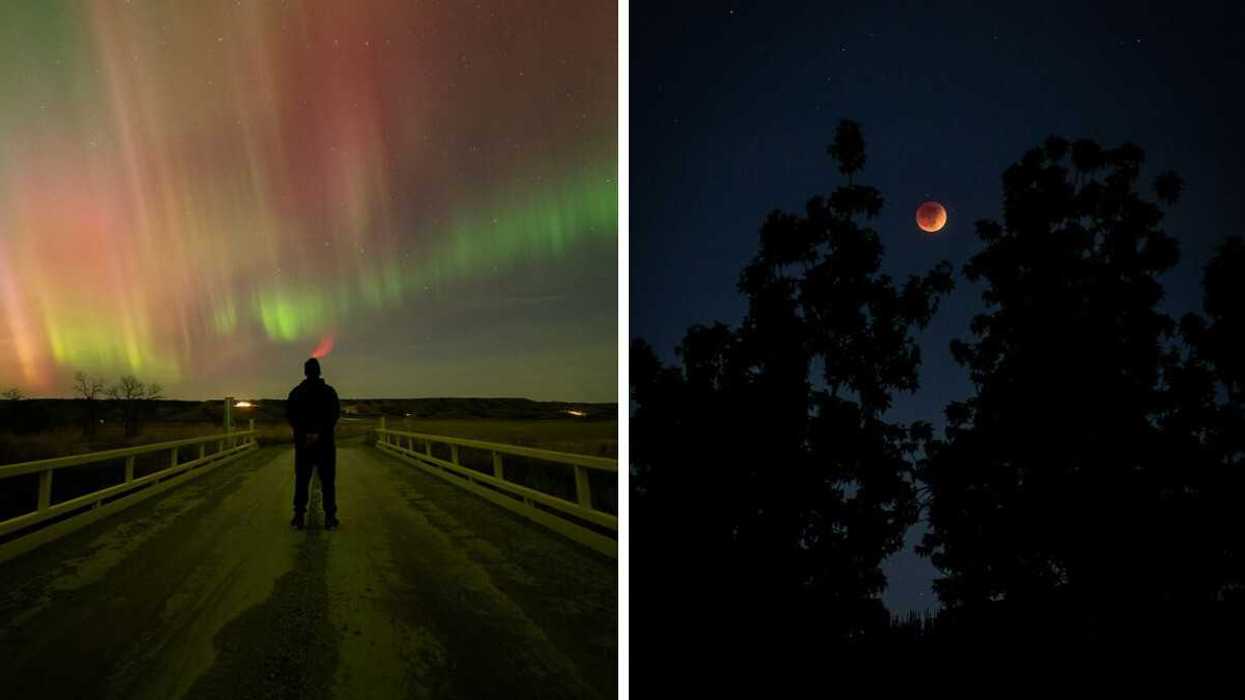
The northern lights could be visible from almost everywhere in Canada tonight.
You could see the green hue of the aurora in the sky alongside a lunar eclipse that will turn the moon red!
Parts of the country are expected to get views of the red moon and a "more intense" aurora.
So, here's everything you need to know about this celestial show of the northern lights and the lunar eclipse in Canada tonight.
NOAA's northern lights forecast called for the aurora to surge across on Thursday, August 27 and overnight into Friday, August 28.
A "more intense" aurora could be seen tonight in central and northern parts of Canada, including Prince George, Whitehorse, Yellowknife, Grande Prairie, Edmonton, Banff, Calgary, Lloydminster, Saskatoon, Regina, Winnipeg, Churchill, and Fort Severn.
The northern lights could be visible but less intense in Victoria, Nanaimo, Vancouver, Kelowna, Cranbrook, Lethbridge, Winnipeg, Kenora, Dryden, Thunder Bay, Sault Ste. Marie, Sudbury, Timmins, Moosonee, Saguenay, Sept-Iles, Rimouski and nearby areas.
There is the potential for bursts of a "bright, more dynamic" aurora that could plunge the northern lights even farther south throughout the night, according to The Weather Network.
Plus, the light of the full moon will "dim significantly" because of the lunar eclipse, making the northern lights easier to view.
If you want to see the northern lights tonight, the Canadian Space Agency said the aurora usually appears a few hours after sunset and becomes more intense around midnight.
You don't need astronomy gear like a telescope to see the northern lights in Canada.
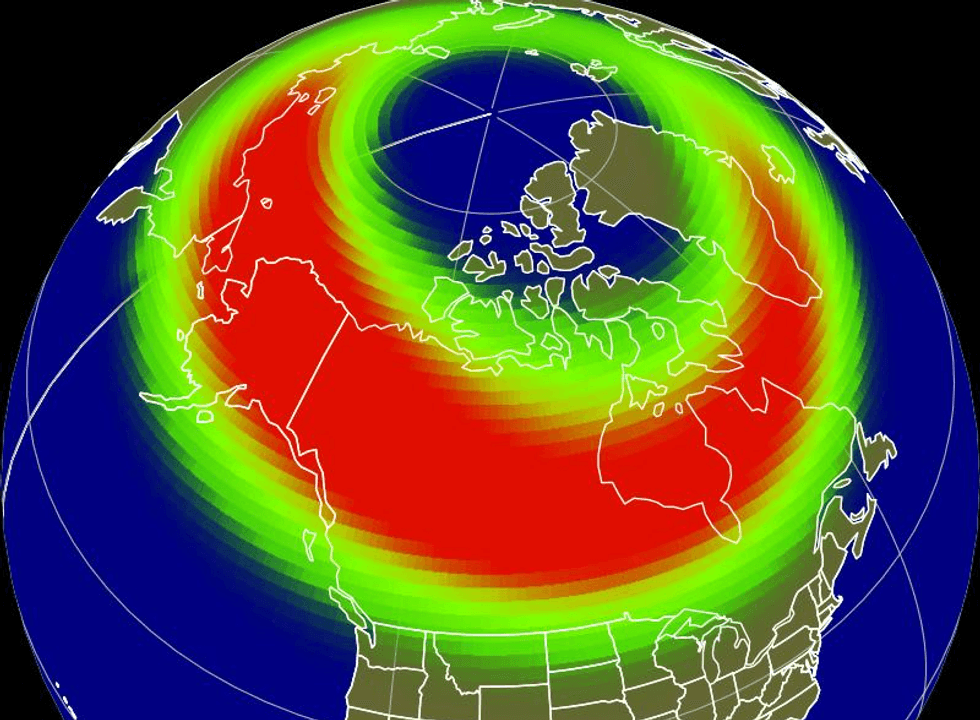 Northern lights forecast map of Canada for August 27, 2026.NOAA
Even though the lunar eclipse tonight is only partial, The Weather Network said there won't be a better eclipse in Canada until the end of 2028 or the middle of 2029.
It's a near-total lunar eclipse, with around 93% of the moon shadowed by Earth's umbra at the maximum part of the eclipse.
According to The Weather Network, the red hue of the moon won't be as noticeable since this is a partial lunar eclipse, not a total lunar eclipse.
You'll be able to see the moon appear red just before and after the eclipse maximum if you're not looking through a camera or telescope.
The lunar eclipse will be visible everywhere in Canada tonight if skies are clear, but eastern parts of the country have the best view.
That's because the moon will rise in B.C., Alberta and Saskatchewan after the eclipse has started.
It will take about three hours for the moon to move through Earth's umbra, which is when it'll darken and turn red.
The maximum of this lunar eclipse is at 1:44 a.m. in St. John's, 1:14 a.m. in Halifax, 12:14 a.m. in Toronto and Montreal, 11:14 p.m. in Winnipeg, 10:14 p.m. in Regina and Calgary, and 9:14 p.m. in Vancouver.
Then, the moon will emerge from Earth's shadow and become brighter as the eclipse ends.
This article's cover image was used for illustrative purposes only.