National security screening system can be strengthened, senior adviser to Carney says
A senior federal adviser says a government-wide registry of security clearance information would improve efficiency, reduce duplication and help departments identify where relevant personnel security data may already exist.
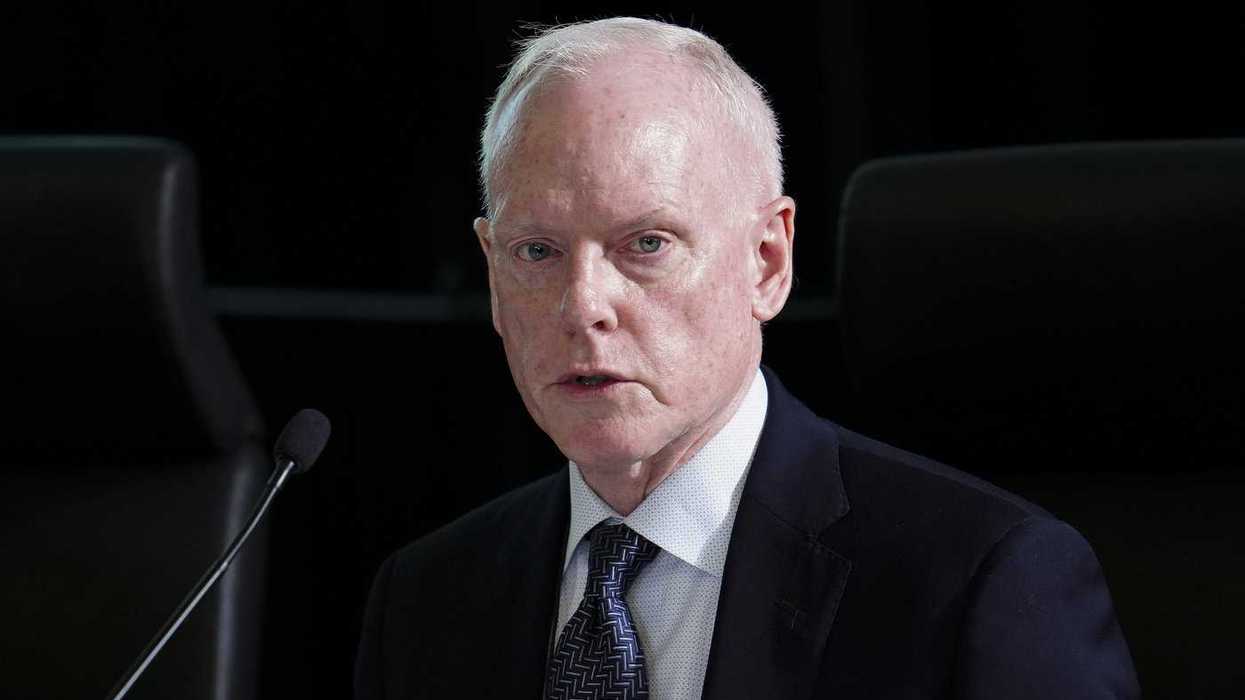
David Morrison, senior diplomatic and international affairs adviser to the prime minister, told MPs on a House of Commons committee Wednesday such a registry would be one way to strengthen Canada's national security screening process.
The Commons public safety and national security committee is holding hearings on the screening process following the arrest of a Canadian NATO intern on espionage allegations.
A federal source not authorized to speak publicly about the issue has said that officials in Canada were proceeding on the basis the suspect is Biwei Zhang — also known as Claire Zhang — who was previously employed by Canadian government agencies.
Public Safety Minister Gary Anandasangaree previously told the Commons committee the woman arrested in Belgium had received a security clearance from Global Affairs Canada.
The clearance was granted even though court records said the federal Public Service Commission found in 2023 that Zhang committed fraud in an appointment process for a position with the Canada Border Services Agency.
The Federal Court dismissed her application for judicial review of the decision the following year. She submitted a letter of apology during the investigation into her actions.
Morrison, a former deputy minister of foreign affairs, pointed out that individual federal departments are accountable for deciding to issue security clearances, informed by centralized expertise.
The Treasury Board Secretariat establishes the policy framework, the Public Safety portfolio — through RCMP and the Canadian Security Intelligence Service — contributes criminality checks and national security assessments, and individual departments collect relevant information, assess risks and make security clearance decisions, he said.
Morrison declined to discuss specific cases, but he said a person screened to work at NATO would likely have a secret-level clearance.
He indicated that open source checks, such as internet searches of a person's history, are now being done for secret-level security screening — a tightening of the system following the arrest in Belgium.
Morrison told the MPs that open source verification should be used more consistently across government for a wider range of security levels. "Its use would also benefit from common tools, training standards and methodologies across departments," he said.
Morrison also suggested human resources-related information relevant to an assessment of an individual's reliability or loyalty should be available to personnel security decision makers without compromising privacy protections or procedural fairness.
Finally, he said a robust personnel security effort should extend throughout a person's employment in the form of insider risk programs, recurring screening, reporting obligations and security awareness. He said these measures would help identify emerging risks, ensure clearance holders remain reliable and loyal, and confirm that clearances reflect current information.
Security expert Wesley Wark said CSIS "shoulders the main burden" of security screening for the federal government, essentially through assessing loyalty to Canada and reliability as it relates to that loyalty. CSIS provides advice related to immigration files as well as on security clearance checks.
Wark, a senior fellow at the Centre for International Governance Innovation, said the current system for security screening in Canada "is simply unsustainable," noting CSIS handles hundreds of thousands of screening requests annually.
"The dual burdens of immigration and security clearance screening on CSIS are simply too great and threaten, in my view, to erode the operational effectiveness of CSIS as it addresses its core missions," Wark said.
"An intelligence service should not be a security screening shop."
He suggested Canada follow the United Kingdom's lead and set up a separate, centralized organization for security clearances.
This report by The Canadian Press was first published Oct. 21, 2026.
By Jim Bronskill | Copyright 2026, The Canadian Press. All rights reserved.