Don’t prune your oak trees until after November
Ontario recorded three confirmed cases of oak wilt, a deadly fungal disease that restricts water flow within oak trees, causing them to rapidly die, in 2023. The infected trees were detected in Niagara Falls, Niagara-on-the-Lake and Springwater Township. While no new cases have been reported since, horticulture experts strongly advise gardeners and landowners to hold off on pruning oak trees until colder weather arrives.
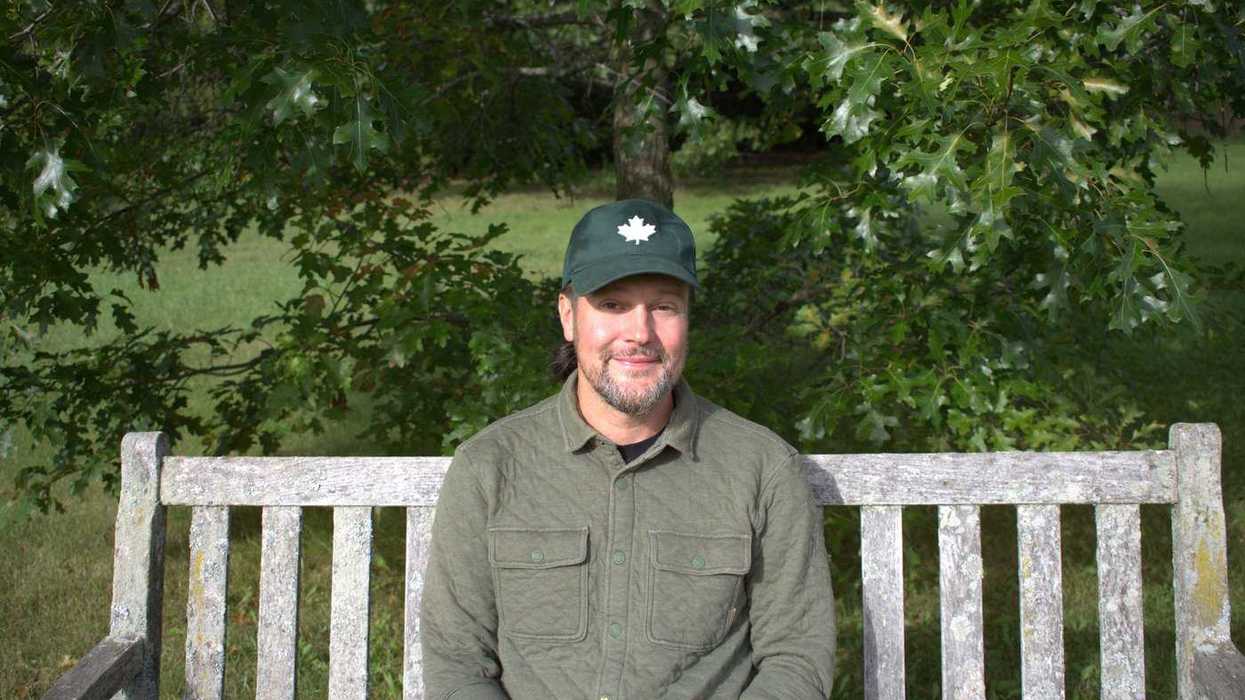
“The big recommendation right now is to not do any pruning between April and November,” said Sean Fox, senior research associate at the University of Guelph’s Arboretum.
Pruning in the warmer months can attract spore carrying insects such as sap-feeding beetles. Fresh pruning cuts ooze sap and release chemical scents that attract these beetles from far away.
After snacking on an infected tree, the beetles will fly to other trees unknowingly carrying microscopic fungal spores and infecting healthy oaks. Another cause of spread with oak trees are fungal mats, which are specialized, spore-producing structures that grow beneath the bark of trees killed by oak wilt.
“If there are spores nearby flying through the air from the fungal mats on an infected tree, then that can also just increase the chance of infection through that wounded site,” said Fox, noting that pruning the tree makes it easier for the spores to get into the tree at the wounded site.
“One precaution that you can take is to avoid pruning during that key time of year when spore release is either active through the air, or through insect vectors.”
While all oak trees are at risk of being infected, red oaks are particularly vulnerable.
“It really comes down to a difference in immune response. So red oaks, the fungus can spread really quickly. The red oaks have a harder time containing the fungus in one area, but other species like white oaks, have a much quicker immune response, and they can kind of isolate the fungus into different parts of their system,” said Madison Sturba, terrestrial invasives team lead at the Invasive Species Centre.
Oak wilt can kill a susceptible tree in as little as three weeks to six months. This rapid decline contrasts sharply with the oak’s cultural reputation for stability and longevity, captured in the traditional folklore phrase: oaks spend 300 years growing, 300 years living, and 300 years dying. While most urban and landscape oaks typically live 150 to 200 years, they can survive for more than three centuries under ideal conditions.
“It’s quite the shocking concern to see something that comes in and sometimes kills the oaks in a single season, so that’s where oak wilt is similar to Dutch Elm disease. That it’s a fungal pathogen that can spread in several different ways, but can often kill the tree very quickly,” said Fox.
The first case of Dutch elm disease was reported in 1946. During the 1970s and ’80s, the majority of elm trees in Eastern Canada succumbed to the disease. The fungus was mainly spread by the European elm bark beetle and native bark beetle carrying fungal spores and through underground root connections between neighbouring trees.
Because of these similarities, Fox emphasizes the importance of remaining vigilant and recognizing the early signs of oak wilt. Symptoms include leaf discoloration, wilting and premature leaf drop starting at the top of the canopy.
“One of the other ways that you can tell is by looking at the trunk or the branches. After a red oak has died, the fungus will keep spreading, and eventually they’ll form these pressure pads underneath the bark. And those pressure pads are basically a collection of spores. They’ll grow. They’ll eventually create enough pressure and crack the bark. So something that people can look out for right now are vertical bark cracks,” said Fox.
Oak wilt is believed to have entered North America in Wisconsin during the 1940s, slowly migrating north ever since. With its arrival in Ontario, early detection is vital to prevent an environmental disaster on the scale of past blights.
Fortunately, Sturba and her team view the current situation as a success story.
“It was found in 2023 in three different locations, but in all three areas, oak wilt was managed really quickly. There was a huge collaborative response, and so there’s been a lot of ongoing surveys ever since then,” said Sturba,
“Oak wilt is good in the sense that if you catch it early enough and you have those management plans in place and that collaborative response in place, you can really manage it.”
Surveys remain ongoing, and no new cases have emerged. To help keep the disease at bay, experts urge the public to avoid transporting firewood.
“There could be fungal spores without even realizing it. So, yeah, we want to just avoid transporting firewood longer distances,” said Sturba.
Long-term protection also relies on fostering diverse forests to ensure ecological resiliency.
“Hopefully, we’ve started to learn the lesson that happened decades past, where we elm trees, for example, we loved them so much we filled all of our streets with them, and then of course, when Dutch elm disease came, we lost almost all the trees. They were then replaced with ash trees, and then we lost most of those,” said Fox, stressing that uniformity is a liability.
“As much as it’s nice to have a very uniform looking street with all the same trees, it’s not a good thing with situations like that likely being imminent in the future when something new comes along. So [it’s important] to mix up our urban forests with as many different species as possible, but also have genetic diversity as well.”
This philosophy is on full display at the University of Guelph’s Arboretum. The grounds host a diverse variety of native and uncommon oak species, including all 11 of Ontario’s native oaks.
“Then we have another pretty big swath of hybrids, so they’ll actually sometimes cross with each other,” added Fox.
Copyright 2026, Woolwich Observer. All rights reserved.
Meg Deak, Local Journalism Initiative Reporter, Woolwich Observer.