Surrey approves 16 priorities as one councillor pushes back
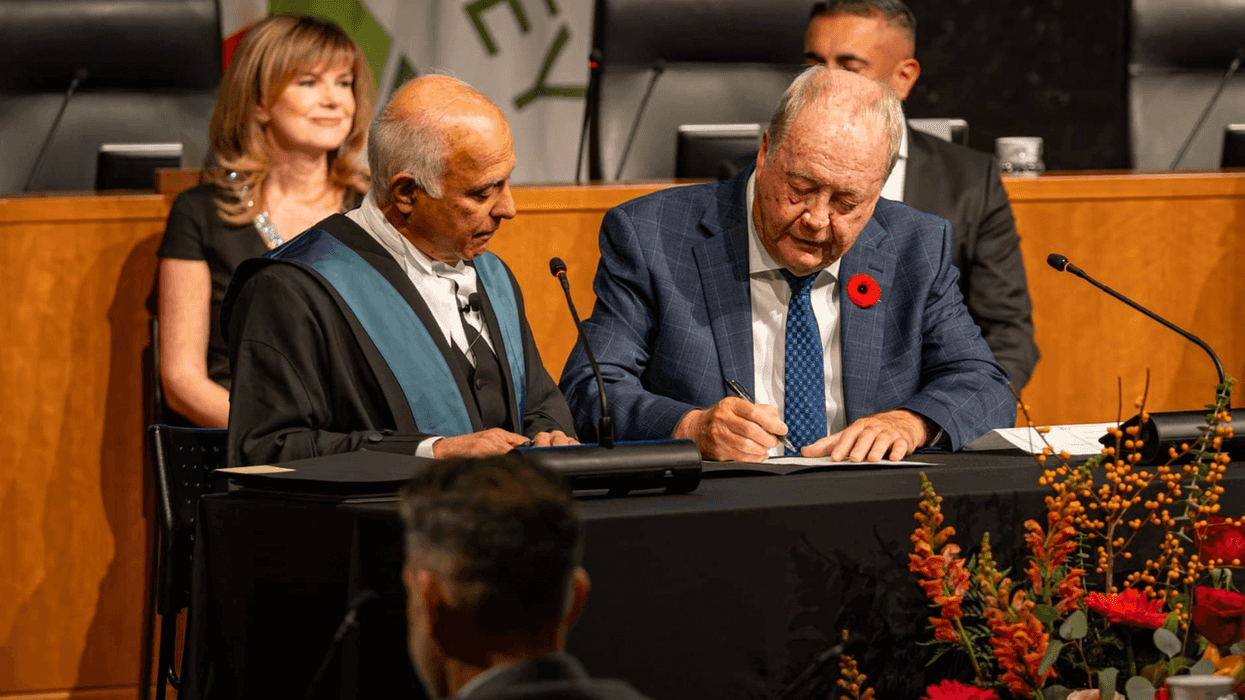
Motions to freeze taxes, institute zero tolerance for crime, and conduct a forensic audit into previous land deals were all passed Monday during council’s first meeting of the term.
However, Coun. Harry Bains — the only councillor not elected as part of Mayor Doug McCallum’s slate — questioned the feasibility and need of some of the priorities, such as equipping the Surrey Police Service with a drone fleet and helicopter within 90 days.
Bains said he does not see why city hall should be funding equipment the SPS has not even asked for.
“That’s a decision for the Surrey Police Board to make. City hall needs to separate itself from the operational management of the Surrey Police,” he said and added he would be in support of the motion if the SPS had requested it.
Bains also questioned why some priorities seemingly favoured certain communities in Surrey, like the motion to implement sizing regulations for Crescent Beach and Ocean Park to “preserve neighbourhood character.”
The Surrey Connect councillor noted that many neighbourhoods throughout Surrey have unique character and allowing special zoning regulations for only a few areas sets a bad precedent.
With Surrey’s growing population, more density will be needed to keep up and Bains said more residents may want to see their neighbourhoods receive the same zoning regulations and could hinder future development.
Similarly, Bains questioned why council is purchasing Rosemary Heights Retreat Centre lands to protect as a park, when there is already an adjacent park in the area.
Bains said this purchase could cost tens of millions of dollars and argued “there’s parks needed across the city, and I think this money could be spent elsewhere to put parks in neighborhoods which don’t have them currently.”
Another key priority for McCallum is advancing the SkyTrain expansion to Newton. Bains asked whether this project could mean the Bus Rapid Transit line planned down King George Boulevard to South Surrey could be cancelled.
McCallum said at this stage, that decision rests with TransLink.
In a statement from Movement, a transit advocacy group, Executive Director Denis Agar explained that while the city has taken steps to plan for the BRT, the project is not actually funded yet.
“The mayors of the region will be negotiating a new Investment Plan in the new year, which will need to include funding for the Newton SkyTrain if it is going to get delivered,” Agar explained.
He also noted that the city does have the power to veto the project if they want — which is what McCallum did in 2018 when he cancelled the proposed LRT route in favour of prioritizing the Surrey-Langley SkyTrain.
Agar said the big question is whether city hall will focus on one SkyTrain project or work on bettering bus services across Surrey — he noted that other corridors throughout the city also need better bus reliability like 72 Avenue and 128 Street.
“The key thing to keep in mind is that the SkyTrain to Newton will be complete by 2037 at the soonest … We would love to see a BRT project on King George that gets us faster service in the interim,” said Agar.
One of McCallum’s biggest promises was freezing property taxes for the next four years. Again, Bains voiced concern about passing this freeze without a clear plan to ensure there will be no service cuts, cancelling of projects or selling of city-owned land.
Instead, Bains proposed the matter be approved during the budget process, when there would be more information about the consequences of a tax freeze.
Opposition a healthy part of democracy
However, Kwantlen Polytechnic Professor political science professor Ross Michael Pink pointed out that Surrey has an average of 2,000 people moving to the city every month. Many of those people, Pink said, are contributing to a growing tax base and the city would potentially pause taxes without having to cut services for new projects. Municipalities cannot also not legally run a deficit.
Larger infrastructure promises like the SkyTrain and new hospital would have funding coming from the provincial government. Premier-elect Lorne Doerkson campaigned on funding both of these projects.
Throughout the meeting, Bains was the sole voice questioning the consequences of approving some of the priorities and was often met with little to no discussion from the other councillors. Every motion was ultimately approved and Bains voted against five of them.
Pink said opposition is a healthy part of democracy. The role of the opposition is to keep the government accountable and ask difficult questions.
He added that it would have been helpful to have more opposition on council, but now, Bains “will have his work cut out for him.”
One motion that received no opposition was Surrey withdrawing from the Metro Vancouver Regional District, but maintaining core services such as water, sewer and waste treatment.
In 2025, the average homeowner paid $875 for Metro services — $781 of that went to water, sewer and waste services.
According to prior reporting, withdrawing from the regional district may only save Surrey households about $31 annually.
The city’s desire to remove itself from the regional board is mainly driven by the board’s blunder in overseeing the North Shore Wastewater Treatment project. The plant was projected to cost $700 million and be done in 2020 — now, the plan has been pushed to 2030 and is expecting to cost $3.86 billion.
“Most of the public is outraged by it, and there has been absolutely no accountability. This is what angers the public. When I talk to [people], … they say ‘I’ve lost faith in government.’ Well, this is the reason why people lose faith in government. There’s no accountability. There’s no consequences,” said Pink.
Purely from a policy perspective, Pink said McCallum’s focus on fiscal responsibility aligns with his rejection of a board that has been financially careless.
Withdrawing from the board could mean Surrey may not be at the discussion table anymore for large regional issues and could limit opportunities for direct debate.
However, Pink argued that mayors and municipalities are in constant conversation with each other outside of these meetings, so Surrey leaving does not mean it will be absent from all consultations.
“There is ongoing consultation [between cities] literally every day. But symbolically, it looks like Surrey is rejecting the Metro Board. But in fairness, I mean, look at the disastrous public governance of that board,” said Pink.
Copyright 2026, Surrey Citizen. All rights reserved.
Aisha Chaudhry, Local Journalism Initiative Reporter, Surrey Citizen.