Elections Alberta pegs cost of separation referendum at $84 million
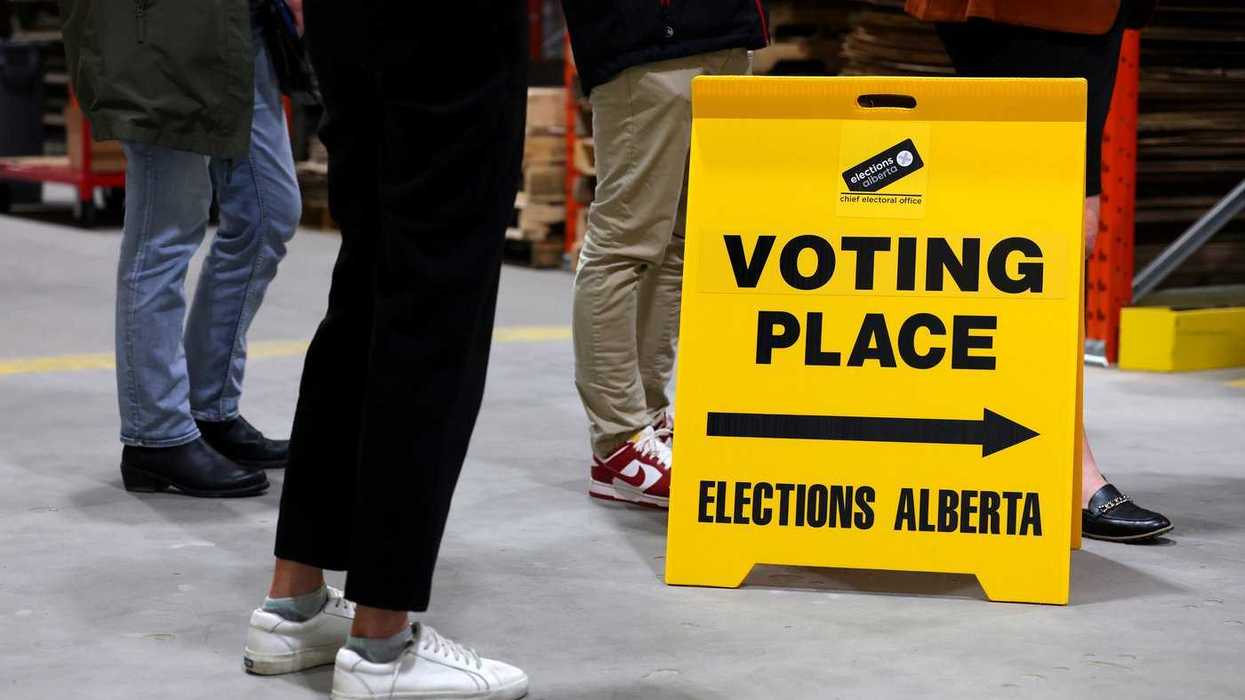
Alberta's elections agency says last month's historic separation vote came with a price tag of $84 million.
The cost, which is more than double the roughly $37 million spent on the 2023 general election, was revealed Thursday when officials from Elections Alberta appeared before a legislature committee.
The 10-question referendum saw about 75 per cent of voters say they want Alberta to stay in Canada instead of holding a second, binding vote on separating.
Albertans also approved, by slim margins, five questions related to the province taking more control over immigration. Four proposals for changing the Constitution were rejected.
Gordon McClure, the province's chief electoral officer, told the committee the referendum cost nearly $50 million more than what the agency's annual budget could pay for. He asked the bipartisan committee for $59 million in additional funding, which was unanimously approved.
McClure said $26 million is needed just to pay staff who hand-counted the more than 22 million ballots that were cast.
Renting voting and counting spaces came out to about $7 million, he added, while nearly $11 million was spent on security, IT equipment, and shipping and postage for ballots.
McClure and other officials also said the referendum was "crushing" for staff, with many working long hours.
One staff member, McClure said, even developed appendicitis and put off getting treatment.
"People went above and beyond," he told the committee.
Steve Kaye, the agency's chief administrative officer, said his longest shift was 22 hours and that the executive team worked multiple 16- to 20-hour days.
"But that comes with the territory," he said. "We're not here complaining.
"We have had our foot on the gas for a long time," he added.
"People are tired, and we have some concerns going forward about being able to hire some of the people that have worked for us in the past."
NDP committee member David Shepherd thanked Elections Alberta for their work, calling it a heroic effort.
He said it’s no surprise Elections Alberta was forced to push their staff to the limit, and noted that it was a decision of Premier Danielle Smith and her government to hold the referendum.
“We will leave that to Albertans, I guess, to determine what the return on investment is,” said Shepherd.
Smith's office did not immediately respond to a request for comment.
As part of its funding request Thursday, the agency is also receiving about $9 million to aid preparations for next year's general election, which is scheduled for Oct. 18, 2027.
The committee also granted Elections Alberta about $1 million in extra funding to hire additional full-time staff.
Kaye said that compared to other electoral agencies in Canada, Elections Alberta has one of the leanest workforces and that the referendum proved it was unsustainable.
"If we lost a person for medical reasons or whatever, the gap that created was exponential, and the staff we had had to pick up the ball and run with it."
He said if the agency had the same staffing level on a per capita basis as Quebec's elections body, than Elections Alberta would have more than quadruple its current 54 full-time employees.
Kaye also said the committee should be prepared for further staffing requests next month when the agency makes its submissions for next year's budget.
The committee also heard Thursday that Elections Alberta will be able to deliver the next general election on time, despite raising concerns last week about the government planning to put controversial new electoral maps into law before the end of the year.
McClure had said the agency needed more time to properly implement and adjust to new voting districts, but the government denied his request to delay the election or hold it under the current boundaries.
Officials told the committee that some processes that normally take months to adjust to new electoral boundaries are being foregone while others, like updating elector information, are being expedited with the help of temporary staff.
McClure said having time to be fully prepared makes the agency more efficient with its spending. He said rushing Elections Alberta to adjust to the maps could see the agency "paying a lot more" to run the 2027 vote.
Justice Minister Mickey Amery said earlier this week that the new electoral boundaries will be put into law before Christmas.
This report by The Canadian Press was first published Nov. 5, 2026.
By Lisa Johnson and Jack Farrell | Copyright 2026, The Canadian Press. All rights reserved.