8 little-known reasons your Canadian passport could be revoked or cancelled
Your passport doesn't belong to you – it belongs to the government. 👀
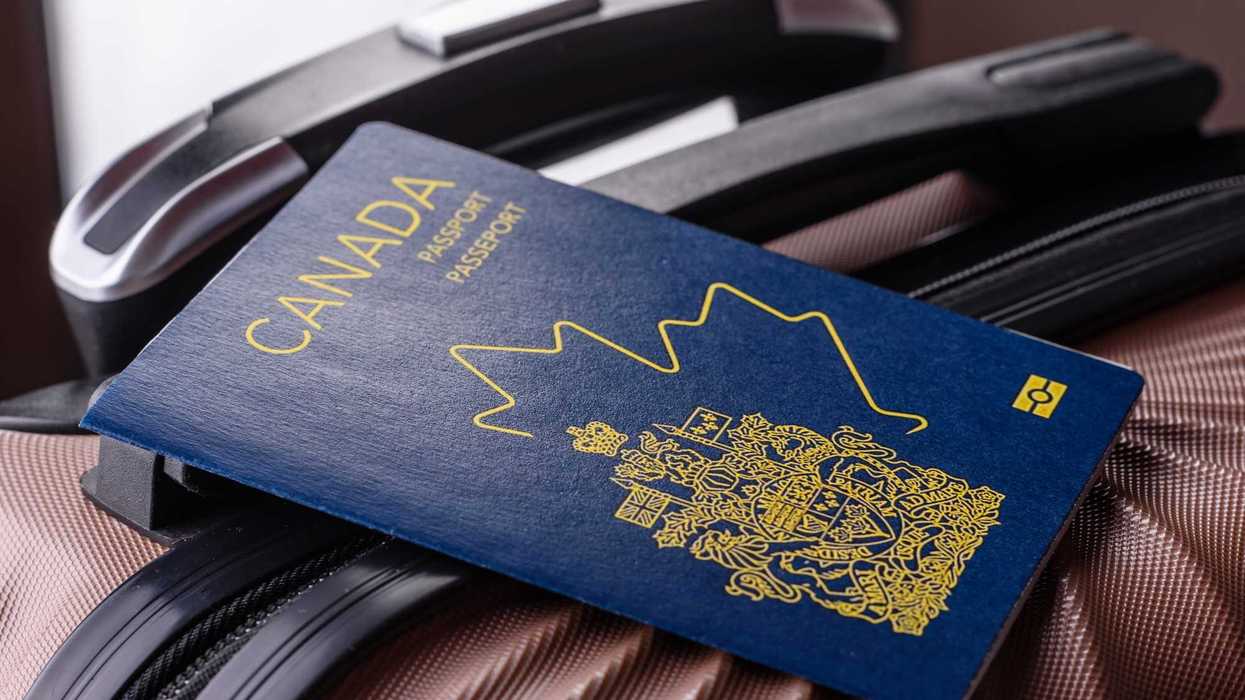
Your Canadian passport doesn't actually belong to you — it belongs to the Government of Canada.
Your Canadian passport is more than just a travel document that gets you through airport security. It's actually considered government property, and there are far more ways to lose it than many people realize.
Most Canadians assume their passport is safe as long as they renew it on time and don't commit a serious crime. But the reality is actually far more complex.
The Minister of Immigration, Refugees and Citizenship has broad authority to revoke, cancel or refuse passport services for a wide range of reasons that go well beyond what most people assume. In fact, government officials actually say that "Canadian passports are the property of the Government of Canada."
The difference between passport revocation and cancellation matters. When a passport is revoked, you'll receive notice and have a chance to respond during an administrative investigation. The Passport Program will communicate a summary of the relevant information to you and give you an opportunity to explain your situation before making a final decision.
Cancellation, on the other hand, can happen without any warning in certain situations. Both processes render your Canadian passport invalid for travel, and border control officials and law enforcement are usually notified immediately.
Once your passport is cancelled or revoked, you could face serious consequences if you try to use it at the airport or at border crossings.
If you're booking flights or making travel plans, you might want to verify that your Canadian passport is actually in good standing. Because while serious criminal charges are an obvious red flag, there are other surprising situations that could leave you grounded in Canada, unable to travel internationally.
Here are seven situations that could cost you your Canadian passport, some of which you probably haven't even heard of.
You're behind on child support or alimony payments
This one catches many Canadians off guard. Under the Family Orders and Agreements Enforcement Assistance Act, if you're in persistent arrears on child support or alimony, the government may refuse to issue or suspend your passport. This means if you're significantly behind on payments, your passport privileges are at risk.
If your passport gets suspended under this law, you'll need to return it to the Passport Program, where it'll be held in safekeeping until you settle your debts. If the suspension is subsequently terminated and your passport hasn't expired, you can get it back. But if you don't return it when requested, it gets cancelled outright and can't be reactivated.
You let someone else use your passport
It might seem harmless to lend your passport to a friend or family member, but permitting another person to use your passport is grounds for revocation on its own. The same goes if you help someone else use a passport that isn't theirs.
Your Canadian passport is tied to your identity for authentication purposes, and allowing anyone else to use it is a serious offence under the authority of the Minister of Immigration, Refugees and Citizenship.
If you're caught doing this, your passport can be revoked, and you could face a period of up to 10 years without passport services. That's up to a decade of being unable to travel internationally.
You owe the government money for getting you home
If you've ever needed emergency consular assistance to get back to Canada — whether it was repatriation costs or other financial help from Canadian officials abroad — and you haven't paid it back, your passport application can be refused.
The government keeps track of debts related to consular financial assistance, and they can block you from getting a new passport until you've settled up.
You lost your passport and reported it
This might seem backwards, but if you report that you're no longer in possession of your passport — whether it was lost, stolen or destroyed — the government may cancel it for administrative reasons.
This makes sense from a security perspective, since a passport floating around out there poses a risk to the integrity of Canadian travel documents.
But it means you can't just find it later and start using it again. Once it's cancelled, it's done. A cancelled passport cannot be reactivated and is no longer valid for travel.
You got your passport through false information
If it's discovered that you obtained your passport by providing false or misleading information during the application process, it can be revoked.
The government takes the authentication of identity and entitlement determination seriously, and any deception in the process can come back to haunt you years later.
You ignored a request to return your passport
Here's something many Canadians don't realize: your passport isn't actually yours. It's property of the Government of Canada. That means if the government asks you to return it and you don't comply by the deadline they set, your passport will be cancelled.
Other agencies, including the RCMP and border agencies, will be notified of its cancellation, and you could face investigation and prosecution under the Criminal Code for theft and illegal possession of government property. The Passport Program isn't responsible for any problems you encounter trying to use a cancelled passport at border crossings.
You lost your Canadian citizenship
If you've ceased to be a Canadian citizen, your passport can be revoked.
This might seem obvious, but it catches people who've had their citizenship revoked for various reasons, including fraud in the original citizenship application. Once you're no longer a citizen, your passport is no longer valid, and you'll be instructed to return it immediately.
You're charged with certain serious crimes
You don't actually need to be convicted of a crime to lose your passport. If you're charged with certain serious offences in Canada — or with an offence committed outside Canada that would be considered serious if it happened here — your passport can be refused or revoked even while you're still awaiting trial.
This applies to charges related to travel document fraud, smuggling, trafficking, violent crimes and other serious offences.
Whether your passport is revoked, cancelled, refused or suspended, the consequences are serious. Law enforcement and border control officials may be notified, and your passport becomes invalid for travel.
If you receive a revocation decision, you can challenge it by filing for judicial review with the Federal Court of Canada, but you only have 30 days from the decision date to do so. Cancellations work differently and may not include the same appeal process.
Depending on the circumstances, you could be blocked from passport services for up to 10 years. During that time, you won't be able to get a new passport, which effectively grounds you in Canada and prevents international travel.
There is one potential option in extreme circumstances: the Minister may issue a limited-validity travel document with geographical restrictions if your reason for travel is urgent, compelling and compassionate. But this is reserved for truly exceptional situations and isn't guaranteed.
The takeaway? Your Canadian passport status depends on more than just staying out of trouble. Financial obligations to the Crown, court conditions and even administrative issues can put your travel privileges at risk. You can find out more about your Canadian passport — and why it could be taken from you — here.
Before you get going, check out our Responsible Travel Guide so you can be informed, be safe, be smart, and most of all, be respectful on your adventure.
AI tools may have been used to support the creation or distribution of this content; however, it has been carefully edited and fact-checked by a member of Narcity's Editorial team. For more information on our use of AI, please visit our Editorial Standards page.