Five Things: PM Carney explains why Canada left the U.S. negotiating table
Canada is preparing to hit the U.S. with dollar-for-dollar tariffs in response to new 50 per cent duties on $28 billion worth of Canadian products that took effect when talks between the two nations collapsed as negotiations neared the finish line.
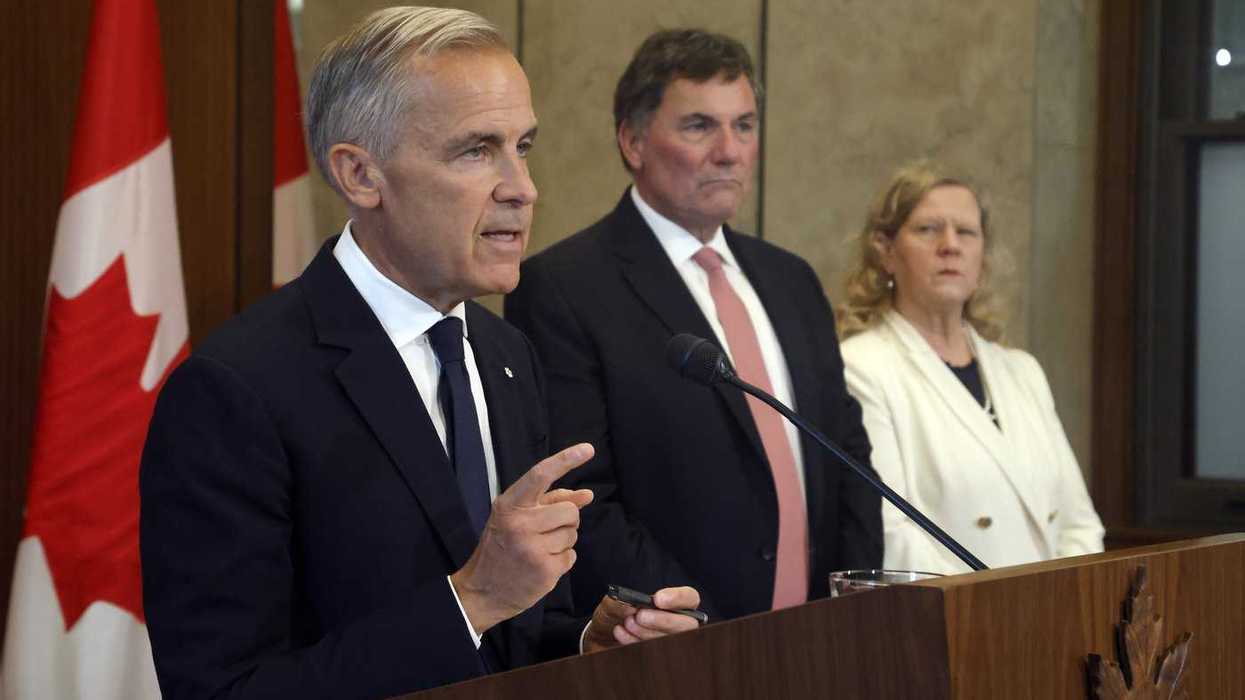
Prime Minister Mark Carney was quiet publicly during the final days of negotiations, but now has now explained his rationale for telling the Canadian negotiating team, led by Canada-U.S. Trade Minister Dominic LeBlanc and chief negotiator Janice Charette, to leave the table.
Restrictions on further trade deals
"The U.S. Introduced at the last hours, in the last hours, efforts to restrict our ability to have other trade deals. You heard me say a moment ago, what we've accomplished in the past year, 20 new deals, economic and security partnerships, the prospect of doubling our market access because we believe in free trade. We're the partner of choice in many respects for countries around the world and the Americans wanted to restrict that. They had language that what they wanted to restrict that, unacceptable," Carney said during a press conference on Parliament Hill.
Carney said there were negotiations about alignment on trade and tariffs for things like steel and aluminum, something Carney said is a normal part of negotiations with an integrated supply chain.
However, Carney said when the U.S. introduced language restricting Canada from making other trade deals it became unacceptable.
"It's a power play and becomes a question of sovereignty."
Trucks excluded from tariff reduction
The U.S. has a 25 per cent tariff on vehicles made in Canada and on auto parts that aren't compliant with the Canada-United States-Mexico Agreement, or CUSMA.
Carney said the U.S. proposed a reduction in sectoral tariffs in exchange for other concessions, but certain vehicles would have been excluded from the those reductions.
"With respect to the auto industry, both in terms of the level of the tariffs, the treatment of Canadian content, so Canadian parts, Canadian steel, Canadian content in vehicles, the scope of the tariff, Americans wanted to limit it to autos only, not include medium and heavy autos and light trucks to be more specific, not include heavy duty trucks, which is a big change," Carney said.
"With respect to Ford's new plant, for example, in Oakville, which is F-350s, 450s, 550s, they would have been excluded. GM, Silverado, same thing, would have been excluded from that. No rationale, just for exclusion. So effectively moving into a series of terms that would have made the production more uneconomic over time."
Ford F-series trucks were the best selling vehicles in the U.S. last year, followed by the Chevy Silverado.
French language and culture
Speaking in French, Carney delved into more details on issues the U.S. side raised on cultural sectors that became a sudden sticking point as a third example for why talks fell apart at the 11th hour.
"The subsidies, the support for our culture and the French language. And even the information that is on Canadian products. There are many examples that are never acceptable. Americans try, try and try and we say no. And it's simple. Never on the table for Canada, my government," Carney said in French.
Carney said that this concession was viewed as an attack on Canadian sovereignty and part of why Canada did not accept a "not perfect, but a good deal."
Critical Minerals
There were reports that the U.S. was looking for the right of first refusal on Canada's critical mineral exports as part of the negotiations.
Carney said the Canada "would never give exclusive access" to critical minerals, but said there is an openness to collaboration with like-minded trading partners as he said the country has signed $50 billion worth of deals in the last 12 months.
"Now, in the context of the U.S. putting 50 per cent tariffs on a bunch of our business, trying to influence our cultural support and language protections, not agreeing to sensible economic terms for our core industry in autos, we've got a lot of demand for critical minerals," Carney said.
"So there's less opportunity to co-operate with the United States. That is something that is a missed opportunity, as a consequence of what's happened, but we didn't cause it to happen."
Carney says breakdown was all on the U.S.
The last several days have seen the Canadian and American negotiating teams going back and forth in Washington, and both sides signalled that a deal was close but more work was continually needed.
Carney said that he does not believe Canada did anything at the last minute to cause the breakdown beyond walking away.
"No. There's a short answer. From our perspective, we clarified what was on offer and were continually disappointed by the answers," Carney said.
This report by The Canadian Press was first published Aug, 22, 2026.
By David Baxter | Copyright 2026, The Canadian Press. All rights reserved.