Ford’s Bill 140 ‘eviscerates’ Ontario’s bedrock environmental laws, hands developers what they want
After a 21-week summer break, the PC government returned to Queen’s Park with another omnibus bill that made “anti-democratic” changes to Ontario’s oldest environmental laws, public consultation and land-use planning under the banner of cutting “unnecessary” red tape. The drastic move will supposedly eliminate nearly 220,000 days of approval processing time with the goal of getting homes and other construction projects completed much sooner.
“When approvals take too long, projects get delayed, investments go elsewhere, and people wait longer for the service they need,” Minister of Red Tape Reduction Andrea Khanjin said during a press conference this week.
“The chaos and uncertainty caused by Washington means Ontario cannot afford unnecessary delays. We need a regulatory system that helps get things done while continuing to uphold high standards people expect.”
On October 27, Khanjin tabled Bill 140, dubbed the Building Ontario Faster Act, proposing amendments to 23 Acts and creating two new laws with the same old promise of the Doug Ford government – to get shovels in the ground faster and create “the conditions for the most competitive business environment in the G7”.
Experts have pointed out that while in office for eight years, Ford’s only plan for economic growth in Ontario is to focus on one part of the economy: what the development community wants.
Instead of expanding investment in the province through innovation, partnerships linked with post-secondary education, fostering industries of the future such as artificial intelligence, bio-medical science, innovative healthcare companies and others at the nexus between rapidly emerging technologies and finance, insurance, pharmaceuticals, computer science and other industries that are driving massive innovation and job growth around the world, Ontario is falling behind badly, as Ford’s only idea has been pushed down to him by the powerful developers who helped him win the premier’s job in 2018.
While the province’s economic performance has since ground to unprecedented low levels, Ford seems incapable of pushing through legislation with one singular purpose, to give a handful of powerful residential developers carte blanche so they can keep building the type of housing most Ontarians no longer want.
Earlier this year, the Fraser Institute published an article titled: “Ontario’s ‘have-not’ status—a powerful symbol of economic decline”.
It pointed out that under Ford’s leadership, the province has every year received equalization payments from Ottawa, defining its status as a ‘Have-not’ province.
“This is a stunning and symbolically potent indicator of the province’s economic decline. Prior to 2009/10, Ontario had never received equalization payments, and for most of its history, it would have been unthinkable as the province was an engine of national economic growth rather than a drag on it,” the article highlighted.
Unemployment compared to other provinces has spiked under Ford, the province’s debt is projected to surpass $515 billion this fiscal year, and despite Ford’s focus on only one small segment of the economy, residential construction, he has failed miserably even in that developer-led mandate, as new housing starts have plummeted under his leadership, thanks partly to the inability of municipalities to pay for the new homes he is pushing, as the PCs shifted the cost of growth-related infrastructure from builders who have for decades paid for roads, water and sewer mains and all the other things a new house needs, onto the backs of municipal property tax payers.
Emails obtained under freedom of information laws showed the City of Mississauga was being pressured by developers to take on these fees, so builders could make even more profit. City council responded by cutting some DC (development charge) fees by 100 percent and others, for certain types of new units by 50 percent, with no guarantee that builders would pass on the savings to consumers.
Critics acknowledge the province needs to foster a business-friendly environment, being one of the world’s largest subnational debt holders. The province’s 2026-27 deficit is estimated at $16.9 billion amid slowing economic growth and U.S. tariffs hitting key economic drivers such as the auto and steel sectors. Ontario’s economic stagnation under Ford started long before tariffs.
Now, he is once again attacking regulations that have sweeping long-term protections for the province, just so builders can get homes to market. Housing planners agree that costs need to keep coming down to make shelter more affordable, but the types of homes developers want to keep profiting from, often sprawled out into sensitive greenspaces where highways have to be built and infrastructure destroys watersheds, is not aligned with smart growth legislation passed twenty years ago.
The Places to Grow Act was widely viewed as a progressive and economically productive approach to protect Ontario’s critical natural assets, while creating the type of dense housing that drives widespread commercial investment and keeps the price of a new home down.
Ford has since pushed through a series of legislation that rips up the foundations that underpinned the Places to Grow Act, which stated:
“The Government of Ontario recognizes that in order to accommodate future population growth, support economic prosperity and achieve a high quality of life for all Ontarians, planning must occur in a rational and strategic way.
The Government of Ontario recognizes that building complete and strong communities, making efficient use of existing infrastructure and preserving natural and agricultural resources will contribute to maximizing the benefits, and minimizing the costs, of growth.
The Government of Ontario recognizes that identifying where and how growth should occur will support improved global competitiveness, sustain the natural environment and provide clarity for the purpose of determining priority of infrastructure investments.”
Ford has stripped all of this away as environmental protections have been watered down year after year in the name of cutting red tape and creating more housing to bring down costs. He has failed to do this, as the latest piece of legislation to tear up Ontario’s environmental safeguards was introduced this week, giving Ford’s developer friends exactly what they want.
The province insists Ontario’s economy can be protected in an increasingly uncertain geopolitical climate by reducing duplication across several ministries including the Ministry of Environment, Conservation and Parks (MECP), and removing “rarely-used tools for civil action”. But legal and environmental experts — as well as historical evidence — disagree.
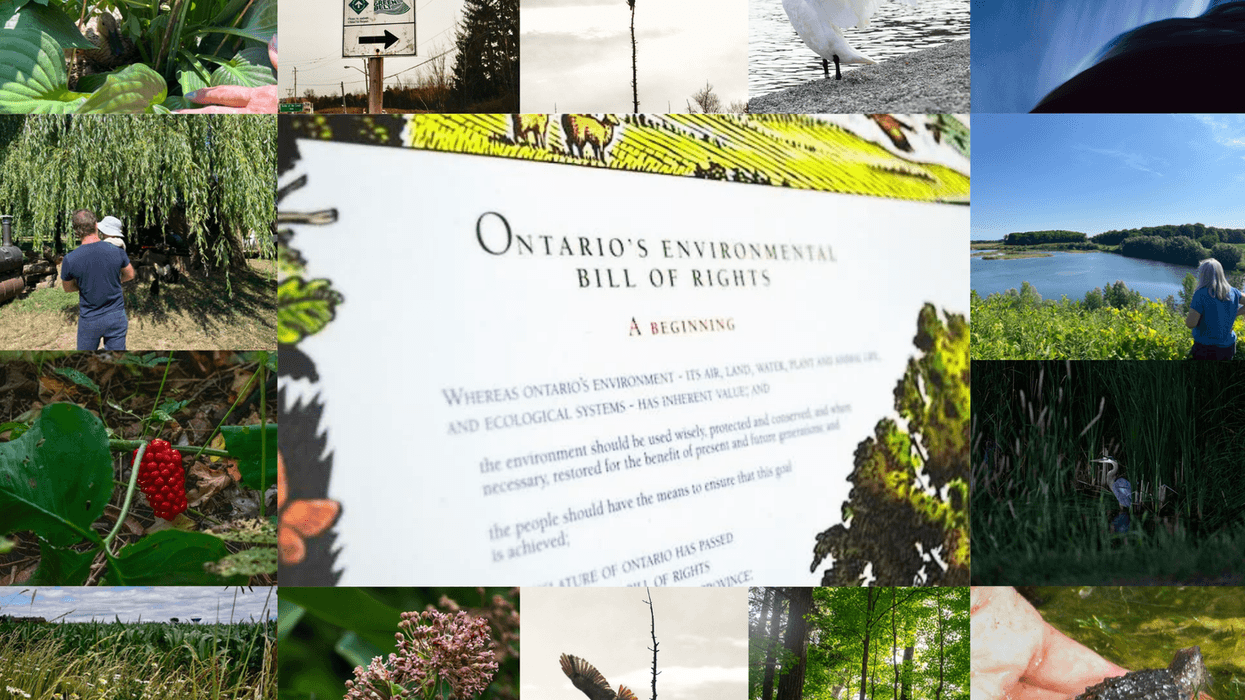
Bill 140’s sweeping changes target three pillars of Ontario’s environmental protection framework: the Environmental Assessment Act, the Environmental Protection Act and the Environmental Bill of Rights, the only piece of legislation to survive former Premier Mike Hariss’ Common Sense Revolution.
Blended with that litany of changes, the province is also planning to experiment with a “shot clock” mechanism that would automatically approve certain environmental permits if the government fails to make a decision within a prescribed timeframe. Notably, the deadlines could be paused when applications are deemed incomplete.
“The legislation would make it easier to build new landfill capacity here in Ontario, recognize energy from waste as a core part of our waste management system, and modernize how environmental decisions are made for the first time in more than three decades,” environment minister Todd McCarthy said, pointing to the urgency given the U.S. President Donald Trump administration’s 50 percent tariff on transport trucks hauling garbage and waste products from Canada into Michigan, effective October 30.
Schedule 7 of Bill 140 proposes repealing “section 17.5” of the Environmental Assessment Act that requires landfill developers to obtain written “support” from the host municipality before proceeding with a comprehensive environmental assessment.
The policy was introduced by the Ford government in 2020 through Bill 197 to give municipalities a say over projects that could have lasting consequences for their communities including large landfill proposals.
The following year, the ‘right to say no’ provisions helped bring the proposal to turn a worked-out section of the Carmeuse Lime quarry in the Township of Zorra into a landfill capable of holding up to 17 million tonnes of waste in Oxford County to an end after more than eight years of opposition from residents and neighbouring municipalities.
When asked whether the province would force a landfill on a municipality that did not want one, McCarthy said the government would “always prefer a host community that’s willing”.
“Anyone who thinks that the old ways of doing things can just go on, that the garbage is going to disappear into outer space, it will not,” he said while promoting burning more waste through projects such as Brampton’s proposed Emerald Energy Waste expansion and creating more landfills.
He stopped short of ruling out imposing a project, instead emphasizing the need for conversations with municipalities, public education and the “local economic benefits” of hosting a landfill and an energy-to-waste facility, including jobs and long-term employment — conveniently failing to mention air pollutants such as dioxins, furans and particulate matter, greenhouse gas emissions, the potential health risks and operating costs associated with waste-to-energy facilities.
The Pointer asked Environmental Defence Senior Program Manager for Plastics, Karen Wirsig, whether Bill 140’s proposed changes could affect the Emerald Energy from Waste expansion application, which could increase the facility’s capacity from 180,000–200,000 tonnes of residual waste a year to as much as 900,000 tonnes—the largest in Canada.
“It’s not clear whether or how the proposed legislative changes would affect the Emerald expansion project in Brampton since they already had the go-ahead to apply for a permit and the guidelines used to assess those permit applications are out of date,” Wirsig said.
“It’s difficult to understand how they could make this process even easier for Emerald than it already was.
On April 28, 2025, MECP rejected calls for a full environmental assessment of the incinerator expansion despite Region of Peel’s health and environmental concerns. The province said stating those concerns ranging from air and water pollution to socio-economic and ecological effects had been sufficiently addressed through technical studies as part of Ontario’s Environmental Screening Process. The application was approved merely nine days after the PCs introduced Bill 5 that allowed them to exempt massive infrastructure projects from existing provincial and municipal laws.
“This is more of a political problem than a technical one,” Wirsig added.
“People in Brampton and Peel are starting to understand that the government is setting them up as a sacrifice zone needed due to the province’s failure to implement and enforce policy intended to reduce the amount of waste going for disposal.”
However, for Ontario Nature Conservation Policy and Campaigns Director, Tony Morris, the “most concerning and significant” amendments under Bill 140 are the “anti-democratic” changes being made to the Environmental Bill of Rights (EBR) — removing requirements for ministries to explain how they consider environmental concerns in their decision-making.
The bill would also eliminate third-party appeals of environmental approvals under the Environmental Protection Act and the Ontario Water Resources Act, giving only proponents the right to appeal those decisions — not Ontarians.
Schedule 9 would also, specifically, withdraw the public’s right to appeal renewable energy approvals under the Environmental Protection Act that has allowed Ontario residents to challenge permits for wind and solar projects before the Ontario Land Tribunal.
In 2013, the tribunal revoked an approval permit issued by the Ministry of Natural Resources for a proposed wind farm at Ostrander Point in Prince Edward County after finding it would cause “serious and irreversible harm” to the at-risk Blanding’s turtles species.
“It is unclear how, in any way, these requirements are red tape,” Morris told The Pointer.
“Really, it’s about avoiding accountability and democratic transparency; the EBR has nothing to do with speeding up projects.”
Ontario’s Environmental Bill of Rights was enacted in 1993 to provide the public rights to participate in environmental decision-making, giving them the ability to comment on environmentally significant government proposals, request reviews or investigations, appeal ministry decisions and take legal action over harm to public resources—most of which is on the chopping block and will hit Ontarians before the province’s economy can supposedly show signs of relief.
Richard Lindgren, a staff lawyer at the Canadian Environmental Law Association (CELA), also says Bill 140 “eviscerates the Environmental Bill of Rights”.
“The EBR is one of our bedrock environmental laws here in Ontario,” he told The Pointer.
“But Bill 140 proposes to basically repeal all of [EBR’s] important tools and really diminish the ability of members of Ontario communities to protect themselves and to protect their environment…the net result of these changes, if they’re implemented, will likely be more pollution, more environmental contamination throughout the province.”
Lindgren was among the government and industry lawyers selected to serve on the Environment Minister’s multi-stakeholder task force, responsible for drafting the legislation in the early 1990s after “nearly two decades” of advocacy.
“The discussions between the EBR task force members were difficult at times,” he said.
After roughly 18 months of negotiations, the committee reached a consensus on the legislation, which was passed by the Ontario Legislature with all-party support.
“It was a hard fight,” he added.
And it didn’t take him long to put the legislation into practice. Lindgren recalled one of his early cases at CELA, in which he used the EBR’s “request for review”, which allows members of the public to ask their government to examine existing laws, policies or regulations (including the need for new ones) and require a response, to challenge an industrial facility’s permit allowing it to discharge lead into the local airshed.
“We filed a formal application for review, and we asked for the revocation of those permits that allowed lead to be discharged, and lo and behold, the ministry did revoke them,” he said.
“There are instances where the requests for review have really made a difference. But that’s something that Bill 140 will repeal forever if it’s enacted.”
Currently, under the EBR, when MECP proposes issuing approvals for projects such as landfills, wastewater facilities or water-taking permits, it must post notice on the Environmental Registry of Ontario (ERO) to provide residents a fair opportunity to submit comments, concerns and technical evidence.
If residents believe a ministry approval could cause environmental harm, they can also appeal the decision to the Ontario Land Tribunal (OLT), an independent body that can uphold, amend or revoke a permit.
In 2025, CELA represented Grassy Narrows First Nation in a legal challenge against a one-year water-taking permit the province issued to Great Bear Resources, a subsidiary of Kinross Gold, for the construction phase of its advanced exploration project in northwestern Ontario.
Grassy Narrows submitted comments and expert evidence through the Environmental Registry process, detailing concerns about huge gaps in the company’s environmental studies and the potential impact of water-taking and sulphate releases on an already mercury-contaminated watershed.
The Ontario Land Tribunal granted them leave to appeal after CELA applied EBR; the tribunal noted there was an arguable case that MECP had not adequately considered the ecosystem’s water needs, the risk of methylmercury formation and the cumulative effects of further contamination on the community. The permit was revoked with consent of all parties.
Schedule 8 of the bill “repeals Parts IV to VI of the Act, including provisions respecting applications for review, applications for investigation and environmental protection actions.”
“Part IV” allowed Ontarians to formally request a prescribed ministry review existing environmental policies, acts, regulations, or instruments or evaluate the need to create new ones.
“Part V” granted residents the right to formally apply for an investigation into an alleged violation of a prescribed environmental law, regulation, or approval.
“Part VI” established the right for citizens to bring a civil action in court for harm done to a public resource, providing a legal mechanism to protect the environment when the government fails to act. Morris suspects this move is to “shield” the government from any litigation as it faces multiple lawsuits on the undemocratic nature of Bill 5 and its climate plan.
All gone.
“For more than 30 years, Ontario’s Environmental Bill of Rights has provided rights to people across the province to hold the government accountable for decisions that could impact their environment and communities and to ensure that regulators serve the public interest, not corporate interests,” Ecojustice lawyer Ian Miron said while calling on the province to “retract” the legislation.
Ontario Green Party Leader Mike Schreiner believes Bill 140 further weakens the EBR, continuing years of the PC government’s efforts to “avoid accountability and fast-track destructive projects”.
On December 2, 2025, Auditor General Shelley Spence outlined in her report a troubling but not surprising pattern of the Ford government, “consistent with past reports”, repeatedly making decisions before finishing consultations, offering little support to help the public understand or participate in environmental processes despite the EBR requiring the province to notify Ontarians of environmentally significant decisions, consider their feedback, and, when warranted, launch investigations.
Spence highlighted that since taking office, the PCs have “been taking actions that had rarely or never been taken” since the EBR was first introduced.
Widespread shortcomings in how ministries apply the Statement of Environmental Values (SEVs), a key component of the EBR requiring environmental considerations in every decision, were also identified in the damning report.
Many ministries failed to “adequately document or demonstrate” how their SEVs influenced decision-making, and some could not provide any evidence that SEVs were reviewed at all when approving environmentally significant actions.
Several ministries have also not updated their SEVs to reflect current mandates and priorities, including the environment ministry (last updated 2008), the energy and mining ministry (last updated 2019, pre-merger) and the municipal affairs ministry (last updated 2020).
In cases where SEVs were in place, compliance remained inconsistent: In the 2024-25 audit, 23 percent of sampled decisions lacked documentation showing SEV consideration.
In 14 percent of cases from the energy and mines minister Stephen Lecce’s ministry, the documentation did not show that all applicable SEV principles were applied.
All four ministries mentioned each had at least one decision where proof of SEV consideration could not be provided, mirroring similar findings from previous years despite internal guidance requiring ministries to review and document SEVs before approving environmentally significant actions.
Despite the shortcomings, Ontarians had requested six reviews and investigations, prompting MECP to take action in some cases and use the legislation to challenge four environmentally significant permits and approvals that they otherwise would have had no right to contest.
The report found not only did the Ministry of the Environment, Conservation and Parks (MECP) fail to educate Ontarians about the EBR, but two of the major infrastructure projects were exempted entirely from EBR consultation, including the Ontario Place Redevelopment Project in June 2025 and Highway 413 in November 2024, despite both projects having a “huge environmental impact”.
Less than a year after, not only did the PC government cherry-pick another project — Highway 69 — from the standard environmental assessment process, but it also targetted provisions flagged in both the 2019 and 2025 Auditor General’s reports as areas of concern, namely the requirement for ministries to maintain Statements of Environmental Values by repealing “sections 7 to 11” of the EBR under Bill 140.
For Chris Winter, who recently retired from the provincial public service after eight years and “was a strong proponent of integrating environmental values at the early stage of policy development” rather than an afterthought.
Before joining the Ontario government in 2018, he had been closely examining whether ministries were living up to their environmental commitments.
In a 2001 report that he authored for the Conservation Council of Ontario, he reviewed the business plans of 14 ministries and found that most of the ministries’ SEVs had not been updated since 1994, and the requirement to consider them in decisions that could affect the environment was being given “lip service at best”.
“The government excels at zoning undeveloped areas as “protected natural areas”, but that it has completely failed to address the fundamental conflicts between economic development and environmental protection,” the report noted.
Winter observed, “things are even worse now,” which should not equate to giving up but should provide “more reason” for the government to keep the SEVs and commit to meaningful public consultation.
However, the latter might be on shaky grounds as well when combined with the third-party appeal right being stripped away: “The Schedule also provides that the notice and comment requirements in sections 15 and 16 of the Act do not apply to certain proposals that are subject to the Modernizing Ontario for People and Businesses Act, 2020 if specified conditions are met,” Bill 140 states.
Sections 15 and 16 of the EBR generally require the government to post qualifying proposals for environmentally significant policies, Acts and regulations on the Environmental Registry and give the public at least 30 days to comment, subject to certain exceptions.
The province says the change is intended to avoid duplicating notices on ERO and the Ontario Regulatory Registry (ORR), where some government proposals are already posted for public input; and the public would still be able to comment through the ORR and other available processes.
Lindgren isn’t convinced that posting on both platforms is an “unnecessary duplication”.
“It is a way to provide the same message to different audiences through different mechanisms,” he noted.
“I would certainly support retaining the ability or the requirement to put environmentally significant changes in the law or regulations or policies on the environmental registry.
“That’s where people go to look to find out what’s happening on the environmental front.”
Furthermore, with SEVs and citizen suits eliminated, that helped “hold ministry feet to the fire”, while the public can still comment on the ORR, there will no longer be a commitment or a legal requirement to actually apply SEV factors.
“People can exercise the right to comment, but that’s about it,” he said.
“There’s no appeal if the ministry makes a bad decision. That’s why this is such a regressive move under Bill 140 to wholly strip people of their longstanding public rights under the EBR.”
In 2019, the province also dissolved the Environmental Commissioner of Ontario office, which reported annually “on the progress of activities in Ontario to reduce the use or make more efficient use of electricity, natural gas, propane, oil and transportation fuels”.
Some experts fear with the remaining EBR tools of the public registry and notice and comment provisions, those might further be eroded eventually.
Winter likened the EBR’s gradual erosion to a house’s foundation. The province has been “chipping away” the values and checks and balances, “in small increments so no one will react to it.”
“[Until], we’re left with a very weak, unstable government that is not responsive to the environmental needs or the social needs of the province,” he said.
The PC government has already repeatedly been accused of failing to meaningfully consider feedback from residents and experts alike on the ERO as it is.
During Bill 5 consultations, experts noted that, even though Indigenous communities had provided extensive feedback on the draft regulations — calling for a public registry of proposed and designated projects, an appeal process, stronger support for Indigenous business participation, and restrictions on designating areas of environmental or cultural significance, or those subject to active land claims, as development zones — the final legislation did not appropriately address either. Nowhere in the legislation did the province include an explicit requirement for free, prior and informed consent from Indigenous communities, a principle recognized under the United Nations Declaration on the Rights of Indigenous Peoples (UNDRIP), which Canada signed in 2016.
Morris sees Bill 140 as an extension of Bill 5 and part of a “pattern”, reflected in legislation such as Bills 17, 23, 46, 212 and many more, in which environmental protections are increasingly framed as “red tape” standing in the way of development.
NDP Member of Provincial Parliament (MPP) Peter Tabuns, Critic for the Environment, Conservation and Parks, said it is “reasonable” to be “very worried” that the erosion of EBR just months after changes to freedom of information rules could dramatically weaken the public’s ability to scrutinize government decisions and make it easier for the government to “facilitate the success of a corrupt project”, possibly paving the way for another Greenbelt-style scandal.
Winter says Ontario residents need to be clear-eyed about what the goal is.
“When the primary motive is profit and power, the government will seek to remove barriers and the laws and regulations that are a check on bad development.”
Email: anushka.yadav@thepointer.com
At a time when vital public information is needed by everyone, The Pointer has taken down our paywall on all stories to ensure every resident of Brampton, Mississauga and Niagara has access to the facts. For those who are able, we encourage you to consider a subscription. This will help us report on important public interest issues the community needs to know about now more than ever. You can register for a 30-day free trial HERE. Thereafter, The Pointer will charge $10 a month and you can cancel any time right on the website. Thank you
Copyright 2026, The Pointer. All rights reserved.
Anushka Yadav, Local Journalism Initiative Reporter, The Pointer.