Trump just launched a trade investigation into Canada and it could lead to even more tariffs
They're looking for "unreasonable or discriminatory" trading practices.
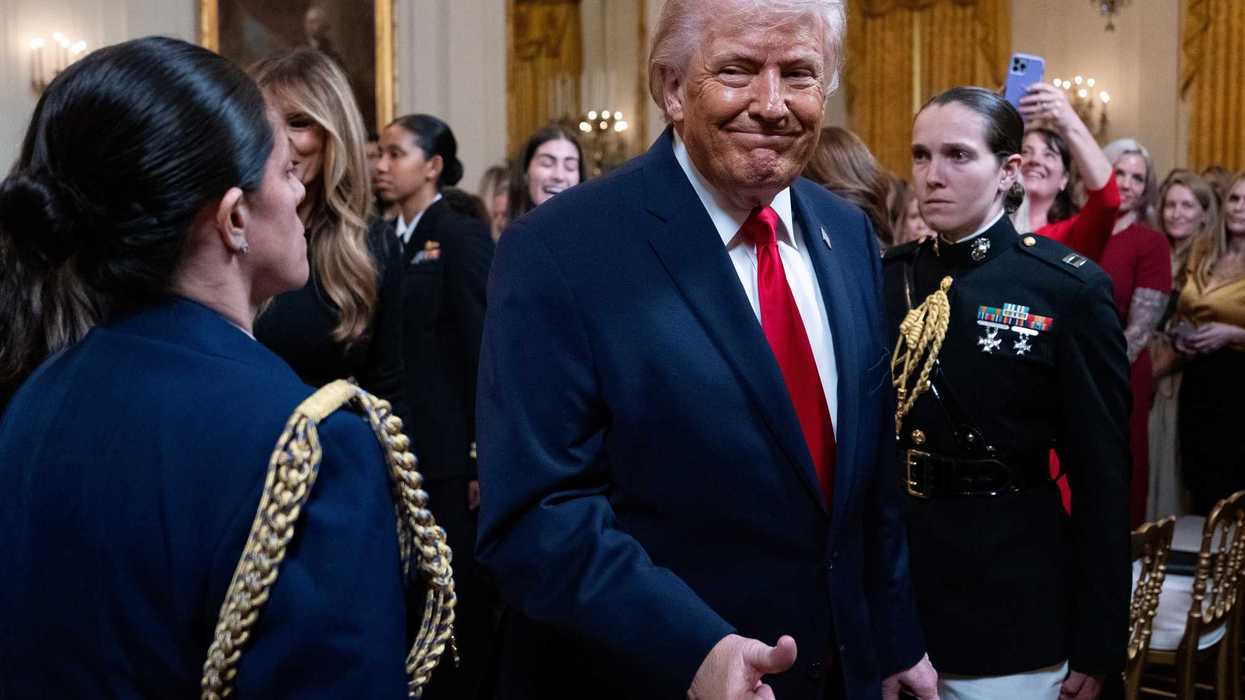
President Donald Trump leaves a women's history month event in the East Room of the White House on Thursday, March 12, 2026.
The Trump administration has expanded its trade investigations to 60 countries, including Canada, in an effort to shore up the president's tariff policies.
"We are trying to move very quickly," United States Trade Representative Jamieson Greer told CNBC Friday. "We are trying to move in a matter of months."
IN CASE YOU MISSED IT:
• Trump's trade rep says Canada will have to accept higher tariffs & send back US jobs
• More than 20 US states are suing the Trump administration over its latest round of tariffs
Greer's office announced Wednesday that it was launching investigations of the European Union and a handful of other countries under Section 301 of the Trade Act of 1974.
A Thursday evening news release from the office expanded the list of countries targeted by the investigations. It says the department will look at whether the countries named have policies or practices that "are unreasonable or discriminatory and burden or restrict U.S. commerce."
Last month, the U.S. Supreme Court struck down President Donald Trump's favourite tariff tool, which he used for his "Liberation Day" tariffs and fentanyl-related duties on Canada, Mexico and China.
In response to the top court's ruling, Trump implemented a 10 per cent worldwide tariff using Section 122 of the 1974 Trade Act. Those tariffs do not apply to goods compliant with the Canada-U.S.-Mexico Agreement on trade.
Section 122 tariffs can only increase to 15 per cent and expire after 150 days unless Congress votes to extend them. An extension would be unlikely to get the approval of Congress.
Canada is also being hammered by Trump's separate Section 232 tariffs on specific industries, including steel, aluminum, automobiles and cabinetry.
Trump is hoping to implement longer-term tariffs through Section 301 investigations but the process does require public consultations and reports.
Greer said that "if we find that countries have been involved in unfair trading practices" — such as subsidies, excess capacity or forced labour — "we can quantify that harm to U.S. commerce and then try to resolve that issue with that country."
If the country doesn't resolve the issue, Greer said, the Trump administration will impose tariffs.
It's not immediately clear what the 301 investigation of Canada could cover. There are long-standing irritants in the Canada-United States trading relationship and Trump has complained repeatedly about Canada's dairy supply management system.
The 301 investigations are launching as Canada, Mexico and the U.S. prepare for a mandatory review of the Canada-U.S.-Mexico Agreement on trade, better known as CUSMA.
Trump has cast doubt on his commitment to the trade pact, which was negotiated during his first term. He has called it "irrelevant" and has said it may have served its purpose.
The U.S. has officially launched negotiations on the CUSMA review with Mexico, which is also subject to a 301 investigation. Ottawa and Washington have not announced a similar move.
While Greer has claimed often that Canada has barriers that make it difficult to negotiate — he has cited provincial bans on sales of U.S. alcohol — he met with Canada's new trade team in Washington last week.
Canada's chief trade negotiator Janice Charette and newly appointed Ambassador to the United States Mark Wiseman were joined by Canada-U.S. Trade Minister Dominic LeBlanc in the meeting.
This report by The Canadian Press was first published March 13, 2026.