U.S. won’t drop digital issues in trade talks: former negotiator
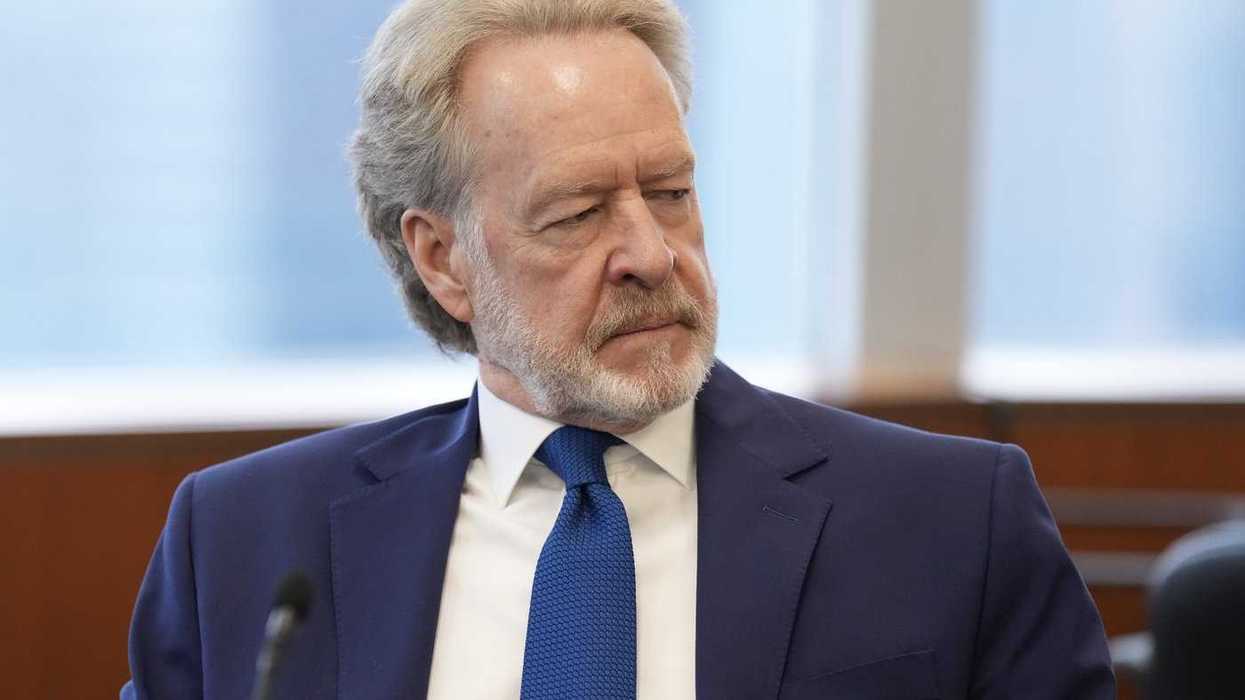
While digital issues will continue to be a source of trade tensions with the United States, Canada can gain strength if it teams up with other allies that have similar interests, Canada's former chief trade negotiator said Monday.
Steve Verheul said the United States won’t simply drop issues like the Online News Act and digital sovereignty that it has identified as trade irritants.
"They've listed them as fairly fundamental concerns that they have and tend to pursue," he said at the Canadian Chapter of the International Institute of Communications conference in Ottawa.
"The Online Streaming Act, the Online News Act, the sovereign cloud issue, control over data in Canada more broadly, that's where the real battleground going forward with the U.S. is going to be on these kinds of issues."
Verheul said the United States views policies targeting big tech companies as discriminatory. He said it’s difficult to design non-discriminatory policies because of how many of the largest digital companies are American.
Canada needs to work more closely with allies like the European Union to develop a more unified position on digital issues, he said.
Verheul said while Canada "needs to to maintain some level of independence on these issues," it also must work with other countries that have similar interests.
"And we need to find some ways to move forward," he added.
Eric Miller, president of the consulting group Rideau Potomac Strategy Group, spoke on a separate panel at the conference and gave the example of Netflix, which gets more than half of its revenue outside the U.S.
"If you begin to have policies which are unfavourable to large U.S. tech companies, it doesn't take too many markets like Canada and the European Union co-ordinating to see how this would have very detrimental effects to them," he said.
Prime Minister Mark Carney has been working on establishing closer links with Europe, and European Commission President Ursula von der Leyen has proposed Canada could become the first associate member of the European Union.
Canada will host an Canada-EU Summit in Montreal at the end of October, where the two sides are expected to announce the next steps in the deepening partnership.
Canada cut off the latest round of trade negotiations with the United States in August citing several reasons, including American demands related to rules about Canadian content on streaming platforms, also known as discoverability. The CRTC is in the process of implementing those rules under the Online Streaming Act.
It's not clear exactly which element of the Online Streaming Act is the source of the conflict. Canada-U.S. Trade Minister Dominic LeBlanc said in late August the United States had withdrawn its position on discoverability.
But U.S. Trade Representative Jamieson Greer has said the issue for the United States is streaming companies having to make financial contributions toward Canadian content — a proposal the Liberal government has backed away from.
Meredith Lilly, a professor at Carleton University's Norman Paterson School of International Affairs, took part in the panel with Miller. She said Canada and the United States are likely to come to an agreement.
"I think that there is a landing zone that both sides will be able to agree on, and I anticipate that that will be keeping mandatory payments off … and Canada is going to be able to keep the discoverability piece of that," she said.
The conference also heard that the cultural exemption Canada has under the current trade agreement allows the Americans to automatically retaliate if it is used.
Lilly said that means the United States could retaliate on things like cars or canola. "And so there is some potential that is going to pit parts of Canada against the cultural sector," she said.
She said while the United States might have tolerated the cultural exemption when Canada was using it to subsidize arts and culture, that might not be the case if it extends to demanding financial contributions from American companies for Canadian content.
"If we start trying to use it to extract capital from large American firms to subsidize the creation of Canadian content and they can't even use those subsidized funds, they are going to play hardball with us and it could be the end of the cultural exemption," Lilly said.
This report by The Canadian Press was first published Oct. 19, 2026.
By Anja Karadeglija | Copyright 2026, The Canadian Press. All rights reserved.