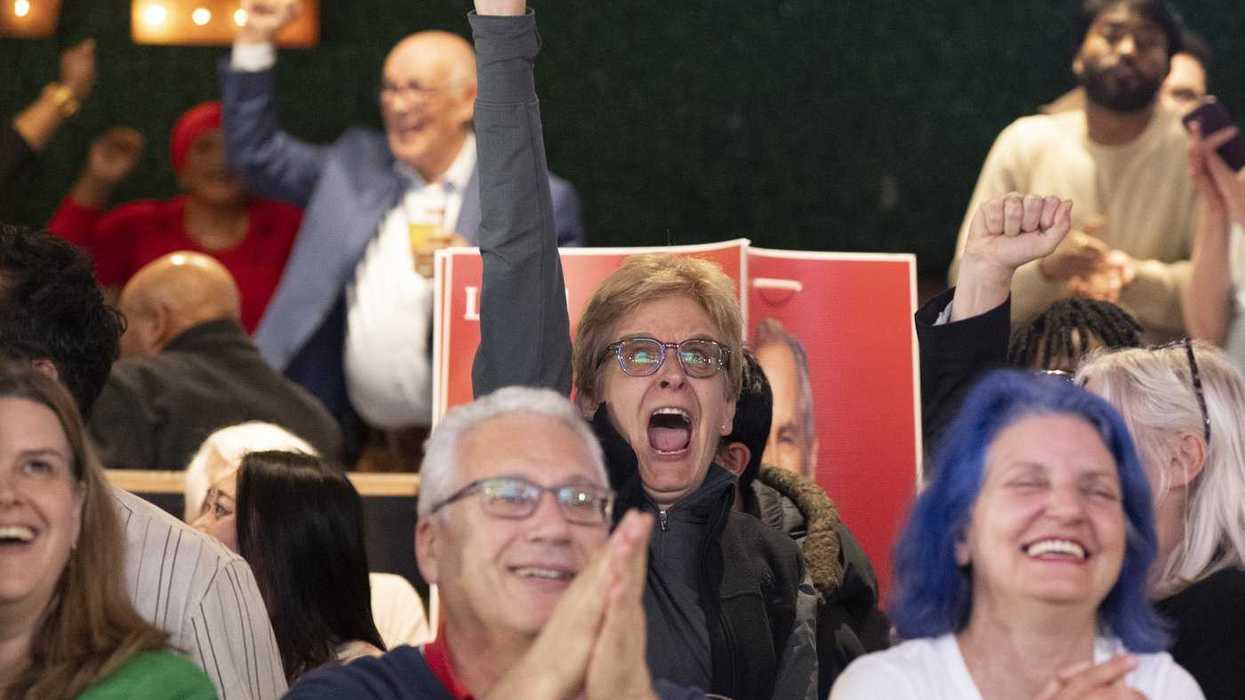
It took nearly a full year and a handful of byelections and defections for Prime Minister Mark Carney to assemble enough members of Parliament to turn his minority government into a slim majority — a feat that has never happened in Canadian politics before.
The Liberals won in three byelections Monday, giving them 174 seats in the House of Commons. Only 172 seats are needed to secure a majority.
That makes Carney's the first federal government in Canada's history to switch from a minority to a majority between elections.
"Tonight, voters have placed their trust in our new government's plan," Carney said in a statement on social media.
"We accept that support with humility, determination and a clear understanding of what this moment demands."
Two of the byelections in the Toronto area were Liberal strongholds recently vacated by former cabinet ministers. The third was a close race that produced a late-night result.
The party threw everything it had at the campaign in Terrebonne, a traditional Bloc Québécois stronghold.
Before last week's surprise announcement that a fifth opposition MP -- staunch Conservative Marilyn Gladu -- was joining the Liberals, Terrebonne was seen as the final piece in the puzzle that would allow Carney's government to actually control the House of Commons.
The suburban riding near Montreal saw a rematch between Liberal Tatiana Auguste and Bloc Québécois candidate Nathalie Sinclair-Desgagné, a year after it produced the closest result in the country in the last federal election.
After a judicial recount of the results from last April, Auguste won by a single vote. Sinclair-Desgagné challenged the loss all the way to the Supreme Court of Canada, which invalidated the results because of a clerical error on the return address for some mail-in ballots.
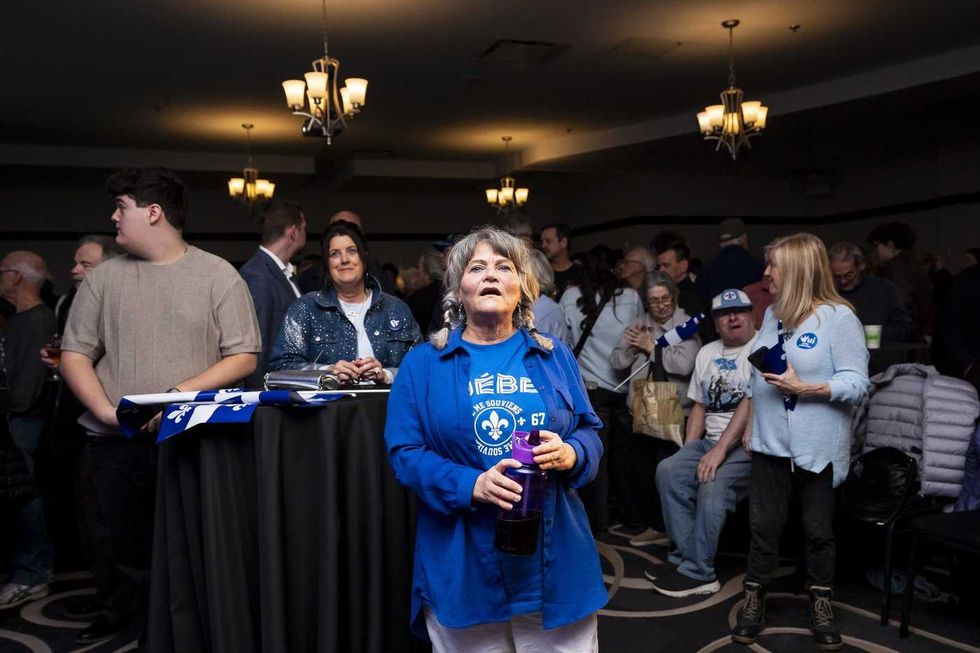 Supporters for Bloc Québécois federal candidate Nathalie Sinclair-Desgagne watch as the results come in at a byelection party in Terrebonne, Que., on Monday, April 13, 2026.THE CANADIAN PRESS/Christopher Katsarov
The Liberals dispatched their entire Quebec caucus and Carney himself to the riding to bolster support for Auguste.
In a short speech in French to her supporters, Auguste said it had been a long year and pledged to work for her constituents.
Sinclair-Desgagné, who represented the riding for the Bloc between 2021 and 2025, congratulated her opponents late Monday, especially for the abundance of resources they had for their campaign.
She said her campaign would have needed a platform three times the size, a parade of cabinet ministers and a party convention at Terrebonne's front door to compete with what the Liberals brought.
"And despite all that, they beat us by just a few hundred votes," she said in French.
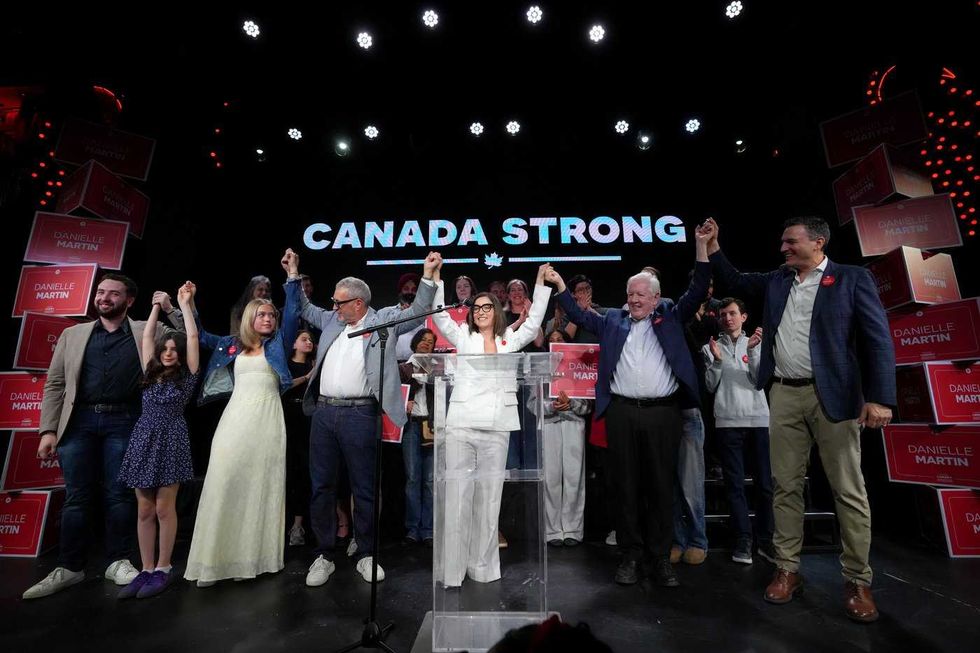 Liberal candidate Danielle Martin celebrates winning the byelection for the riding of University—Rosedale in Toronto, Monday, April 13, 2026.THE CANADIAN PRESS/Chris Young
In Toronto, Danielle Martin took the stage to celebrate her victory in University—Rosedale, a riding previously held by former cabinet minister Chrystia Freeland before she left politics.
"As of tonight, Mark Carney and our entire incredible Liberal team have earned an even more powerful mandate to continue building a better Canada," Martin said.
"This is not a mandate to be quiet. It is not a mandate to take our time. It is a mandate to get to work."
Doly Begum won in nearby Scarborough Southwest, the seat left vacant when former cabinet minister Bill Blair left politics to become Canada's high commissioner to the U.K.
In a speech to her supporters, Begum said the government has a responsibility to come together.
"We have to do the hard work of building. Building a country where opportunity is real, where dignity is protected and where every single person has a fair chance to succeed," she said in a speech to supporters on Monday.
Begum surprised many when she left her seat in Queen's Park as a member of the provincial NDP to run federally.
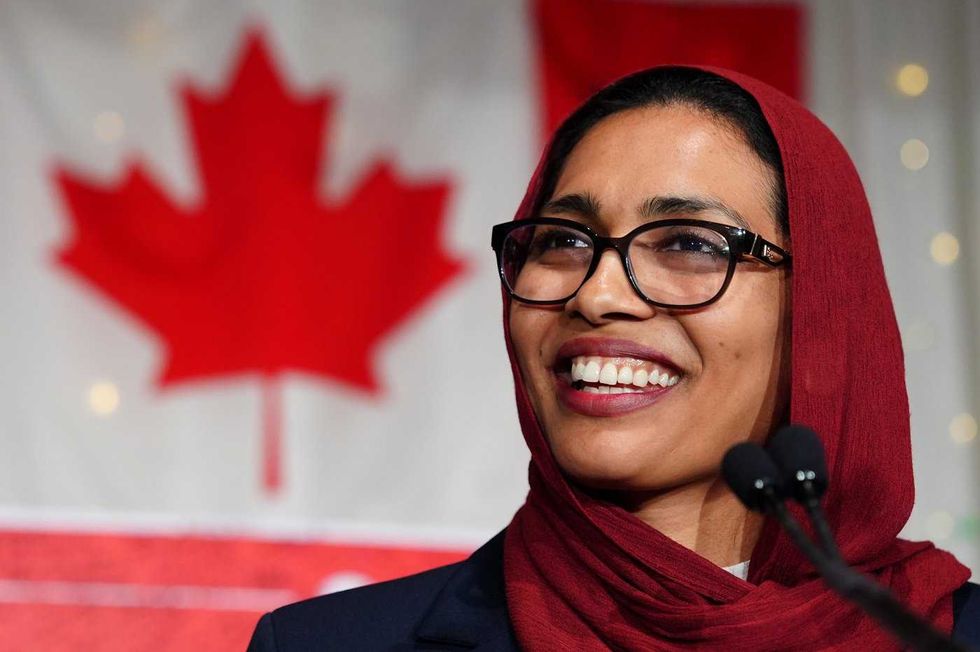 Liberal party candidate Doly Begum celebrates winning the byelection for the riding of Scarborough Southwest in Toronto on Monday, April 13, 2026.THE CANADIAN PRESS/Frank Gunn
She also represents the growing Liberal tent that Carney has been building for the better part of six months, as he courted five opposition MPs to join the governing party — four from the Conservative benches and one from the federal New Democrats.
Three more Liberal MPs will be officially sworn in and will take their seats in the House of Commons in the next few weeks.
That means the government will soon be able to pass legislation in the House of Commons without the support of another party, something the Liberals have not been able to do since 2019. They will also be able to control House committees.
Conservative Leader Pierre Poilievre accused Carney of spending a year on "a cynical power grab."
"The Carney Liberals did not win a majority government through a general election or today's byelections. Instead, it was won through backroom deals with politicians who betrayed the people who voted for them," he said in a post on X.
Elections Canada's count was slowed in Terrebonne by the fact that dozens of candidates signed up as part of a "longest ballot" protest.
The agency decided to go with a modified ballot to avoid issues with printing and folding the overly long ballots — meaning voters had to write in the name of their preferred candidate. It's a measure Elections Canada has taken once before, in the byelection last August that saw Poilievre return to the House of Commons. In that race, more than 200 candidates were on the ballot.
This report by The Canadian Press was first published April 13, 2026.
— With files from Kyle Duggan and Catherine Morrison in Ottawa, Erika Morris and Morgan Lowrie in Terrebonne, Que., and Diana Mussina and Rianna Lim in Toronto
By Sarah Ritchie | Copyright 2026, The Canadian Press. All rights reserved.