$168M loan guarantee provided for First Nations' investment in LNG pipeline
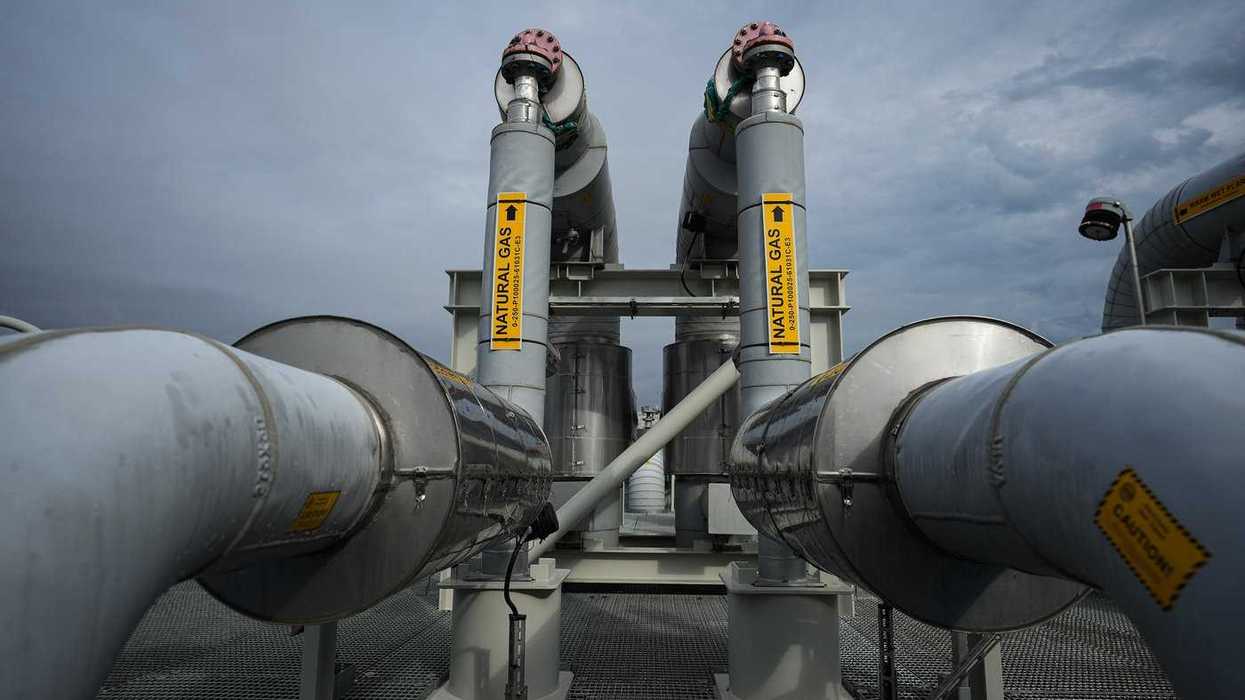
A dozen First Nations in British Columbia are being provided a roughly $168-million loan guarantee to support their investment in a pipeline that feeds natural gas to the LNG Canada plant.
It's the fifth transaction the federal Canada Indigenous Loan Guarantee Corp. has closed since the agency was set up in 2024, with the goal of helping make it more affordable for First Nations, Métis and Inuit communities to share in the economic benefits of major projects.
The 12 nations that make up the CGL First Nations Limited Partnership are investing in the entity that holds TC Energy's interest in the Coastal GasLink pipeline, which delivers gas from northeastern B.C. to the LNG Canada plant and tanker port Kitimat, B.C.
“This investment represents a historic milestone for our Nations and a new chapter in our relationship with Coastal GasLink," said Corrina Leween, director of the First Nations partnership, in a news release Thursday.
"It reflects years of work to advance Indigenous participation in major infrastructure projects and to create a stronger role for our nations in shaping the economic future of our territories."
The investment is the second planned Indigenous investment deal related to Coastal GasLink. In October, another group representing five First Nations announced it had invested $65.3 million of its own funds in TC's Coastal GasLink subsidiary.
For major projects to happen, the support of affected Indigenous communities is crucial, federal Natural Resources Minister Tim Hodgson said in an interview Thursday.
"As nations become more comfortable with projects, as they become more comfortable with different forms of participation, we'll see more and more equity ownership," he said.
"It's the ultimate form of ownership in a project because it means you have real participation and upside from the project."
TC chief executive François Poirier said in a news release that the deal reflects the strength of the relationships the company has developed along the pipeline corridor over more than a decade.
“This transaction demonstrates what is possible when Indigenous communities, industry and governments come together with a shared commitment to creating opportunities that deliver benefits over the long term," he said.
TC has given the green light to a project that would expand the capacity of Coastal GasLink to serve the second phase of LNG Canada. No new pipeline would be built, but the flow of gas would be increased through pumping power and other upgrades.
For the pipeline expansion, the LNG Canada partners — Shell Canada and four Asian firms — are taking the lead on construction, reducing the exposure to cost overrun and schedule risks for TC and its co-owners in the pipeline.
The initial construction of Coastal GasLink encountered numerous challenges, from blockades by opponents in Wet'suwet'en traditional territory in northern B.C. to disruptions from the COVID-19 pandemic. By the time it was complete in late 2023, the cost had ballooned to $14.5 billion from $6.6 billion five years earlier.
"Look how far we've come. We've come from a place where a project like this, there was no shared vision, to a place where the project is performing, it's generating revenues for the people of British Columbia, for the people of Canada, and now — really importantly — for the First Nations all along its route," Hodgson said.
Within B.C. First Nations, sentiment toward Coastal GasLink is divided.
A majority of Wet'suwet'en elected band councils supported the pipeline, while some traditional hereditary chiefs resisted it.
"We respect every Nation's right to self-determination, and the reality is this project destroyed our lands without our consent," Hereditary Chief Na'Moks said in an emailed statement after Thursday's announcement.
TC and the Indigenous groups hold a collective 35 per cent interest in Coastal GasLink, with KKR Co. and Alberta Investment Management Corp. owning the rest.
"TC Energy is further divesting from CGL, a project for which TC Energy’s estimates for the cost of construction doubled, and now the federal government is encouraging Indigenous finances to back it, tying those to the risk and uncertainty of the pipeline and LNG business," said Gwii Lok’im Gibuu, a member of the Gitxan First Nation and co-executive director of the Skeena Watershed Conservation Coalition.
This report by The Canadian Press was first published Nov. 26, 2026.
Companies in this story: (TSX:TRP)
By Lauren Krugel | Copyright 2026, The Canadian Press. All rights reserved.