Child-care advocates warn provincial funding changes could deepen space shortages
YORKTON, Sask. — Child-care advocates are warning that provincial funding changes introduced this summer could worsen already lengthy wait-lists and place additional financial strain on centres across Saskatchewan.
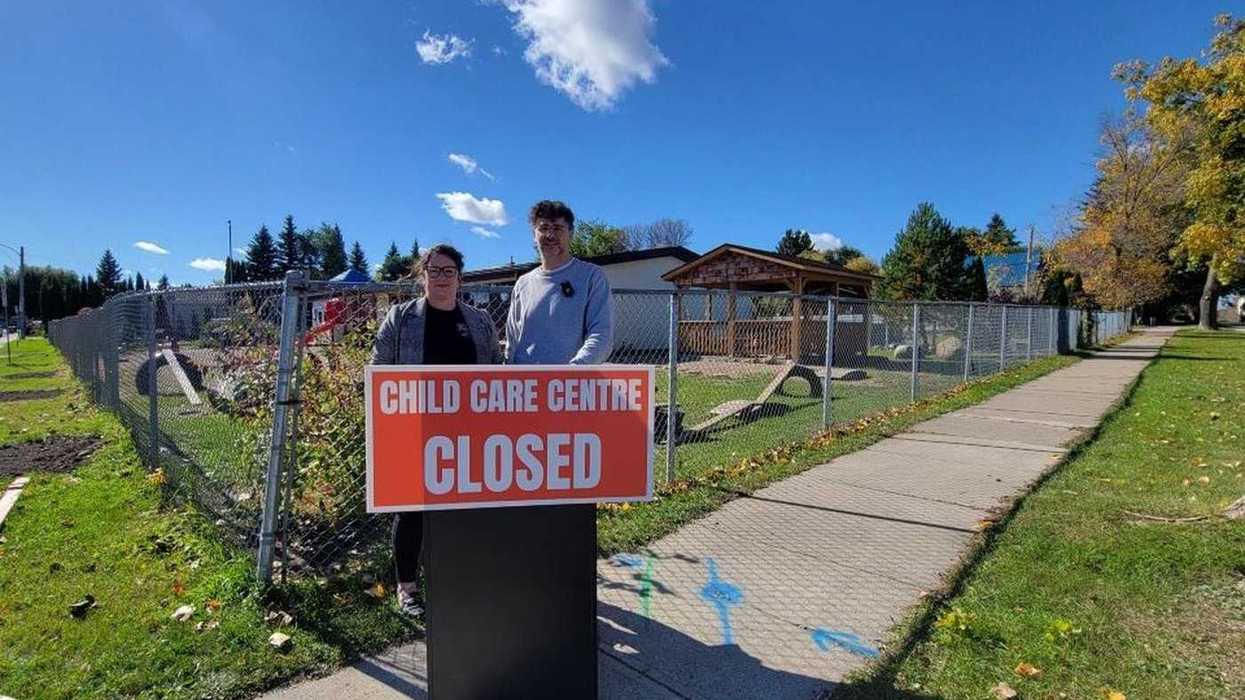
Representatives from Child Care Now Saskatchewan and CUPE Saskatchewan made the case Oct. 1 outside Accent on Kids Early Learning and Childcare Inc. in Yorkton, part of a provincewide campaign calling on the Saskatchewan government to reverse child-care funding changes announced July 1.
Cara Werner, chair of Child Care Now Saskatchewan, said families across the province continue to face significant challenges finding licensed child-care spaces.
“Wait lists remain long across the province, and in some communities, licensed spaces simply aren't available,” said Werner.
She said rising operating costs, including food, utilities and wages, are putting pressure on providers while funding levels have not kept pace with the true cost of care.
“Across Saskatchewan, providers are reporting deficits and being forced to spend more time to close budget gaps rather than supporting educators and families,” she said.
Werner argued the July 1 changes have added to those pressures, saying they include restrictions on funding, a halt to tuition-free training opportunities for early childhood educators, a rollback of child-care expansion plans and the possibility of new fees for families.
“What we're hearing from families, educators and providers is clear. They're worried about the future of child care in Saskatchewan,” she said.
The organization is calling on the provincial government to reverse the changes, review the funding model, ensure all children receiving care are funded and establish a provincial wage grid for child-care workers.
Werner said long wait-lists remain a problem in both urban and rural communities, noting some centres have waits exceeding a year.
“I can tell you from my experience we're looking at anywhere from a year to, well, a year plus in a lot of centres,” she said, adding one Regina facility reported a wait-list of about 1,500 children.
She said the growing popularity of the federal $10-a-day child-care program has increased demand for spaces, while providers continue to struggle with staffing shortages and securing adequate funding.
“The issue with that now is finding people that are qualified, that are trained, finding people that can open centres, and the government funding spaces properly so that they can actually afford to run and stay open,” Werner said.
CUPE Saskatchewan president Kent Peterson said the July 1 changes included a freeze on the creation of new child-care spaces, which he argued will make it more difficult to address existing shortages.
“You have these dual challenges of wait lists that were already in place, but at least being worked on in some way,” Peterson said. “The cuts this summer include a freeze on new child-care spaces. And so those wait lists are only going to grow and create more pressures for families and for the centres themselves.”
Peterson also pointed to changes affecting how centres can use part-time spaces, saying some operators previously relied on filling a single funded space with multiple part-time children throughout the week.
“The July 1 changes prevent that from happening now,” he said. “It impacts space availability for those folks that need those part-time spaces and it impacts centres like Accent on Kids, but other centres across the province that relied on that revenue.”
Peterson said CUPE and Child Care Now launched a series of town halls and news conferences to raise awareness about what they see as the potential consequences of the changes.
“This one is not closing,” Peterson said, referring to Accent on Kids. “We use this sign no matter where we're at because it's really meant to be a warning. We don't want to see these signs up. But I'm afraid if it keeps going on like this with these cuts not being reversed, you will see these signs up across the province.”
Werner said many centres are already operating with significant deficits and warned the current situation could have lasting impacts on families and communities.
“Child care is not a luxury,” she said. “It's essential to children, families, communities and the Saskatchewan economy.”
CUPE Saskatchewan and Child Care Now are hosting town halls around the province to discuss the future of Saskatchewan's child-care system and gather feedback from families, workers and providers.
The public town hall meeting in Yorkton will be held at 7 p.m. Oct. 1 at St. Andrew's United Church. The meeting will give families, workers and providers an opportunity to share their experiences and discuss ways to strengthen and protect child-care services in their communities.
Copyright 2026, SASKTODAY.ca. All rights reserved.
Andrea Moss, Local Journalism Initiative Reporter, SaskToday.ca.