6 Countries That Are Bringing Back Lockdowns & Restrictions As COVID Cases Surge
These countries are tightening up again as coronavirus cases spike.
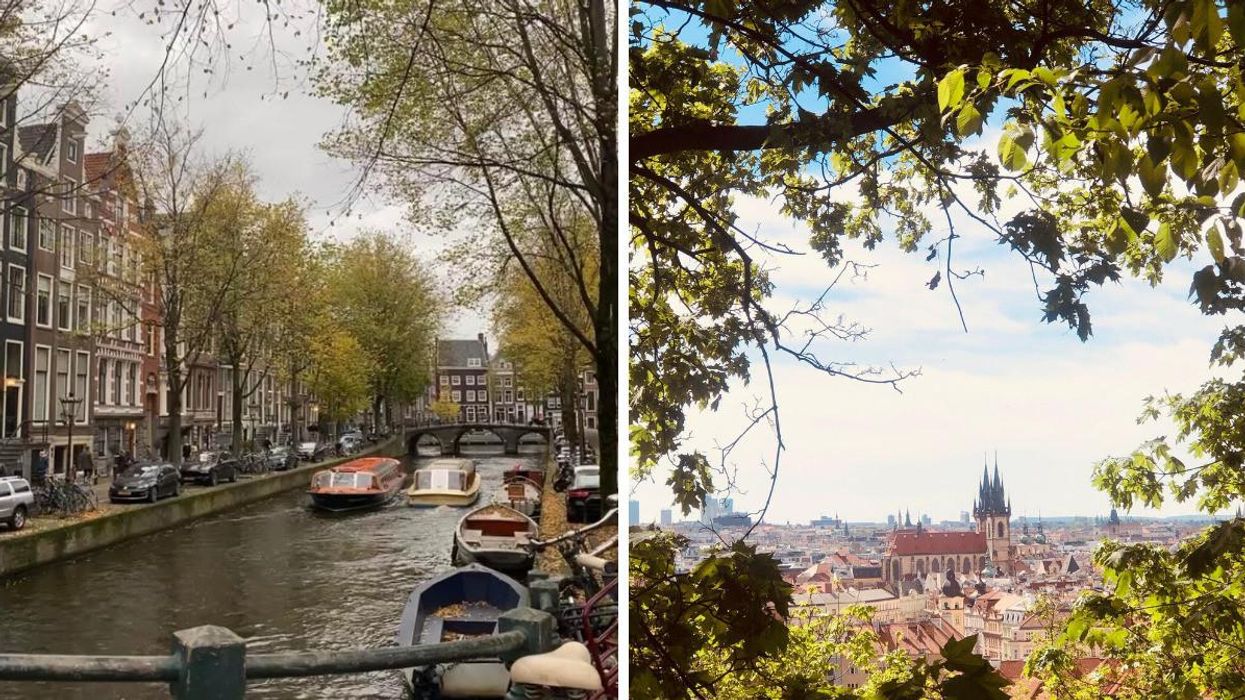
Planning on going skiing in the Austrian Alps? Hoping to finally check off seeing Dracula's castle from your bucket list?
All that might have to be put on hold as several European countries face a new surge of COVID-19 cases that are sending some nations back into lockdown.
These countries aren't necessarily turning travellers away, but you might have a hard time playing tourist under the restrictions, which are coming in ahead of the busy holiday travel season.
Here are six countries that are bringing back lockdowns and restrictions due to COVID-19.
Austria
Austria just went back into a complete lockdown due to its recent surge of COVID-19 cases, according to its official tourism site. The lockdown started on November 22 and will be reevaluated after 10 days, but if the situation doesn't sizzle down, it will be extended for another 10 days. That means it could be in force until December 13.
People are only allowed to leave their homes for grocery trips, doctor visits and daily exercise, and leisure tourists are not being allowed into the country.
Austria is the first Western European country to reintroduce a complete lockdown since vaccines became readily available.
It's also one of the first countries in the world to introduce a general vaccine mandate, under which people will be legally obligated to get vaccinated by February 1. Fewer than 66% of its 8.9 million people are fully vaccinated, according to Al Jazeera.
Netherlands
The Netherlands is also cracking down hard on the new surge of COVID-19 as it implements a partial lockdown.
Prime Minister Mark Rutte started a three-week partial lockdown on November 13, saying he wants to "deliver a hard blow to the virus," according to Al Jazeera.
This means that grocery stores, pharmacies, restaurants and bars will have to shut down at 8 p.m., retail and other non-essential stores will have to close by 6 p.m., people are encouraged to work from home and stadiums will be empty during professional sports games, according to the government's official rules.
Germany
Germany is tightening up like many of its neighbours due to COVID-19, but the rules vary from state to state.
Many German states are implementing restrictions for the unvaccinated that prevent them from attending events and going to bars, restaurants, clubs and museums. German states such as Saxony and Bavaria have cancelled Christmas markets, with Bavaria going as far as shutting down all clubs, bars and discos for three weeks, according to the government.
Czech Republic
Like Germany, the Czech Republic introduced new restrictions, but they only affect the unvaccinated community.
Whereas unvaccinated people used to be allowed to show a negative COVID-19 test in order to gain access to the same places as those who are vaccinated, this will no longer be the case under the new restriction, ABC News reports. This would limit unvaccinated people from entering bars, restaurants, public events, museums and other non-essential businesses.
The new rules were approved in the hopes that they would encourage more people to get vaccinated.
Slovakia
With only 45% of its population vaccinated, Slovakia has one of the EU's lowest vaccination rates, according to Euro News.
Prime Minister Eduard Heger announced "a lockdown for the unvaccinated" that began on Monday, per Reuters. These restrictions mean that only fully vaccinated people and those who have already recovered from COVID-19 in the past six months can enter restaurants, retail and non-essential stores, malls, public events and sports activities.
Romania
Romania currently stands at only 35% of its population being fully vaccinated, making it the second-least vaccinated country in the EU, Al Jazeera reports.
The country is not closed to visitors, according to Romania's tourism website.
Under restrictions introduced on October 25, only those who are fully vaccinated or have recently recovered from the disease can go to gyms, cinemas and shopping malls, or leave their homes for any non-essential reason between 10 p.m. and 5 a.m.
Before you get going, check out our Responsible Travel Guide so you can be informed, be safe, be smart, and most of all, be respectful on your adventure.