Hydro-Québec maintains plan to boost rates for data centres despite court ruling
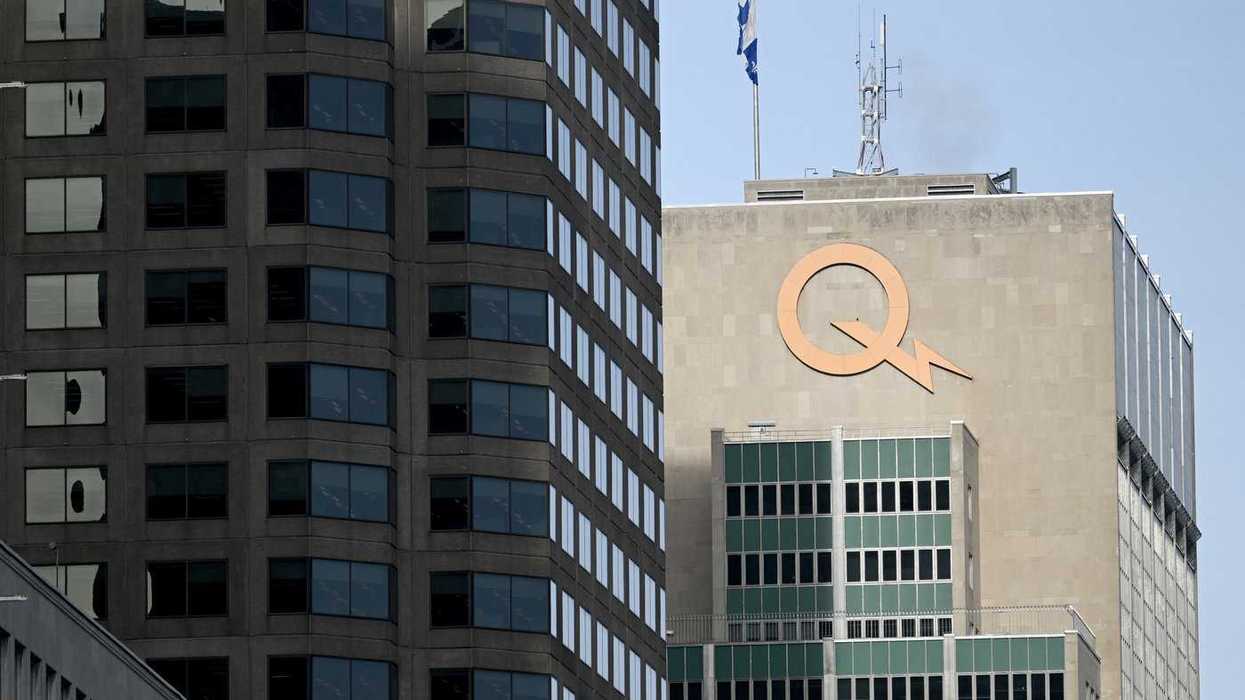
Hydro-Québec will continue seeking higher electricity rates for data centres and cryptocurrency miners despite a court decision striking down governmental decrees that supported the plan.
Hydro-Québec is asking the province’s energy regulator to approve a new rate averaging 13 cents per kilowatt hour for data centres requiring more than five megawatts of power, which is nearly double their current rate.
The utility is also asking to raise the rate for cryptocurrency mining projects to an average of 19.5 cents per kilowatt hour.
In early 2026, the provincial government published two decrees expressing support for both increases. The government previously amended a law on energy resources to allow the province to express economic, social and environmental concerns to the regulator, which must consider them in its decision.
But Quebec Superior Court Justice Élif Oral ruled on Monday that the government had overstepped with these two decrees.
While the government can express concerns to the regulator -- the Régie de l’énergie -- it can’t impose an outcome as it did by directly supporting Hydro-Québec’s proposal, the judge wrote in her decision.
"The interpretation of the word 'concern' as proposed by the (government and Hydro-Québec) is so broad that it distorts its ordinary, grammatical meaning," wrote Oral.
The provincial government’s justice department declined to comment on the decision and its energy department did not immediately respond.
The legal challenge was filed by Keel Infrastructure, HIVE Digital Technologies and Flumen Energy. The companies, which are data centre and/or cryptocurrency developers, have opposed the rate hike in front of the energy regulator. The law firm representing the companies declined to comment on the decision.
Hydro-Québec spokesperson Cendrix Bouchard said the utility acknowledges the court’s decision.
“Hydro-Québec remains convinced of the value of its rate proposal, which was developed with the goal of protecting all of its customers in Quebec,” Bouchard told The Canadian Press in a statement.
At the first part of the hearing on the proposed hikes in early October, analysts for the utility argued that increasing the rates would ensure the potential growth of the data centre industry would not lead to higher energy prices for other clients.
At the time, two consultants hired by Hydro-Québec said they expect the demand from data centres to more than double between 2024 and 2030 — mostly because of the growing AI industry.
One of the actors opposing the rate hikes is Google, which announced in 2021 its intention to build a $735-million data centre in Beauharnois, Que. Google did not respond to a request for comment on Monday’s decision.
Jocelyn Allard, president of the Association of Industrial Electricity Users of Quebec, praised the judge’s ruling. The association acted as a third-party speaker in the case.
“It was our pretension that these decrees went further than the powers given to the government.… (The decision) couldn’t have been clearer,” he said.
The energy regulator should act independently, he said, adding that the provincial government already has the power to accept and refuse projects requiring more than five megawatts of power or to strike special contracts with individualized rates.
Allard said he hopes the newly elected Parti Québecois government will take the opportunity to clarify its energy plan and reaffirm the energy regulator’s independence.
“The new government could adopt a true road map to let us know where we’re heading,” he said.
Energy analyst Jean-Pierre Finet said he was not surprised by the decision.
“It’s not the first questionable decree that the government adopted,” he said.
Finet represents environmental groups in energy cases, including the one on rate hikes for data centres and cryptocurrency miners.
He sees the decrees as an example of the “politicization” of energy rates.
“That, I’m completely allergic to. Just remove the energy regulator if you want to just decide rates however you see fit,” said Finet.
While it struck down the decrees, Oral’s ruling also dismissed the argument by the data centre and cryptocurrency companies that the government acted in bad faith and to harm their industry.
“The evidence demonstrates that the contested decrees are consistent with the ongoing efforts by the government of Quebec to address the tightening of the province’s energy balance,” she wrote.
In drawing this nuance, the judge validated concerns motivating the rate hikes, said Allard.
“These are not far-fetched considerations,” he said.
The energy regulator's hearings on the proposed rate hikes are set to continue in December, at which time industry actors will present their perspective on Hydro-Québec’s proposal.
This report by The Canadian Press was first published Oct. 29, 2026.
By Marieke Glorieux-Stryckman | Copyright 2026, The Canadian Press. All rights reserved.