Farmers stomach high diesel prices
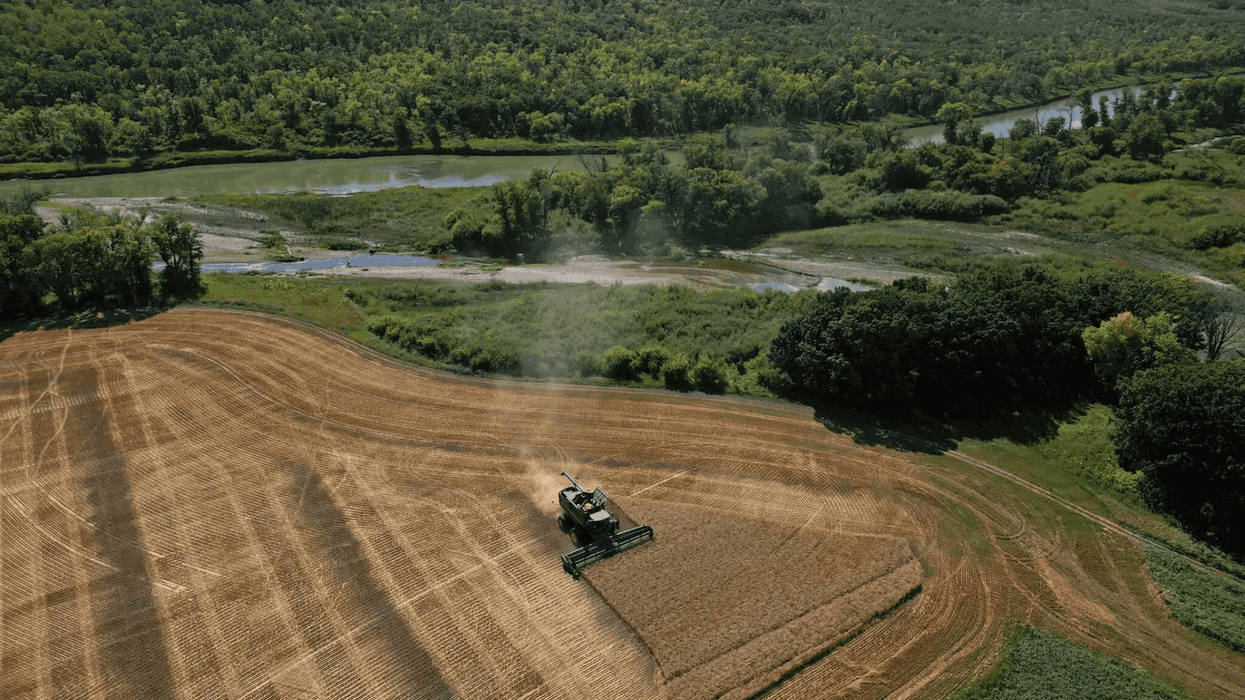
Rising diesel fuel costs have impacted how a Westman farmer is planning his work this autumn season.
The price of diesel in Canada was $2.60 per litre as of Sept. 30, according to Natural Resources Canada’s online tool for the daily average retail price for diesel. The price had increased from $1.52 in January.
Michael Decock, a Deleau-area cattle and hay farmer, said that the cost increase is dissuading him from going after some hay in rain-affected areas of his fields. The risk of getting stuck in the mud, and the extra maneuvering required to avoid wet ground, presents a problem, he said.
“Especially at the high prices, it’s not worth it to go back out there for hay that is mature,” Decock said in an interview last week. “Right now, the way the fields are, you got to do extra twisting and turning, because you got to go around water puddles and soft spots, and there’s bigger risks of getting stuck and burying equipment, and of course that burns more fuel if you get stuck because you have to go and pull it out.”
The farmer said he will work on other projects, including renovating a pasture and tilling the land, rather than go after the hay that was left in his field following harvest earlier this season. He farms roughly 800 acres of prairie hay and 350 acres of alfalfa, and has a herd of more than 200 cattle.
“We’ll be okay for feed anyways, we have enough carryover from years past.”
The price of diesel witnessed last week was up 59 per cent compared to right before the Iran war, according to Natural Resources Canada. Supply disruptions caused by the closure of the Strait of Hormuz have shrunk energy output for seven months and counting, with the critical waterway effectively closed and many crude refineries slashing production.
Decock said he paid $1.77 per litre in August, when he decided to stock up in anticipation of rising prices. The farmers stores up to 3,000 litres. The preparation has saved him money, he said, however he pointed out that just a year before he had paid much less, at $1.17 per litre.
The cost cannot be avoided or worked-around because diesel is instrumental to farm work, Decock said.
“Things still need to be done, so you just have to grin and bare it,” he said. “It’s expensive.”
Bruce Burrows, executive director at Grain Growers of Canada, said high diesel prices have arrived at the “worst possible time” for farmers because harvest season marks a particularly fuel-intensive period of the year.
He said earlier this month he’d like to see the federal government offer a “targeted and temporary” per-litre rebate on fuel to help ease some of the pain
Four weeks ago, Ottawa extended its suspension of the fuel excise tax, in place since April 20, through to Jan. 31. The relief measure saves drivers four cents per litre on diesel and 10 cents per litre on gasoline.
Diesel prices varied widely across Canada last week, with the weekly retail average ranging from $2.94 per litre in Gaspé, Que., to $2.47 per litre in Grande Prairie, Alta.
Jake Ayre, vice-president of Keystone Agricultural Producers, described in a recent interview that diesel is a “critical input” for farmers. He said farmers do not have much freedom to adjust and protect themselves from price shifts, but in most cases just bear the brunt of cost hikes.
“It’s not like we all can all the sudden switch our combines and tractors to run off electricity, there is not an instant alternative. It is unique in a sense that it is the only option,” Ayre said. “Increasing the cost of a critical input in agriculture really impacts the bottom line.”
KAP will be considering ways to lessen the impact on farmers, he said, responding to the higher cost of diesel this year. It was not yet clear what approach may be taken, but Ayre said that diesel prices are expected to be a big subject of consideration.
“I anticipate it’s definitely something that will be in the coming months,” he said. “There will be lots of discussion on this, ideas and looking at potential policy changes.”
Experts say elevated fuel costs translate into higher price tags on items ranging from food and clothing to construction materials for months to come, with diesel demand poised to go up even further as winter approaches.
Ayre, who farms near Minto, has said the farming season was already “challenging” this year, citing a dust storm, wet weather during harvest time, and flooding through the summer months among issues that impacted farmers’ businesses.
Westman region is among the most-impacted this year by wet weather, Ayre said, citing the Manitoba Crop Report. The report showed in its Sept. 29 edition that spring wheat, barley, oats, canola and silage corn were behind the average harvest completion in Manitoba.
» cmcdowell@brandonsun.com, Christopher Reynolds, with files from Lauren Krugel
Copyright 2026, Brandon Sun. All rights reserved.
Connor McDowell, Local Journalism Initiative Reporter, Brandon Sun.