Alberta Court of Appeal says Ottawa's Impact Assessment Act is still unconstitutional
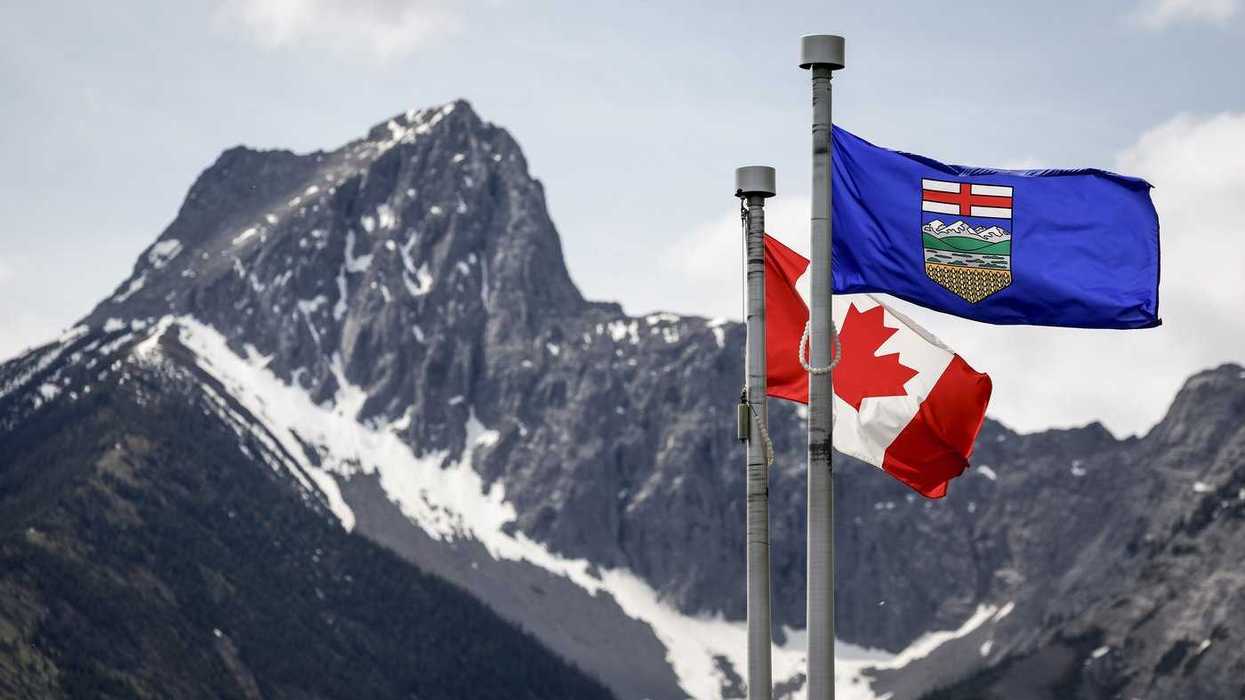
The Alberta Court of Appeal has ruled the federal government's Impact Assessment Act is still unconstitutional, following a second court challenge of the federal legislation.
The act was first passed by the Liberals under former prime minister Justin Trudeau to set out a process to review the environmental, economic, health and social effects of proposed projects like ports, mines and pipelines.
In a 4-1 decision issued Friday, the court said even though Ottawa modified the law after the Supreme Court struck down much of it in 2023, the new version still infringes on provincial jurisdiction.
The Court of Appeal found that, among other things, the act still gives Ottawa the power to stop a project in provincial jurisdiction if it has even the smallest impact on federal jurisdiction.
"While Parliament may have the power to create an impact assessment scheme that complements existing regulation in environmental matters, the (Impact Assessment Act) creates great uncertainty due to the potential for previously unpronounced standards to apply to designated projects," the court wrote.
"This merely exacerbates the concern that a federal assessment scheme might enable the federal government, on the pretext of some narrow ground of federal jurisdiction, to conduct a far-ranging inquiry into matters that are exclusively within provincial jurisdiction."
The court said while some of the changes Ottawa made to the previous version of the act weren't constitutionally problematic, the law still gave Ottawa overly broad powers in areas of provincial jurisdiction.
"The decision maker may regulate the project causing the impacts through imposition of conditions and followup programs, or indefinite prohibitions on entire projects and matters within provincial jurisdiction rather than confining oversight to federal effects caused by the project," the court wrote.
Ontario and Saskatchewan both backed Alberta's legal challenge.
The Impact Assessment Act, otherwise known as C-69, has been staunchly opposed by oil and gas industry players and critics such as federal Conservative Leader Pierre Poilievre. Former Alberta premier Jason Kenney dubbed it the “no more pipelines act.”
Friday's ruling comes as Ottawa and Alberta are partnering on a new oil pipeline to the West Coast.
Earlier this month, the Pacific Link pipeline project became the first to receive a national interest designation under Ottawa's new Building Canada Act.
And while the Building Canada Act gives Ottawa the power to skirt a dozen federal laws to help move hand-picked projects forward, critics like Poilievre have long called for the Impact Assessment Act to be repealed.
Through the newly tabled Bill C-39, Ottawa is trying to transfer the assessment process for pipeline and energy transmission projects from the Impact Assessment Agency of Canada to the Canada Energy Regulator.
The federal government has said it has been told by industry that the level of expertise on energy projects that existed at the Canada Energy Regulator couldn't be found at the Impact Assessment Agency.
Ottawa has said the Canada Energy Regulator will still be bound by the provisions of the Impact Assessment Act — which the Alberta Court of Appeal now says is unconstitutional — when carrying out its reviews.
In a statement, the office of federal Environment Minister Julie Dabrusin said the government is reviewing the decision and considering next steps.
”To position Canada for long-term prosperity in a rapidly changing global economy, the Government of Canada is moving forward to build at a pace not seen in decades. The (Impact Assessment Act) is fundamental to the advancement of this work,” wrote press secretary Amy Falkner.
”The (Court of Appeal) opinion does not change our commitment to engage all provinces in the spirit of co-operative federalism.”
This report by The Canadian Press was first published Oct. 9, 2026.
— With files from Lauren Krugel in Calgary.
By Nick Murray | Copyright 2026, The Canadian Press. All rights reserved.