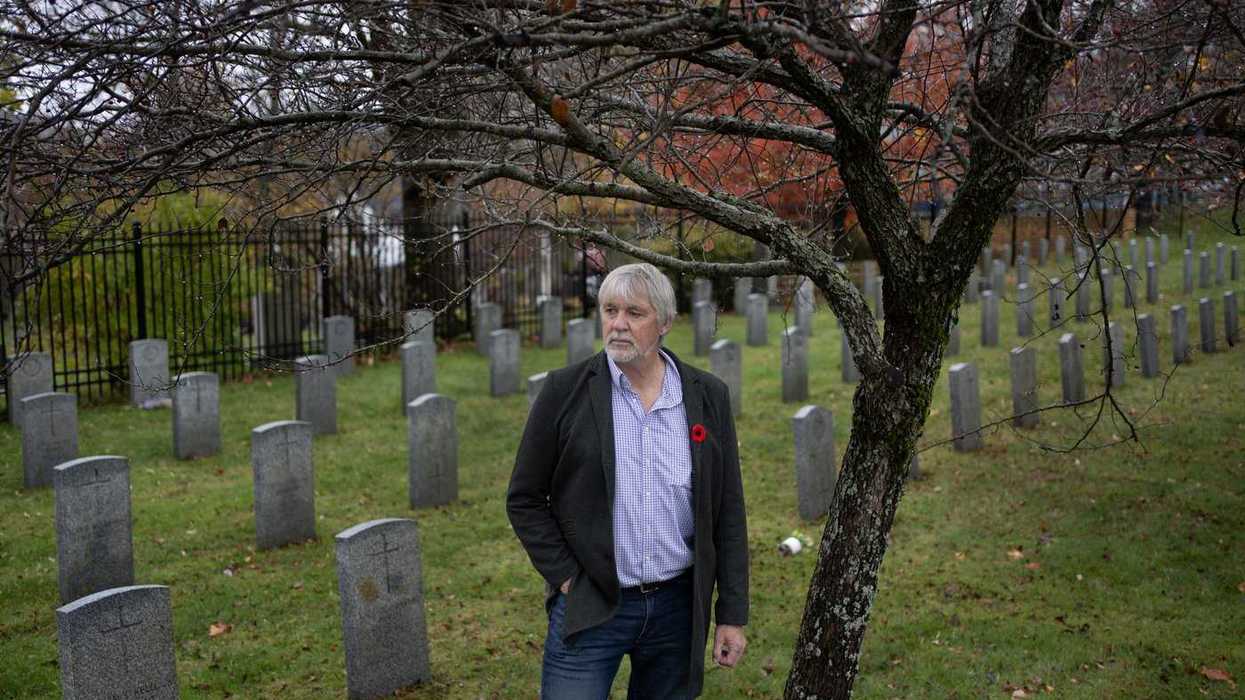
Nova Scotia author and photographer Len Wagg was on his day off 30 years ago when he discovered how powerful and poignant a war cemetery could be.
Wagg was on assignment for the Halifax Chronicle Herald in Italy when he accepted an invitation to visit the small Sicilian town of Agira.
A few hours later, he was walking through the Agira Canadian War Cemetery, an oasis of immaculately manicured lawns and pine trees, looking at row after row of headstones inscribed with the names of Canadians who served during the Second World War.
He wrote a story for the paper, and said the response to it stayed with him for years.
"I got calls from Nova Scotia and from the United States,” Wagg said in a recent interview at the Last Steps memorial in Halifax, where more than 350,000 First World War service members boarded ships to Europe, many never to return.
“People had said they knew their father had died overseas but they didn’t know where it was. And this picture of the headstone was the first time that they had seen where it was.”
For the past five years, Wagg has travelled across Canada and Europe photographing war graves, monuments and other sites for his new book, “At Home and Beyond: Honouring Canada’s War Dead.”
The book captures images of well-known sites such as Vimy Ridge, Juno Beach and the grave of poet John McCrae, who wrote “In Flanders Fields.” But it also tells the stories of the people who care for those monuments or make other contributions to honour Canada's war dead.
More than 110,000 Canadians are buried overseas at more than 5,800 sites. Another 27,000 have no known graves, having gone into battle and disappeared.
Wagg said he's not a historian, and didn’t want the book to focus only on war monuments. Instead, he focused on the people.
The book includes chapters dedicated to Canadian war nurses, the organizers behind relatively new memorials like the Last Steps, and the stories of individual soldiers like Pte. George Lawrence Price of Port Williams, N.S., the last Commonwealth soldier to die in the First World War. He was killed by a German sniper at 10:58 a.m. on Nov. 11, 1918 — two minutes before the armistice went into effect.
By coincidence, Price’s grave in Belgium is metres away from that of Pte. John Parr, a 17-year-old British soldier who became the first Commonwealth serviceman killed during the First World War, which had been declared less than a month earlier.
Wagg profiles Sarah Lockyer and her team at the Department of National Defence's casualty identification unit in Ottawa. The group of historians and anthropologists use various tools, including DNA analysis, to identify Canadians whose unmarked graves are still being found in Europe. Once identified, those service members are given full military funerals in France.
“One of the quotes from (Lockyer) was, ‘They gave their lives for the country. It’s the least we can do to give them back their names.’ And that was something I found very powerful,” said Wagg.
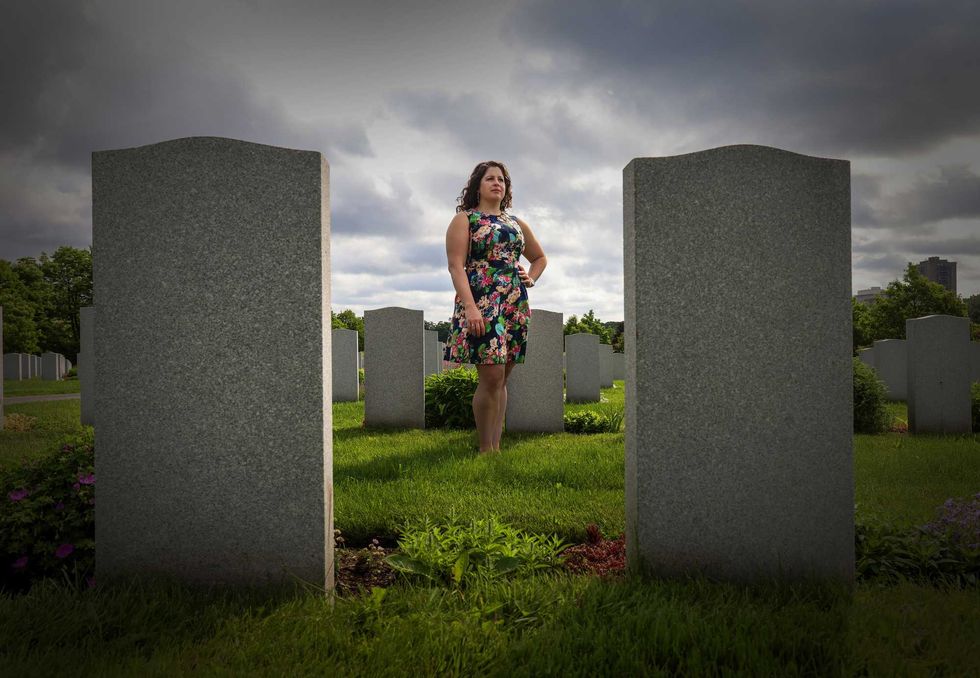 Sarah Lockyer, casualty identification co-ordinator with the Department of National Defence, is seen in this handout photo at the National Military Cemetery in Ottawa on June 10, 2025.THE CANADIAN PRESS/Handout-Len Wagg(Mandatory Credit)
The book’s foreword is written by Warren (Whitey) Bernard, the 91-year-old Tofino, B.C., resident who was the subject of a famous photo known as “Wait for Me Daddy,” taken in 1940.
The image, which has inspired a bronze statue, souvenir coins and a stamp, appeared on the front page of the Vancouver Province. It features a young Bernard breaking away from his mother to reach for his father’s hand as he marches off to war in New Westminster, B.C. Wagg said the photo once hung in every school in British Columbia.
Wagg said he wondered what happened to the little boy in the photo and set out to find him, calling his meeting with Bernard one of the high points of his career.
Bernard said he’s been interviewed many times over the years but was impressed by Wagg’s passion for the project.
“I appreciated the way he was taking this on,” Bernard said in an interview. “When guys like Len come along, they’re not trying to get the story for a five-minute or a two-minute shot.… They’re interested in the story. I was really impressed.”
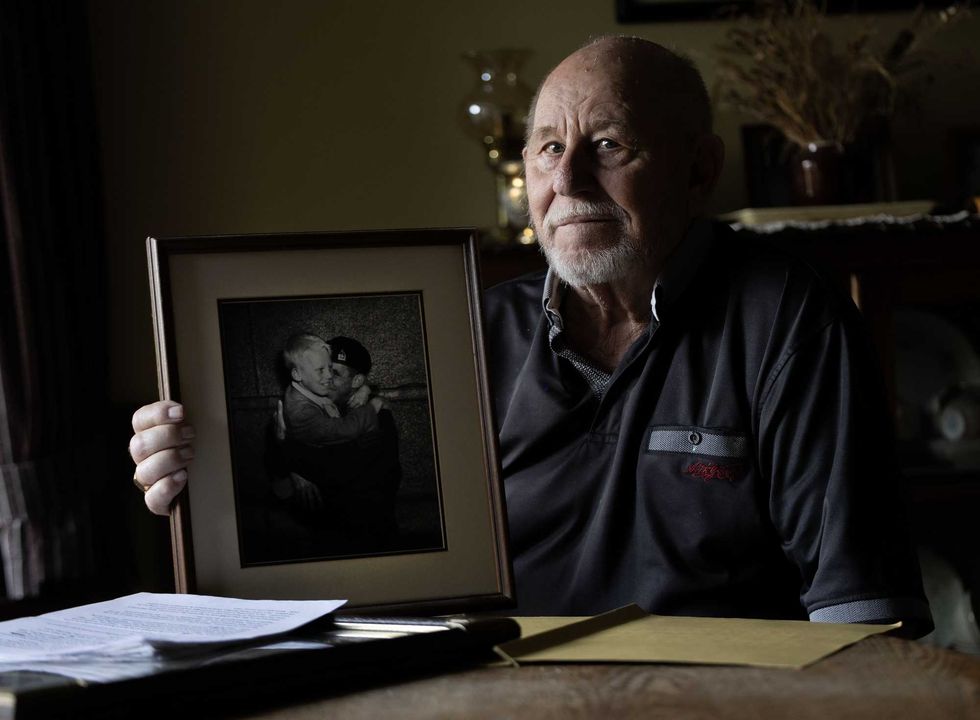 Whitey Bernard is seen in this handout photo on Jan. 11, 2025. Bernard was five when he was the subject of the "Wait For Me Daddy" image by Claude Dettloff, a photographer working for The Vancouver Province. Bernard is holding his favourite photo, also taken by Dettloff, five years later when his father returned from the war.THE CANADIAN PRESS/Handout-Len Wagg(Mandatory Credit)
Wagg said the way many people see Canada as a country today is a ripple of what the country did in the First and Second World Wars, especially in Europe, where graveyards are actively maintained and host various ceremonies every year.
Wagg said that from the beaches of Normandy to the buglers playing the Last Post every night at the Menin Gate memorial in Ypres, Belgium, he's heard the same message from the young people involved in caring for war monuments.
“It’s a generational gratitude,” he said. “The reason why young people in their 30s and 40s are doing this is because of the stories they heard around the kitchen table from their parents and grandparents. It’s important for us to understand (that) part of who we are as Canadians comes from the ripples of their sacrifice.”
This report by The Canadian Press was first published Nov. 7, 2026.
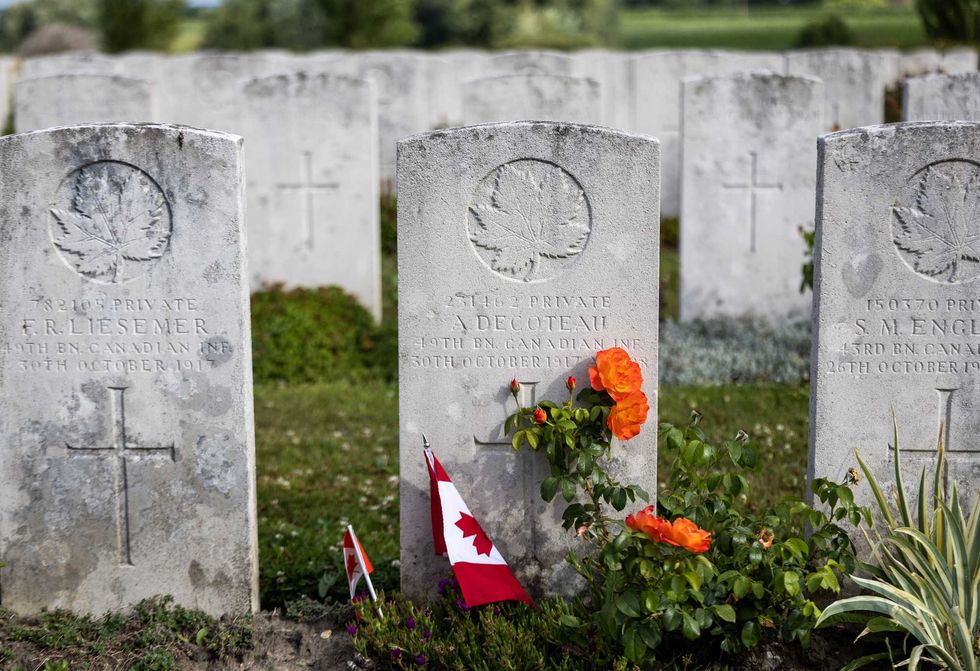 The final resting place of Alex DeCoteau at the Passchendaele New British Cemetery in Belgium is seen in this handout photo on July 19, 2025. DeCoteau, from the Red Pheasant Cree First Nation in Saskatchewan, was Canada's first Indigenous police officer and an Olympian who was killed by a sniper during the Battle of Passchendaele in 1917.THE CANADIAN PRESS/Handout-Len Wagg(Mandatory Credit)
By Devin Stevens | Copyright 2026, The Canadian Press. All rights reserved.