Northern First Nations advocates call on province to withdraw Bill 140 at Queen’s Park
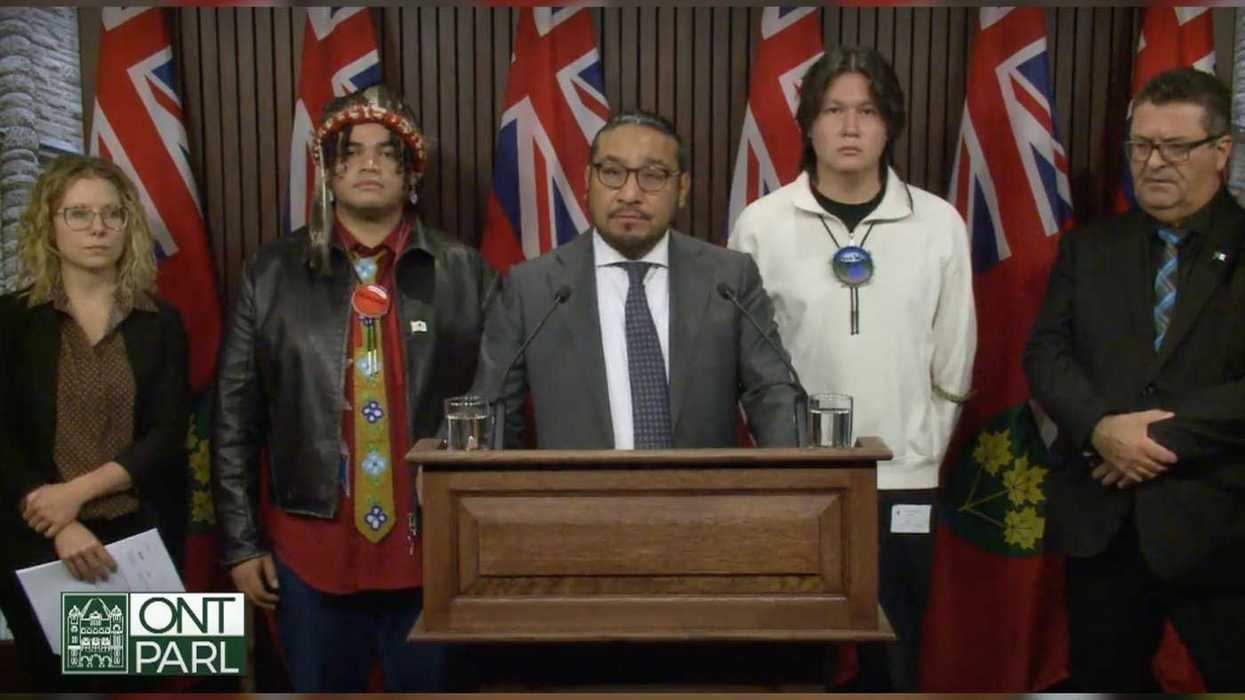
QUEEN’S PARK — Northern First Nations advocates are calling on the Ontario government to withdraw proposed legislation, arguing it continues a pattern of weakening Indigenous rights and environmental protections.
Guy Bourgouin, Mushkegowuk-James Bay MPP, and Sol Mamakwa, Kiiwetinoong MPP, were joined by Legal Advocates for Nature’s Defence (LAND), Here We Stand and Okiniwak at Queen's Park on Nov. 17 to speak out against Bill 140, the Building Ontario Faster Act, 2026.
The legislation, introduced Oct. 27, includes proposed changes to the Ontario Heritage Act that the groups say could weaken archaeological assessment requirements and exempt certain properties or projects from those assessments.
SEE: Groups concerned about proposed changes to archaeological protections
The advocates are particularly concerned about the potential consequences for the Hudson-James Bay Lowlands, including the Attawapiskat River and the proposed Ring of Fire development area, where they say ancestral burial grounds and other culturally significant sites could be affected.
Attawpiskat’s Jeronimo Kataquapit, founder of the youth-led movement Here We Stand, said archaeological assessments are important because they help identify sites that may otherwise be unknown to developers.
He said sacred burial sites are spread throughout the territory, with knowledge of their locations passed down through generations.
Jeronimo questioned how governments and companies could determine where development should take place if archaeological assessments were no longer required in certain areas.
“These just aren't normal sites,” he said, describing the burial grounds as the resting places of family members and ancestors that he says Indigenous people have a responsibility to protect.
RELATED: Youth launch James Bay journey to document Ring of Fire region
Jeronimo said the proposed changes could have lasting consequences for future generations and argued that projects should not proceed without the “free, prior and informed consent” of affected First Nations.
Ramon Kataquapit, the founder of the Indigenous youth movement Okiniwak and Jeronimo’s cousin who is also from Attawapiskat First Nation, said he became more involved in advocacy after witnessing the passing of Bill 5 last year.
He described Bill 140 as part of a broader pattern of legislation that he believes weakens Indigenous rights and environmental protections in the interest of resource development.
“These bills are a direct attack on life itself. It’s not just politics anymore. It's not just money anymore. These are lives that are at stake,” he said.
Ramon said the groups intend to continue their opposition through grassroots organizing, legal challenges and political advocacy, regardless of whether the bill advances.
SEE: 'It really made me proud': Youth bring Indigenous rights, concerns to United Nations forum
The proposed legislation is particularly concerning in Northern Ontario, where Mamakwa said governments are advancing major resource projects despite First Nations' concerns about consent and their treaty rights.
He said the land is central to Indigenous identity, culture, language and traditional ways of life, including hunting and fishing.
Mamakwa similarly described Bill 140 as another attempt to weaken protections and bypass First Nations' rights, building on the precedent set by Bill 5.
Bourgouin criticized the government's consultation process, saying the time provided to discuss a bill with potentially significant impacts on First Nations was inadequate.
He argued that communities across Ontario should have an opportunity to understand and comment on the proposed changes.
Kerrie Blaise, founder and legal counsel with LAND, said her organization and its partners asked to talk to the legislative committee reviewing the bill, but none were granted a speaking slot.
Blaise said the proposed changes under Schedule 17 of Bill 140 would allow the province to exempt properties and projects from archaeological assessment requirements.
She said those assessments are among the few tools available to identify and protect Indigenous sacred sites, ancestral burial grounds and artifacts before they are damaged or destroyed by development.
Blaise also raised concerns about the legislation's relationship with the United Nations Declaration on the Rights of Indigenous Peoples, citing provisions that recognize Indigenous peoples' rights to practise and revitalize their cultural traditions and maintain spiritual relationships with their lands and waters.
She said archaeological sites could be particularly vulnerable in areas near proposed Ring of Fire roads and mining developments, including locations around the Attawapiskat River.
“Bill 140 is yet another shameful display of Ontario's impoverished view of reconciliation,” Blaise said.
“As allies, as legal experts, as advocates, please speak out and join us in calling on Ontario to withdraw Bill 140, respect Indigenous peoples' rights to protect their culture, their heritage, and the lands and waters upon which both depend.”
Copyright 2026, TimminsToday.com. All rights reserved.
Marissa Lentz-McGrath, Local Journalism Initiative, TimminsToday.com.