Smith backs hybrid ridings as rural leaders warn of diluted voice
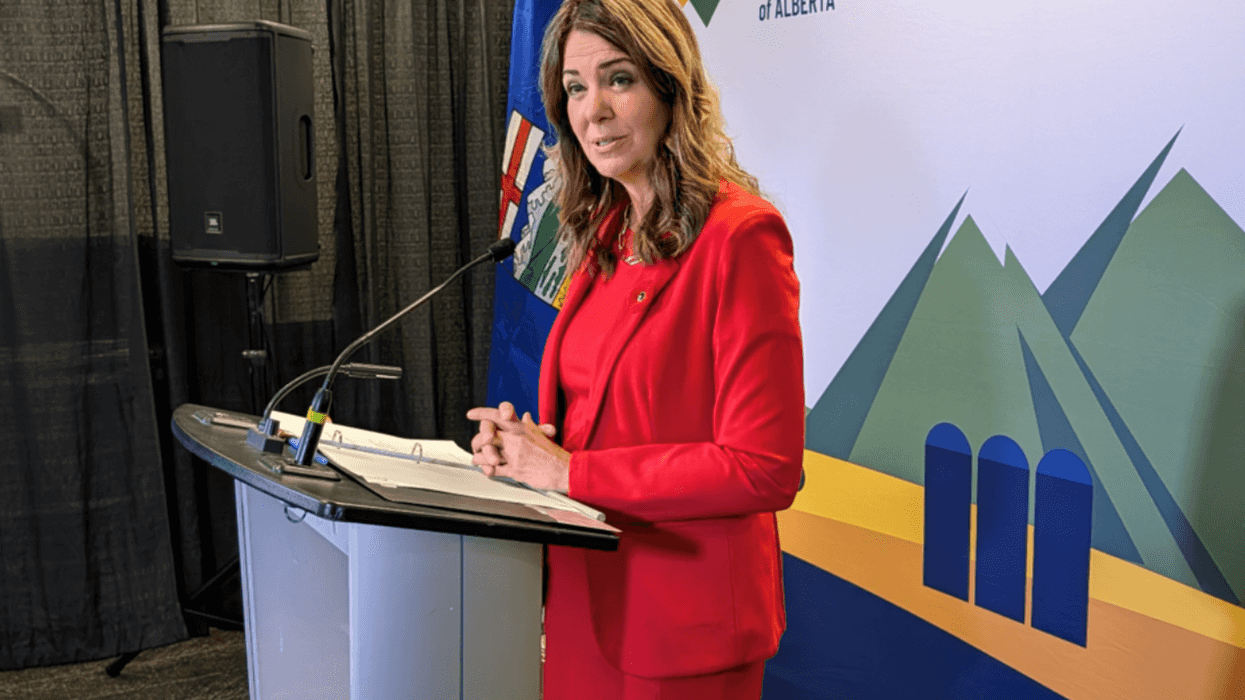
Premier Danielle Smith is backing proposed electoral boundaries that would combine parts of Alberta cities with surrounding rural areas, despite concerns from rural municipal leaders that the changes could dilute their communities’ voices.
"That was the recommendation, is to look at where hybrid ridings make sense," said Smith at the Rural Municipalities of Alberta fall convention in Edmonton on Tuesday.
A long-awaited report from an advisory panel consisting of several prominent Albertans was published, detailing 91 ridings that Albertans could be voting in come 2027. Some electoral divisions saw several significant changes, including in Calgary, where newly proposed ridings stretch beyond the limits of the province's largest city.
Perhaps the most significant changes come in Lethbridge, where the southern Alberta city will be carved up into four ridings. Three of those potential ridings would see Lethbridge share an electoral district with mostly rural areas.
Smith said Lethbridge would be well served by rural-urban hybrid riding, as she herself represents one in Brooks-Medicine Hat.
"The idea of hybrid riding is very common, not only in our province," said Smith. "Medicine Hat is well served by having two representatives and I think Lethbridge would be very well-served by having more representatives."
One person who isn't an immediate fan is Kara Westerlund, president of the Rural Municipalities of Alberta.
"We are a bit concerned with the hybrid ridings and the fact that they may dilute the rural issues," said Westerlund.
The population component of this, said Westerlund, is key.
"Our members are the 69 rural municipalities of Alberta. We represent 85 per cent of the land mass, but less than 15 per cent of the population," she said.
Smith ready for potential litigation
If the government is taken to court over the maps, Smith said she's ready for it.
"We will assemble a legal team and make the argument that this is how we get effective recommendations," said Smith. "I hope it doesn't come to that and we'll be able to have a debate in the Legislature."
The legal action may well be coming. In the report, two panel members in the minority published a section saying they believe that all changes made south of Airdrie are outside the mandate of the panel.
"Recommendation 5 stipulates that expanding the Legislature to 91 seats and adding two rural seats should 'have no impact on any electoral division in Airdrie or containing territory south of Airdrie's southernmost border, with the exception of Drumheller-Stettler,'" said University of Alberta constitutional law professor Gerard Kennedy and town of Okotoks councillor Brent Robinson, who wrote the minority report.
Recommendation 5 states that if the Legislature couldn't find consensus on the majority report, the number of electoral divisions should increase to 91, but with no impact whatsoever on any riding in Airdrie or south of the city directly north of Calgary.
However, University of Alberta political science professor Jared Wesley said critics were right to worry about the report.
"In the traditional process, an independent body consults with folks in those districts to determine whether the new lines create ridings that give them effective representation," said Wesley. "Under this new process, the people who are now divided up into these new constituencies have no say in that. And that should be the most concerning part."
Copyright 2026, St. Albert Gazette. All rights reserved.
David Boles, Local Journalism Initiative Reporter, St. Albert Gazette.