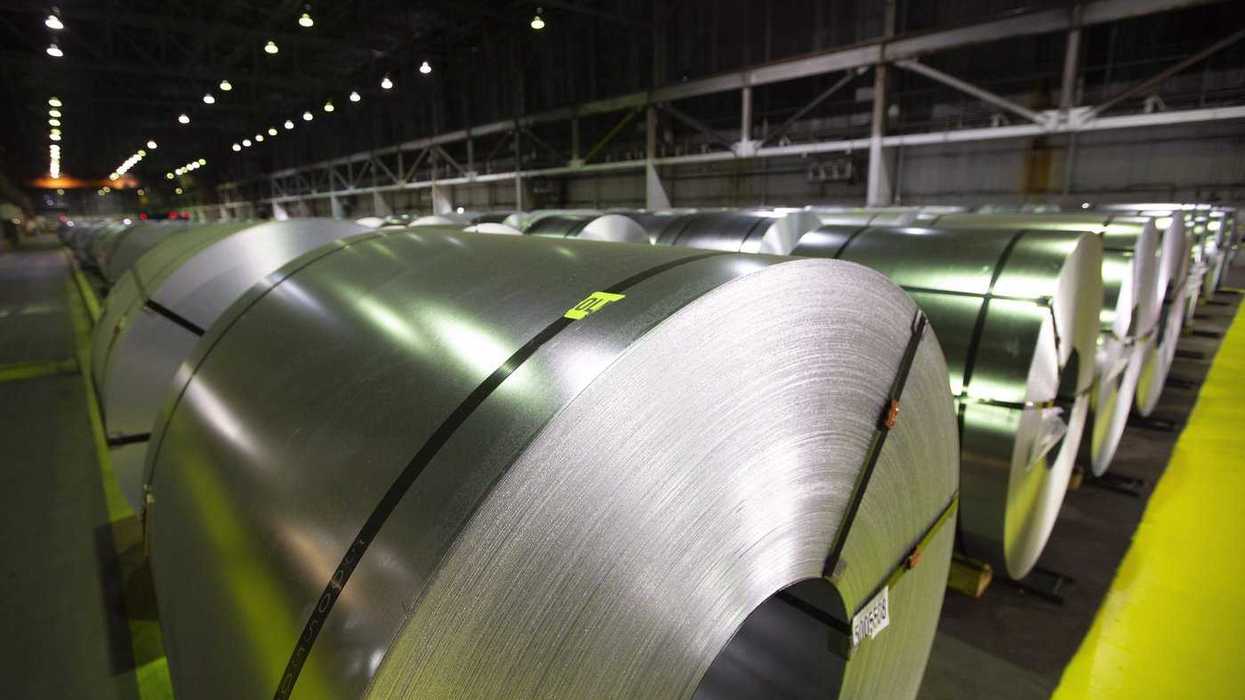
The latest round of layoffs in Ontario’s steel belt highlights the ripple effects of U.S. tariffs as their impact reverberates through Canada’s manufacturing supply chain, industry experts say.
Stelco Holdings Inc. on Monday said it was laying off up to 500 workers at its Hamilton and Lake Erie facilities, with the company citing the ongoing trade crisis, weak demand and continued import pressure.
The job cuts are the latest in a string of tariff-linked layoffs in the province and come after plans for more than 1,000 job cuts at Algoma Steel in Sault Ste. Marie and the closure of ArcelorMittal’s Hamilton wire-drawing mill.
Alan Arcand, chief economist at Canadian Manufacturers and Exporters, said the decline in Canadian steel demand reflects the way tariffs are working their way through highly integrated manufacturing supply chains.
Companies that use steel are losing U.S. sales and cutting production, which in turn reduces the amount of steel they buy from Canadian producers, he said.
"Supply chains have been optimized on the assumption that we would have free trade with the U.S. and you yank that away suddenly without warning and these are the consequences," Arcand said.
"You have impacts within the firm being directly hit by the tariff and the firms within the broader supply chain."
Stelco called the layoffs "unfortunate but necessary" to ensure its survival, noting U.S. tariffs have significantly shrunk the market for its cold-rolled and galvanized products.
The end users for those products can include automotive and parts manufacturers, machinery and fabricated metal producers, appliance makers, and construction and electrical equipment manufacturers.
Those manufacturers are facing U.S. tariffs of up to 50 per cent on steel-intensive and derivative products, while automakers face separate trade barriers, weighing on exports and production.
Ron Wells, president of United Steelworkers Local 1005, which represents workers at Stelco’s Hamilton plant, said the union is disappointed in the situation and wants the ongoing tariff issues settled.
"We're hoping this trade situation resolves itself so our members can get back to work," he said.
Wells said Lourenco Goncalves, the chief executive of U.S.-based Cleveland-Cliffs, which acquired Stelco in 2024, said on a recent earnings call that coated steel prices in Canada are significantly lower than in the United States.
"He's blaming this on Canada not tariffing steel being imported into Canada, which drives down the price," Wells said of Goncalves' comments. "They're claiming they can't make any money selling coated products."
Arcand said there is "significant overproduction" of steel globally.
"There's a lot more steel being produced than consumed," he said. "It's mainly a China story and that's been a long-running issue."
Arcand said that while the government has responded with anti-dumping duties and other measures, it needs to keep monitoring steel import volumes and adjust its policies as needed.
Meanwhile, Brendan Sweeney with the Pacific Manufacturing Association of Canada said Honda and Toyota are still producing at steady levels in Canada and continue to buy significant volumes of Canadian steel, suggesting the weakness in Stelco’s domestic demand may be coming from other manufacturers or different parts of the auto sector.
"Production is not down," said Sweeney, president and chief executive of the trade association, which was launched by the two major Japanese automakers last April. "Production is pretty stable despite the tariffs."
He said Honda and Toyota are among the top consumers of Canadian-made steel from southern Ontario and "it's important for us to have steel mills around."
Sweeney added: "We don't see an immediate impact on our operations as the result of this (Stelco) announcement ... I don't know what the lasting effects are going to be."
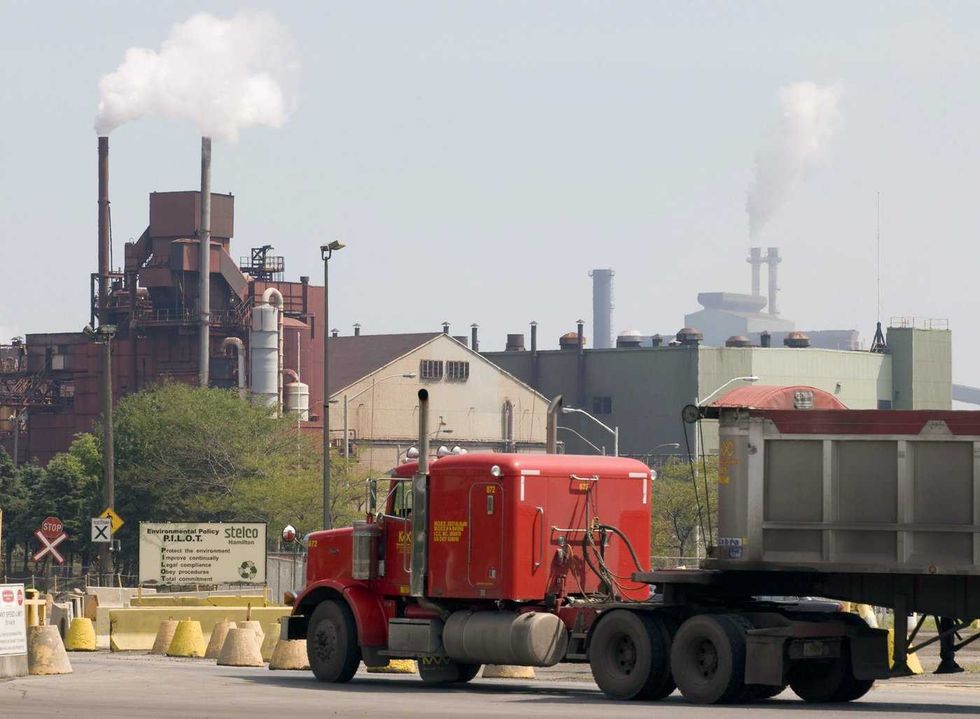 A transport truck arrives at the Stelco plant in Hamilton, Ont. Monday, Aug. 27, 2007. (CP PHOTO/Adrian Wyld)
Stelco is indefinitely idling its Hamilton facility and concentrating production at its Lake Erie Works in Nanticoke, Ont., though parent company Cleveland-Cliffs said overall steel tonnage will not be affected.
The company expects a significant number of affected Hamilton employees will be offered jobs at Lake Erie Works.
Stelco said demand for its products fell nearly 25 per cent in the second quarter compared with the 2024 quarterly average, including a 10 per cent decline in Canadian demand as steel customers and manufacturers faced trade-related pressures.
The company said federal measures have reduced imports, but volumes remain too high to offset the market gap created by trade tensions.
This report by The Canadian Press was first published Sept. 29, 2026.
By Brett Bundale | Copyright 2026, The Canadian Press. All rights reserved.