USask dental therapy program brings care closer to rural and northern communities
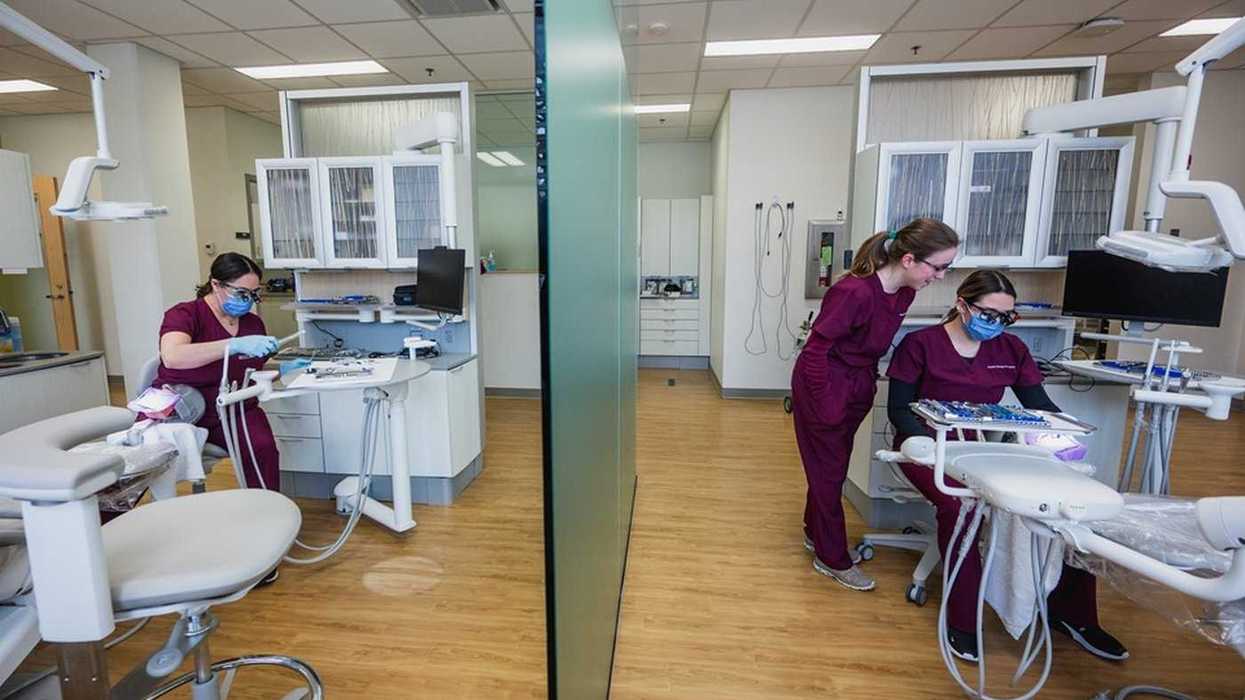
PRINCE ALBERT, Sask. — A University of Saskatchewan program aimed at training oral health professionals closer to home is helping address long-standing challenges in accessing dental care in rural and northern Saskatchewan.
The University of Saskatchewan's College of Dentistry launched its Bachelor of Science in Dental Therapy program in 2023. According to the university, it is Canada's first and only Bachelor of Science in Dental Therapy program.
The initiative was designed to improve access to oral health services while building a workforce equipped to serve communities where care can be difficult to access.
"Dental therapists are licensed oral health-care professionals who provide essential preventive and clinical dental services," said Dr. Walter Yim, assistant director, academic, for the dental therapy program in Prince Albert.
Yim said dental therapists are trained to conduct oral examinations, diagnose dental decay, take X-rays, provide fillings, perform certain tooth extractions and deliver preventive treatments such as fluoride applications and dental sealants. They also provide oral health education and work alongside dentists, dental hygienists and other health professionals.
According to Yim, dental therapists play an especially important role in rural and northern communities, where access to regular dental services can be limited.
"By providing essential treatments and preventive care closer to where people live, dental therapists help improve access to oral health care and reduce the need for patients to travel long distances for basic dental services," he said.
The program is offered through a distributed learning model that includes Prince Albert, La Ronge, Regina and Saskatoon. It has the capacity to admit up to 28 students annually across its Saskatchewan learning locations.
Yim said making education available outside major urban centres was a key part of the program's design.
"One of the guiding principles behind the program is that improving access to health care begins with improving access to health-care education," he said.
For many students living in rural and northern Saskatchewan, relocating to pursue a university education can create financial, personal and cultural barriers. Offering education closer to home allows students to remain connected to their families and communities while pursuing a health-care career.
Yim said there is also a long-term workforce benefit to training students in the regions where oral health professionals are needed most.
"Ultimately, we want to create opportunities for people to train locally and help build the oral health-care workforce their communities need," he said.
While the program is still relatively new, Yim said the university is beginning to see encouraging examples of graduates choosing to work in the communities and regions they know.
"One of our long-term objectives is to create a sustainable supply of dental therapists who have personal connections to the communities they serve," he said.
"When graduates return home, they bring more than clinical expertise. They may already understand the culture, geography and challenges associated with accessing health care in those communities."
Access to regular dental care remains one of the biggest oral health challenges facing northern Saskatchewan residents. In some communities, patients must travel several hours to Prince Albert, Saskatoon or other larger centres for treatment, creating barriers related to transportation costs, child care, time away from work or school and scheduling appointments.
Yim said delayed access to care can lead to more serious health problems.
"When dental problems are left untreated, they can progress from relatively minor issues into significant pain, infection and, in some cases, tooth loss," he said.
"Oral health is an important part of overall health, and the consequences of untreated dental disease can extend well beyond the mouth."
The program is also helping improve access to care through supervised student clinics operating in Prince Albert and La Ronge, with clinical training and patient services also available at locations in Regina and Saskatoon.
Senior dental therapy students provide reduced-cost oral health services under the supervision of licensed dental professionals. Available services include dental examinations, X-rays, preventive treatments, cleanings, basic fillings and certain uncomplicated extractions. Patients requiring more complex treatment are referred to other dental professionals.
"The clinics provide students with essential hands-on experience while helping community members access affordable oral health care," Yim said.
Yim said feedback from patients has been overwhelmingly positive, particularly from people who delayed treatment because of affordability or accessibility barriers.
"Treatments that may have been postponed because of affordability or accessibility challenges become possible through our supervised student clinics," he said.
The program was established through a partnership involving the University of Saskatchewan College of Dentistry, the Northern Inter-Tribal Health Authority, Northlands College and Saskatchewan Polytechnic. Indigenous Services Canada provided $2.1 million to support the establishment of the program.
Looking ahead, Yim said expanding the dental therapy workforce will play an important role in strengthening oral health services in underserved communities.
"One of the greatest opportunities is continuing to develop a sustainable workforce of dental therapists who are prepared and interested in practicing in rural and northern communities," he said.
"Ultimately, our vision is to help move oral health care toward a model where people can access more of the services they need within their own communities rather than routinely having to travel to larger centres."
Copyright 2026, SASKTODAY.ca. All rights reserved.
Nicole Goldsworthy, Local Journalism Initiative Reporter, SaskToday.ca.