Canadian truck dealers warn they can't buy new U.S. models until feds fix paperwork
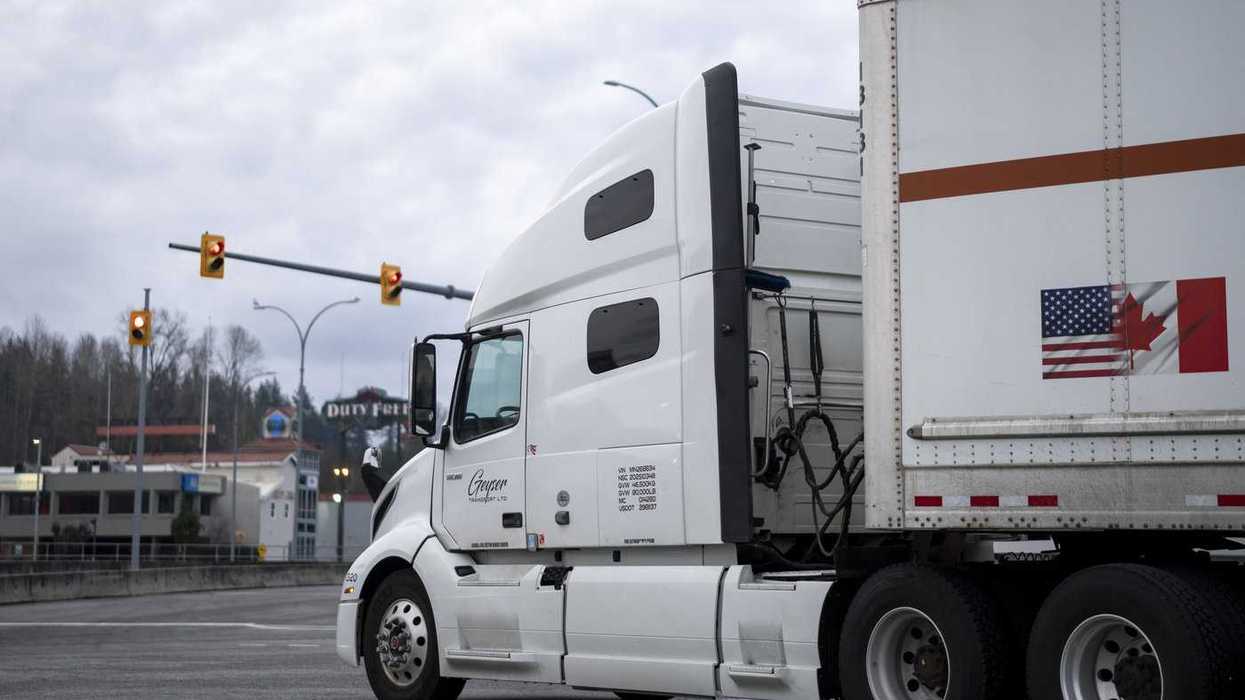
The Canadian Truck Dealers Association says it needs Ottawa to quickly fix a paperwork problem that will prevent dealers from importing new models from the United States next year, warning it will cause further economic pain if the issue isn't solved.
"If Canada faces a shortage of heavy trucks, the impact will extend far beyond our industry," said Kevin Disher, the head of the association, at a press conference on Parliament Hill on Thursday.
"This issue affects every major sector of the Canadian economy. Shipping, infrastructure, construction, forestry, mining, agricultural. If trucks become more difficult or more expensive to access, those costs move throughout the supply chain and ultimately impact Canadian businesses and households."
The truck dealers said manufacturers have been flagging the issue to the federal government for a year, with little progress.
Disher said the problem arose after the United States changed how it certifies emissions standards for trucks built there. That process used to be carried out by the Environmental Protection Agency, but the U.S. recently moved that role over to the National Highway Traffic Safety Administration.
Canada only recognizes emissions certifications done by the EPA, and unless that changes, Canadian dealers can't import any U.S.-made models. American. companies provide 95 per cent of Canada's supply.
"This is more of a paperwork problem and a paperwork misalignment than it is a misalignment of vision," said Huw Williams, the spokesperson for the dealers association.
"These trucks, I think it's important to note, are going to be cleaner than ever in terms of their (nitrogen oxides) emissions, and cleaner than ever in terms of the greenhouse gas emissions. But without the right regulatory recognition, we will not be able to have these trucks sold in Canada."
The trucks in question are Class 4 to Class 8 trucks, which is anything heavier than 6,350 kg. That can include super duty pickups like the Ford F-450, all the way up to a transport heavy haul truck.
In a statement to The Canadian Press, Keean Nembhard, the press secretary for Environment Minister Julie Dabrusin, said Ottawa is aware of the issue and is working on it.
But in the meantime, the truck dealers say Canadian companies can't join in the competitive process to pre-order new trucks until this is fixed.
"At the end of August, the trucking companies are making decisions for what they need to renew, and they will not be able to order those trucks," Williams said.
"I think that the government may be operating under the impression that this is a 2027 problem. This is a yesterday problem."
This report by The Canadian Press was first published May 21, 2026.
By Nick Murray | Copyright 2026, The Canadian Press. All rights reserved.