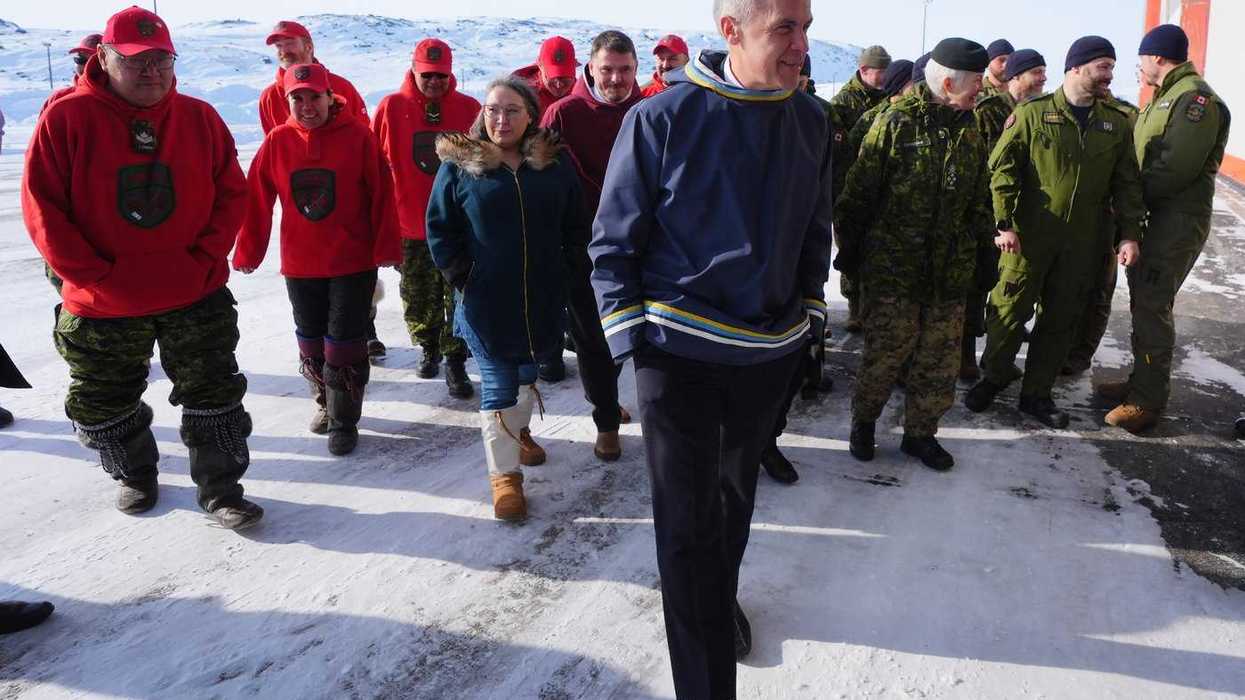
As Canada plans an ambitious expansion of defence and economic activity in the Arctic, regional experts are asking whether it has enough diplomats to build the ties it wants in the North.
"The Arctic is a geopolitical hot spot," said Natan Obed, president of Inuit Tapiriit Kanatami. "The (Global Affairs) department does not have huge bench strength when it comes to Arctic diplomacy."
Here's a look at how the Liberals have both cut back and restaffed positions across the North in recent years.
Closing an expert centre
In 2023, the government of Prime Minister Justin Trudeau closed the Canadian International Arctic Centre, a hub for diplomacy across the region that had been operating within Canada's embassy in Norway since 2009.
In a briefing note obtained by The Canadian Press, Global Affairs Canada cited "high costs in Oslo" and anticipated savings of $550,000 per year.
The department argued its Arctic team would work better out of Ottawa, particularly on shaping policies that aligned with the Biden administration.
"The hybrid work model has demonstrated the department's ability to engage worldwide through technology … diminishing the relative advantage of operational staff located in the field," says the briefing note.
Artur Wilczynski, who served as Canada's ambassador to Oslo from 2014 to 2018, said CIAC helped him prepare for the posting by registering him in conferences and introducing him to “key” Arctic contacts.
Wilczynski called the decision to close CIAC "incoherent."
"You need to develop a cohort of people who actually have a deep understanding and knowledge of a very complex and diverse region," he said. "You do not get that from a Zoom call."
A regional policy
In December 2024, the Trudeau government released an Arctic foreign policy that committed to boosting domestic and international collaboration to face down emerging foreign threats.
The policy said the region was "no longer free from tension" because of increased geopolitical instability following Russia’s invasion of Ukraine. Ottawa appointed Virginia Mearns as Arctic ambassador last year and promised new consulates in Greenland and Alaska.
The government of former Liberal prime minister Prime Minister Jean Chrétien created the role of Canadian ambassador for circumpolar affairs in 1994. Former Conservative prime minister Stephen Harper shelved the role in 2006.
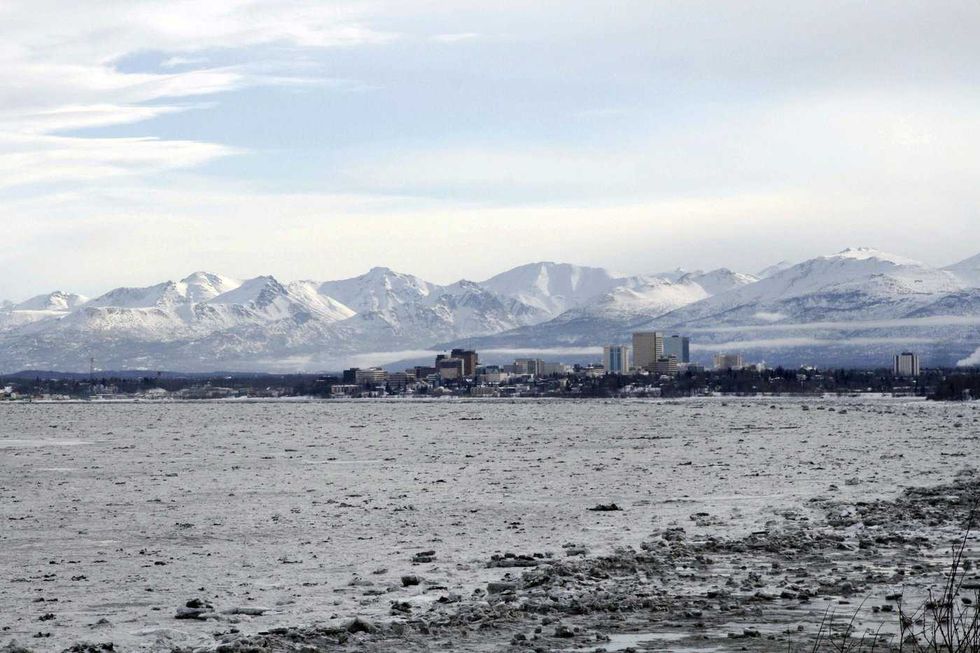 Downtown Anchorage, Alaska, is dwarfed by the snowy Chugach Mountains and fronted by an ice-choked Cook Inlet on Monday, March 11, 2024. (AP Photo/Mark Thiessen)
The policy's release followed several incidents in the region, including a high-altitude balloon from China crossing into Canadian airspace in 2023.
Ottawa has since promised billions of dollars for defence and new infrastructure for northerners.
Wilczynski argues that buildup needs to be accompanied by a commensurate increase in the number of diplomats in order to build circumpolar contacts.
"I don't think that there is a more immediate and proximate security, economic and political interest for Canada and Canadians than the Arctic," said Wilczynski, who also worked as an executive in Canadian intelligence.
"Investing more in our diplomatic presence in the region is part of a strategy that recognizes the interests that Canada has in relationships with our Arctic partners."
A new consulate
In February, Foreign Affairs Minister Anita Anand opened Canada's first consulate in Greenland's capital, Nuuk. Due to the shortage of available buildings, the Canadian consulate operates out of the Icelandic consulate.
A briefing document obtained by The Canadian Press estimates the operating cost of the consulate at $8.76 million over five years — roughly $1.75 million annually. That includes staffing and the use of various services.
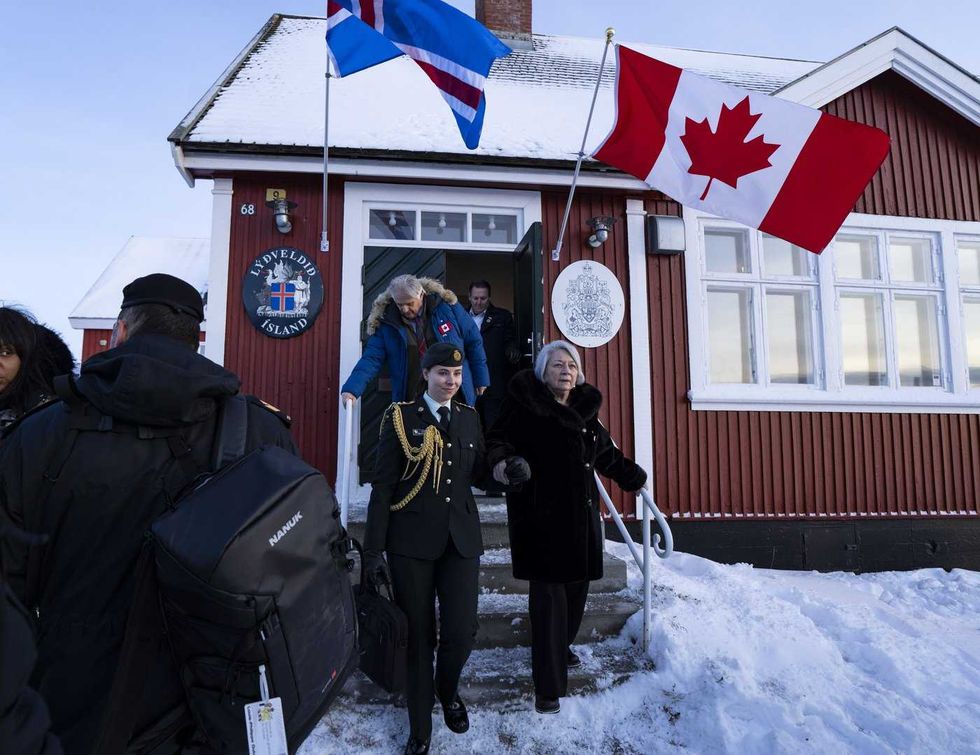 Governor General Mary Simon, right, leaves the newly opened Canadian consulate in Nuuk, Greenland on Friday, Feb. 6, 2026.THE CANADIAN PRESS/Christinne Muschi
The consulate originally was intended to employ three full-time equivalents. But the consulate has only one staffer and it's not clear if that is due to budget cuts.
"These figures were prepared for planning purposes … and may be temporarily higher than the actual costs incurred during implementation due to a number of factors, including employing fewer staff than originally planned," Global Affairs Canada said in a media statement.
The department did not say when the consulate in Alaska will open or how many staffers it will have.
'Key contacts' lost
Part of Canada's goal in Arctic diplomacy is to give northerners a voice in international platforms so that federal policies reflect their concerns.
Ottawa helps facilitate this through the Global Arctic Leadership Initiative, which connects Inuit and northern people with projects and conferences abroad and funds their travel.
An internal Global Affairs audit reported in May 2025 that closing the Canadian International Arctic Centre deprived the Global Arctic Leadership Initiative of "key contacts in the Arctic."
"This led to a certain loss of expertise, outreach and support for the missions," says the audit, adding that means fewer opportunities for "Indigenous and northern speakers."
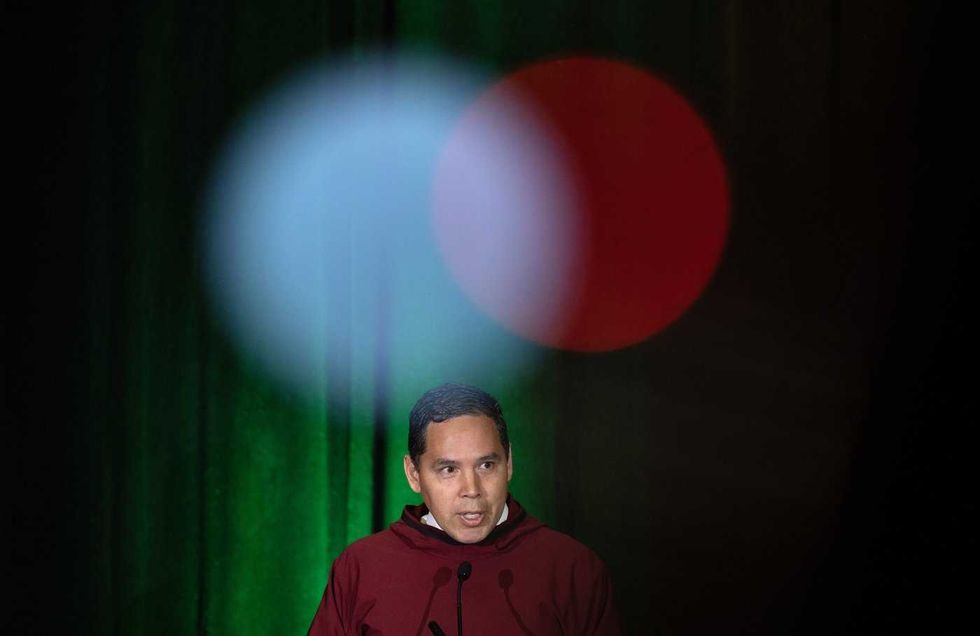 Inuit Tapiriit Kanatami President Natan Obed delivers opening remarks at an ITK Summit in Ottawa, Friday, June 19, 2026.THE CANADIAN PRESS/Adrian Wyld
Obed said this shows the shortcomings in Ottawa's approach to engagement with Inuit. Obed said there is "untapped" potential in the region and Inuit can help Canada make new contacts around the North Pole.
"These new times require greater administrative and political and policy footprints in order to do it right," he said.
Nordic outreach
Marc Lanteigne, a political scientist from Montreal, is a professor at the Arctic University of Norway in the northern city of Tromso and teaches at the University of Greenland.
He said Canada has made itself more visible in Nordic capitals in recent years by sending larger and more varied delegations to the annual Arctic Circle assembly in Iceland.
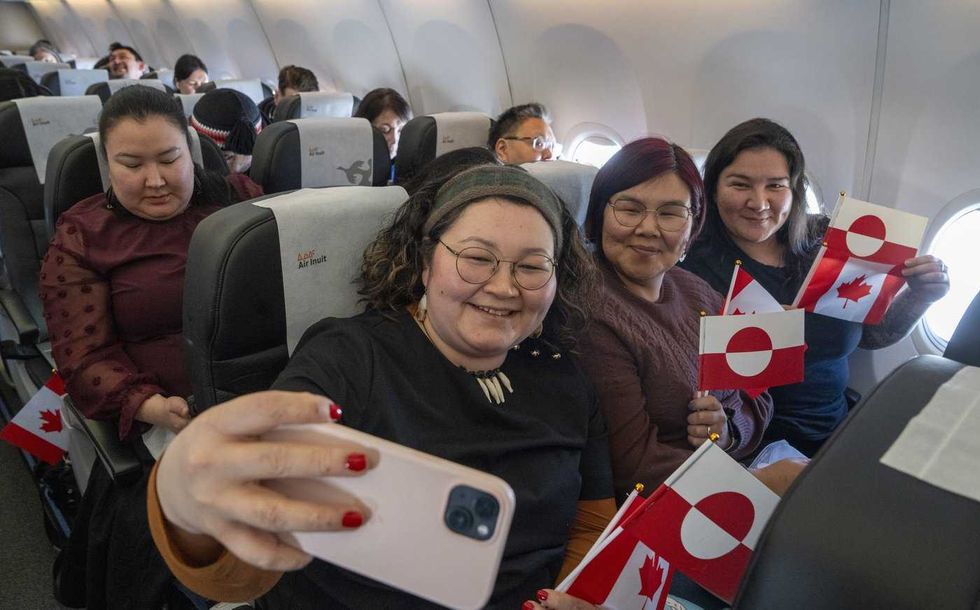 Minnie Annahatak, left, takes a selfie with friends as they travel to Nuuk, Greenland on Thursday, Feb. 5, 2026.THE CANADIAN PRESS/Christinne Muschi
Canadian foreign ministers have also met with their five Nordic counterparts in recent years.
"We have a lot to contribute, not only in our particular corner of the Arctic, but (across) the region as a whole," Lanteigne said from Tromso, which sits on the same latitude as Yukon's northern coast.
"Where I'm standing right now, everyone's talking about the green transition and how we can balance that with the ongoing need for fossil fuels. These are really areas where I get asked, "Where's Canada in all this?'"
How many diplomats are needed in the north?
Lanteigne said people in Greenland and Norway are troubled by the "very sudden" rise in international interest in the Arctic, driven by the prospect of new shipping routes and U.S. President Donald Trump's talk of annexing Greenland, Canada and Iceland.
"A lot of the issues regarding sovereignty and regarding the livelihoods of the people of the Arctic sometimes get lost in the crush," Lanteigne said.
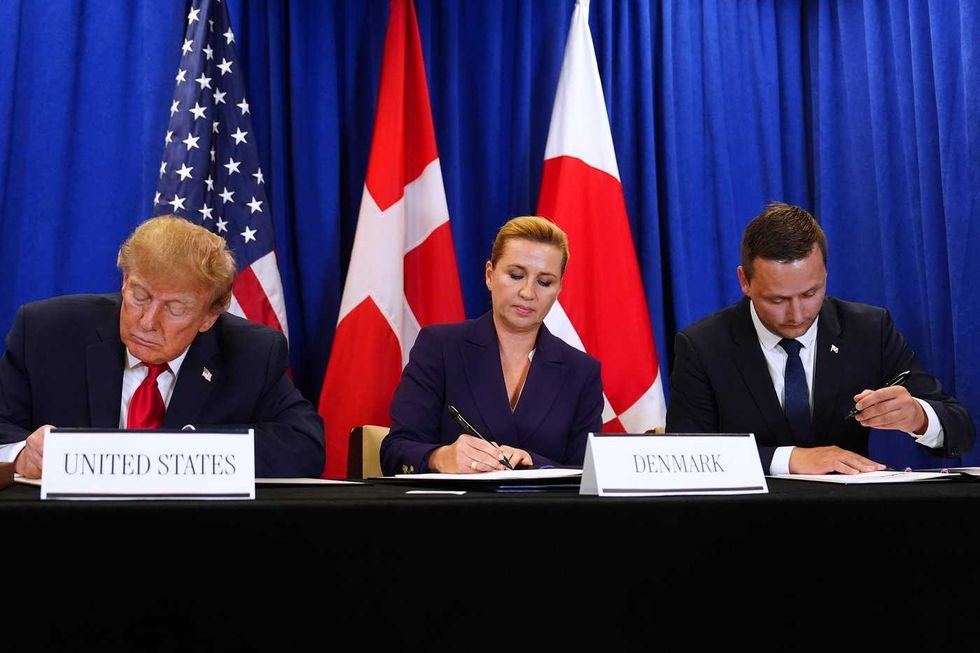 President Donald Trump signs a security agreement with Denmark's Prime Minister Mette Frederiksen and Greenland's Prime Minister Jens-Frederik Nielsen during the United Nations General Assembly, Tuesday, Sept. 22, 2026, at the UN headquarters. (AP Photo/Julia Demaree Nikhinson)
He said Trump's threats have elevated Canada's status in the region as a partner in economic co-operation and education.
Lanteigne said Canada does not necessarily need a large diplomatic cohort in places like Nuuk and Anchorage — as long as those on the ground make connections for Indigenous communities, businesses, climate-change researchers and development experts.
He said this type of "para-diplomacy" is more important in an age of geopolitical tumult.
"Our capitals are right now in opposition, but we are facing a lot of similar concerns," he said.
"What will need to be done with Anchorage is to basically identify areas of mutual concern — of which there are many — and try to stick to that particular menu, even though it is going to be a bit tricky."
This report by The Canadian Press was first published Sept. 27, 2026.
By Dylan Robertson | Copyright 2026, The Canadian Press. All rights reserved.