As Parliament returns, focus is on the U.S. trade war, new EU ties and cost of living
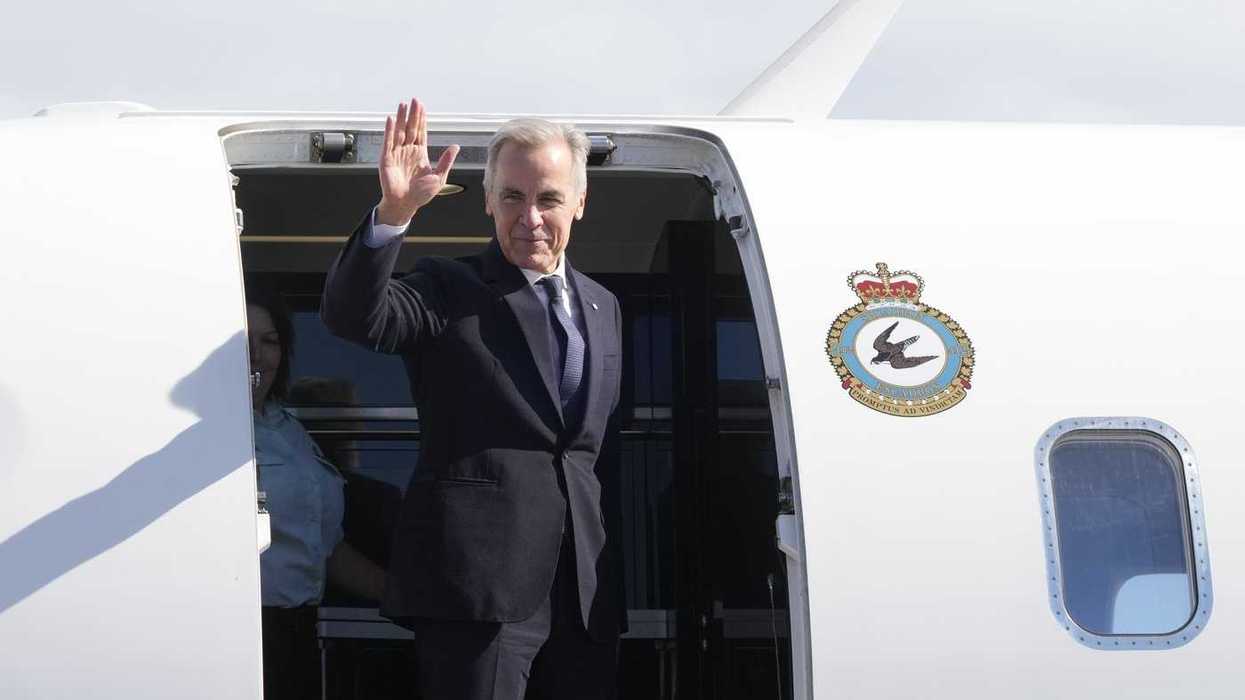
Parliament will get back to work Monday after a three-month break, with the trade war with the United States and Prime Minister Mark Carney’s move to formalize closer ties with the European Union top of mind.
Public opinion backs Carney’s approach to both, but the Liberals could be vulnerable on the issue of affordability, says Daniel Béland, a political science professor at McGill University.
"There is strong support overall for Mark Carney in terms of what he's doing internationally ... but the Liberals should make sure that there is no real opening for the Conservatives to attack them on the state of the economy and cost of living," Béland said.
When he addressed his caucus Friday, Carney said his government would "remain laser focused on bringing down costs for Canadians," as well as defending the country’s sovereignty.
Carney is fresh off a visit to Europe, where European Commission President Ursula von der Leyen opened the door to Canada becoming what she called the first "associate member" of the EU.
Carney has said the House of Commons will have the chance to debate and vote on whatever alliance is ultimately proposed.
The potential associate membership — which doesn’t currently exist within the EU — is the latest in Carney’s pivot to Europe in the face of a fractured relationship with the United States that saw trade talks come to a halt in August.
Carney suspended negotiations just before a U.S.-set tariff deadline. He said the U.S. made demands Canada could not agree to, including restrictions on Canada's protections for French and its ability to make trade deals with other countries.
The U.S.-Canada relationship became even more tense when U.S. President Donald Trump said last week that if Canada becomes the first associate member of the European Union it could be a "hostile act."
Carney’s international focus is continuing as the House of Commons reconvenes. Carney's Sunday agenda included meeting with French President Emmanuel Macron in Saint-Pierre-et-Miquelon and hosting the Prime Minister of Norway in Ottawa.
He's set to travel to New York on Monday for the United Nations General Assembly.
Speaking to his MPs Friday, Carney said this would be a "crucial session of the House of Commons."
"We are going to introduce some of the most consequential legislation not just of this government, but in decades," he said.
That includes legislation to streamline infrastructure project reviews, which will be called the Building Canada Strong Act.
Government House leader Steven MacKinnon said that "very significant" economic legislation will be the "centrepiece" of the fall sitting, though he did not go into specifics.
Béland said the Liberals’ planned changes to the Labour Code could be controversial. On Saturday, Jobs Minister Patty Hajdu said upcoming legislation will help reduce the number of times the federal government has to intervene in strikes.
The Liberals head back to Parliament holding onto a slim majority. There are also three new MPs on the government benches, after the party swept three byelections by a wide margin on Aug. 31.
Carney's former deputy chief of staff Braeden Caley won in North Vancouver-Capilano, and Tanveer Shahnawaz won in Beaches-East York.
Both of those were seats previously held by the Liberals, and the party also picked up a seat in Chicoutimi-Le Fjord with the victory of dairy farmer Daniel Gobeil. The riding was previously held by Conservative MP Richard Martel, who accepted a seat in the Senate this summer.
He's one of a number of Conservative MPs who won’t be coming back as part of that caucus this fall. Cathay Wagantall and Larry Brock both resigned, while four other MPs, Chris d'Entremont, Michael Ma, Matt Jeneroux and Marilyn Gladu, crossed the floor from the Conservatives to the Liberals.
Conservative Leader Pierre Poilievre told his MPs at a caucus gathering in Penticton, B.C., that Canadians are struggling financially, and accused Carney of "secretly negotiating" with the EU.
"While we support free trade and continued NATO co-operation with our European allies, Conservatives say no EU taxes, no EU laws and no EU open border rules on immigration in Canada," he said.
Conservatives also return to Ottawa after a summer of public infighting about the direction of the federal party, leading some strategists to publicly question Poilievre's control of his caucus and discipline within the ranks.
Béland said it’s difficult for the Conservatives to score points against Carney when he is travelling and focusing on standing up to the Trump administration.
In the midst of a trade war and international tensions, "people tend to really rally behind the leader, in this case the prime minister," he said.
“So the Conservatives are, I think, struggling right now.”
The NDP is heading back a seat shy as well, after longtime Quebec MP Alexandre Boulerice resigned his seat in August. That exit followed Nunavut MP Lori Idlout’s defection to the Liberals earlier this year.
New Democrats will be looking to make an impact with only five MPs in Parliament — a number that doesn’t include leader Avi Lewis. Lewis has said he won’t rush to run for a seat in the House of Commons, and that his focus instead will be to reach out to grassroots members and rebuild the party.
Béland said the NDP’s weak position is making it easier for Carney to propose ideas like having private investors take over operations at Canada's four largest airports. He noted Carney has moved the Liberals more toward the centre-right of the political spectrum.
"This situation, normally, would be an opportunity for the NDP to shine," he said.
But while the weakness from the left gives the Liberals more wiggle room, the Liberal government should be careful not to become overconfident and introduce measures Canadians oppose, Béland said.
"They are trying to put forward some proposals that could blow up in their face at some point," he said.
This report by The Canadian Press was first published Sept. 20, 2026.
— With files from Sarah Ritchie, David Baxter and Nick Murray in Ottawa and Kelly Geraldine Malone in Washington.
By Anja Karadeglija | Copyright 2026, The Canadian Press. All rights reserved.