Carney 'welcomes' ambition to make Canada first EU associate member
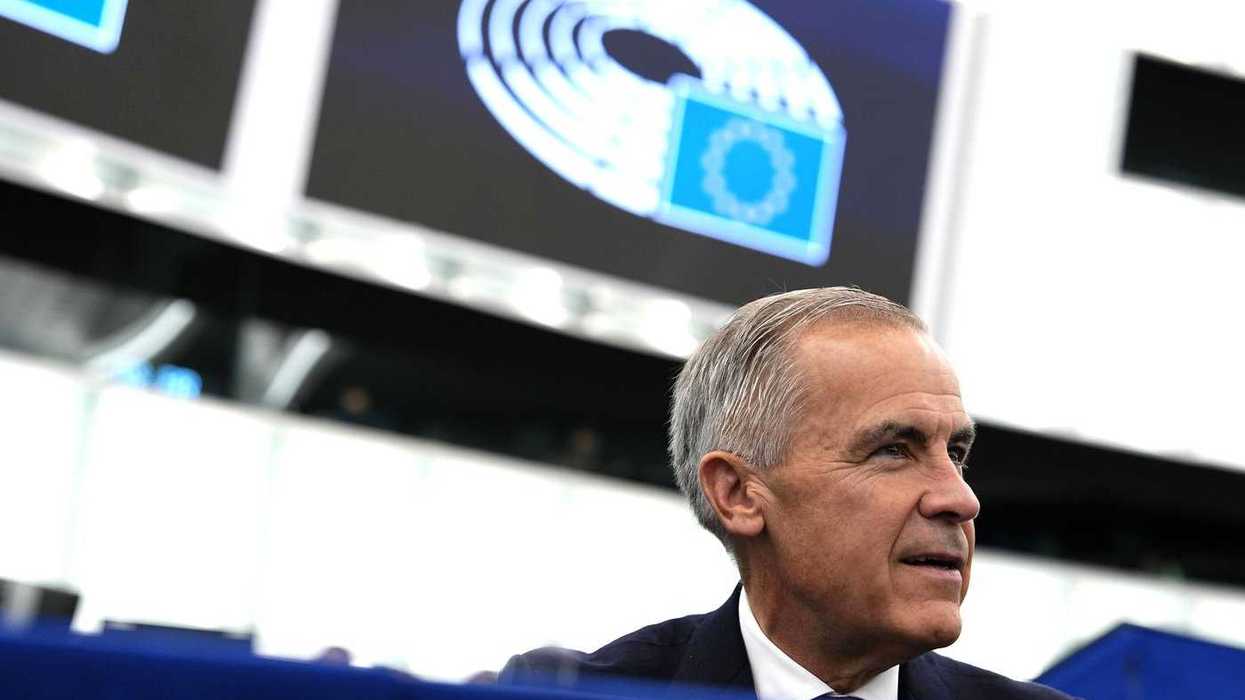
Prime Minister Mark Carney says Canada welcomes the ambition to become the European Union’s first associate member, though what exactly that would entail still needs to be defined.
Addressing the European Parliament, Carney referred to EU President Ursula von der Leyen's speech the day before, in which she pitched moving the relationship beyond a trade partnership to making Canada the EU's first associate member.
"We welcome this ambition — polling shows an overwhelming majority of Canadians support much closer ties,” he said in his address Thursday.
His remarks come after Canadian officials previously downplayed the characterization of a deeper relationship with the European Union as being an "associate member." Canadian officials continue to stress that a specific name for that enhanced partnership with Europe still needs to be determined.
Carney said Canada and Europe should have deeper ties on critical minerals, defence, artificial intelligence and energy security.
He said the two should move forward in allowing youth to live, work and study on either side of the Atlantic, and create an integrated market for financial services.
Carney did not mention U.S. President Donald Trump by name, though his speech alluded to strained relations between both Canada and Europe with the American administration.
"We are not fair-weather allies. We do not pursue zero-sum deals. Our commitment to the rule of law, and our unyielding defence of human dignity, individual freedom and democracy share the same deep roots, the same unwavering dedication," Carney said.
"We hold common values, for which we have always fought, and in whose defence we must always remain vigilant."
Trump said Wednesday in North Carolina that he views Canada potentially becoming an associate member of the European Union as a hostile act and threatened "serious" tariffs against the EU if they moved forward.
Carney said the goal of this partnership is not to create a "third bloc in order to become a great power rival, only with better manners."
"We do not seek power to dominate others. On the contrary, we are pursuing resilience so no one — no one — can control our open markets, impair our sovereignty, threaten our territorial integrity, or undermine our freedoms, our democracies, our rule of law," he said.
Jonathan Wilkinson, Canada's incoming ambassador to the European Union, said Wednesday that the name of the partnership was still being finalized, as well as specific details. He said that is expected to be formally announced in October during the EU-Canada Summit in Montreal.
He added any new labour mobility programs would be limited and would require consultation with the provinces.
The prime minister will take questions from reporters before heading back to Ottawa.
Conservative MPs have suggested associate membership in the EU might compromise Canadian sovereignty. They have warned of chaos from open borders, heaps of tax revenue going to Brussels and newcomers taking Canadian jobs — though it's not clear that any of those changes would come from associate membership.
Ten of 27 EU countries still haven't ratified a trade deal with Canada that has been in place provisionally for nine years. Canadian businesses have not taken up market access provided to them in Europe to the same extent that European industries have in Canada.
This report by The Canadian Press was first published Sept. 17, 2026.
— With files from David Baxter in Ottawa
By Nick Murray | Copyright 2026, The Canadian Press. All rights reserved.