Halifax’s traffic problem is growing alongside South Dartmouth’s neighbourhoods
Halifax’s city centre ranked third worst in Canada for traffic congestion in 2025, behind only Vancouver and Toronto, according to the annual TomTom Traffic Index. Drivers in HRM lost 111 hours to rush hour last year, more than commuters in Toronto, who lost 100 hours in a city with a metro population close to 14 times its size, according to the index.
Unless aboard a ferry, every commuter from Dartmouth to Halifax funnels across the MacDonald or MacKay bridge. Development in Dartmouth South has been fast-tracked to keep up with the demand for housing, but the growth is already apparent on the road.
“The biggest challenge for District 3 is the transportation corridors and transit,” says Councillor Becky Kent during an interview with the Post.
On Pleasant Street, average daily traffic climbed 8 percent between December 2021 and May 2025, from 10,987 vehicles a day to 11,828 according to a South Dartmouth Post analysis of HRM traffic count data. The bump corresponds to the opening of a No Frills at 375 Pleasant Street in February 2025.
Traffic counts on Mount Hope Avenue near Baker Drive rose nearly 5 per cent in a year, from 15,392 vehicles a day in November 2023 to 16,139 in November 2024.
With thousands of new homes approved for construction on both sides of the bridges, more commuters are coming.
The Growing Problem
Claudia Chender, MLA for Dartmouth South, says housing approvals are outpacing infrastructure, a problem that is more acute with the introduction of Special Planning Areas (SPA). SPAs let Nova Scotia’s housing minister bypass municipal zoning and public hearings to approve developments. The minister’s office approved close to 1,800 residential units for Mount Hope Village and Opal Ridge through the SPA process. Another 414 housing units have been approved along that Pleasant Street corridor.
HRM Media Relations confirmed the municipality did individual Traffic Impact Studies (TIS) for Mount Hope Village and Opal Ridge. A representative says HRM maintains a model that accounts for future population and employment growth which informs the background for individual studies. Link Nova Scotia does regional-scale modelling for the province.
There were 518 collisions on Pleasant Street between 2018 and 2026 resulting in three fatalities, according to HRM’s open data portal.
“I wasn’t aware there were three,” says Kent. “One is too many. It’s never okay. It’s a problem.”
Fatality data drives changes to municipal infrastructure including roads, crosswalks and building active transportation corridors, Kent says.
“We want safe crossings and sidewalks,” she says.
The transit solution
Kent and Chender say robust transit and active transportation systems are the best ways to take cars off the road, but Halifax Transit is also struggling to accommodate new riders.
“Transit has been, I think, one of the lower-priority areas for our folks," Kent says.
Ridership is climbing on routes that reach Dartmouth’s newest neighbourhoods. The Post’s analysis of HRM transit data showed the following increases between 2019, pre-pandemic, and 2025:
Route 72, serving Portland Hills, increased 45.8 per cent
Route 56, serving Dartmouth Crossing, increased 34.6 per cent
Route 54, serving Montebello, increased 19.3 per cent
Route 55, serving Port Wallace, increased 15.6 per cent
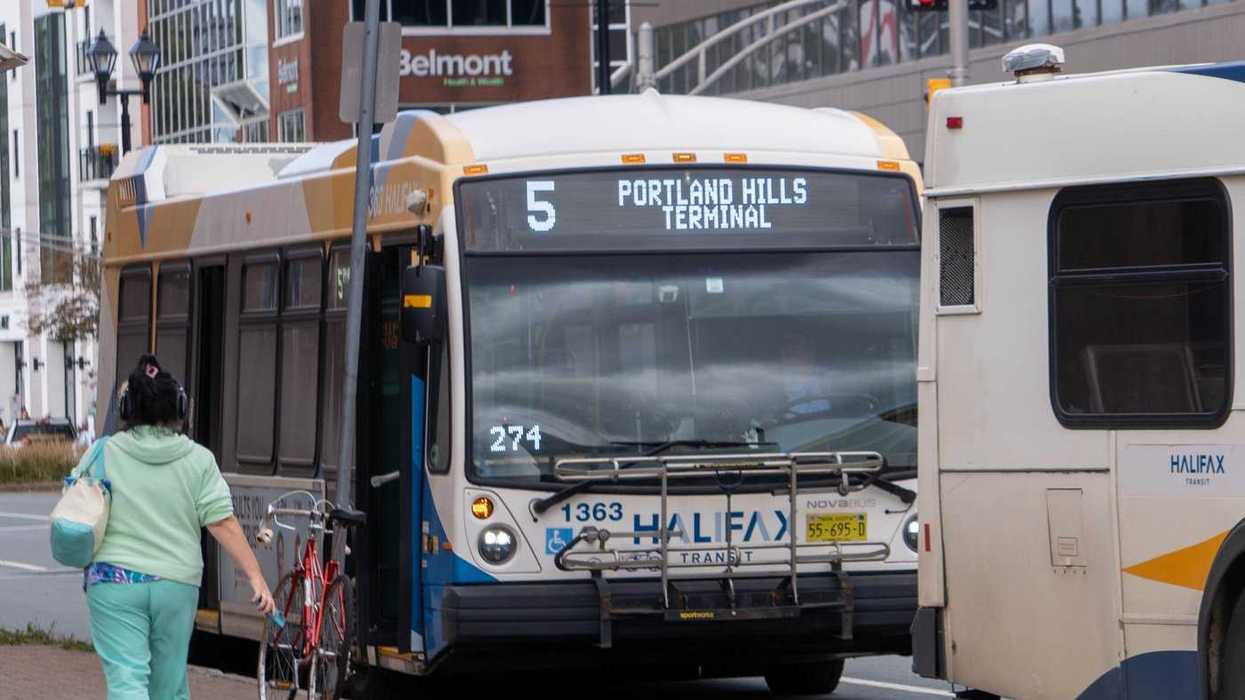
Route 5, which carries Halifax riders across the MacDonald Bridge through downtown Dartmouth, saw passenger overload incidents more than triple in its first two full years, climbing from 17 in 2022 to 57 in 2024, according to HRM data, before easing to 38 in 2025. Of 205 total incidents since the route launched in November 2021, 204 occurred on the Dartmouth side of the bridge.
Route 54 which is flagged for expansion into Port Wallace once the area hits a population density trigger, shows a similar, smaller pattern. The route went from a single overload incident in 2020, to 12 to 15 a year, every year, since 2023.
Transit director Robin Gerus was hired in January 2025. Kent says he has a reputation for solving transit problems in larger cities and she is hopeful his new approach will “close the gap.”
In February, HRM proposed the Halifax Transit Core Service Plan. The $70-million overhaul would change 37 per cent of bus routes, including several in Dartmouth South, with a further overhaul aimed at integrating planned bus rapid transit lines expected in 2028.
The Dartmouth–Woodside ferry is another underused transit option, Kent says.
“It’s only part-time and there’s no parking available," she says.
One of the five ferries was out of service for close to four months, cutting Alderney service to half its usual frequency on weekdays. Council voted for a report on the cost of a new ferry on August 25. The fleet hasn’t expanded since 2018 but the municipality grew by more than 80,000 people from 2017 to 2024. A long-planned Bedford ferry connecting Mill Cove to downtown Halifax has been delayed twice over land-acquisition issues and rising costs.
Kent points to another project that she says could bring real traffic relief.
“The Mount Hope Connector has the potential to help people who live, or will live, in the Eastern Passage–Cole Harbour area bypass Pleasant Street and Mount Hope and make their way to Bedford, Sackville, or Burnside without funneling onto Highway 111 through the Pleasant Street bottleneck,” Kent says.
The connector would extend Baker Drive, through Caldwell Road into Eastern Passage. It has been identified in HRM’s regional planning process but remains unbuilt, unfunded and without a construction timeline. Kent says the connector is likely to move forward with the next major development push into Eastern Passage at Morris Lake, another SPA she says could double the area’s population.
The problem plaguing Dartmouth South’s corridors can be summed up by Chender’s criticism: growth approved faster than the infrastructure needed to support it. HRM points to traffic impact studies and a citywide model as evidence the process accounts for growth, but so far people moving to the East Coast looking for a slower pace are finding big-city traffic that only promises to get worse.
Copyright 2026, South Dartmouth Post. All rights reserved.
Jeremy Hull, Local Journalism Initiative Reporter, South Dartmouth Post.