In new memoir, Harper says he offered Carney a job — but not finance minister
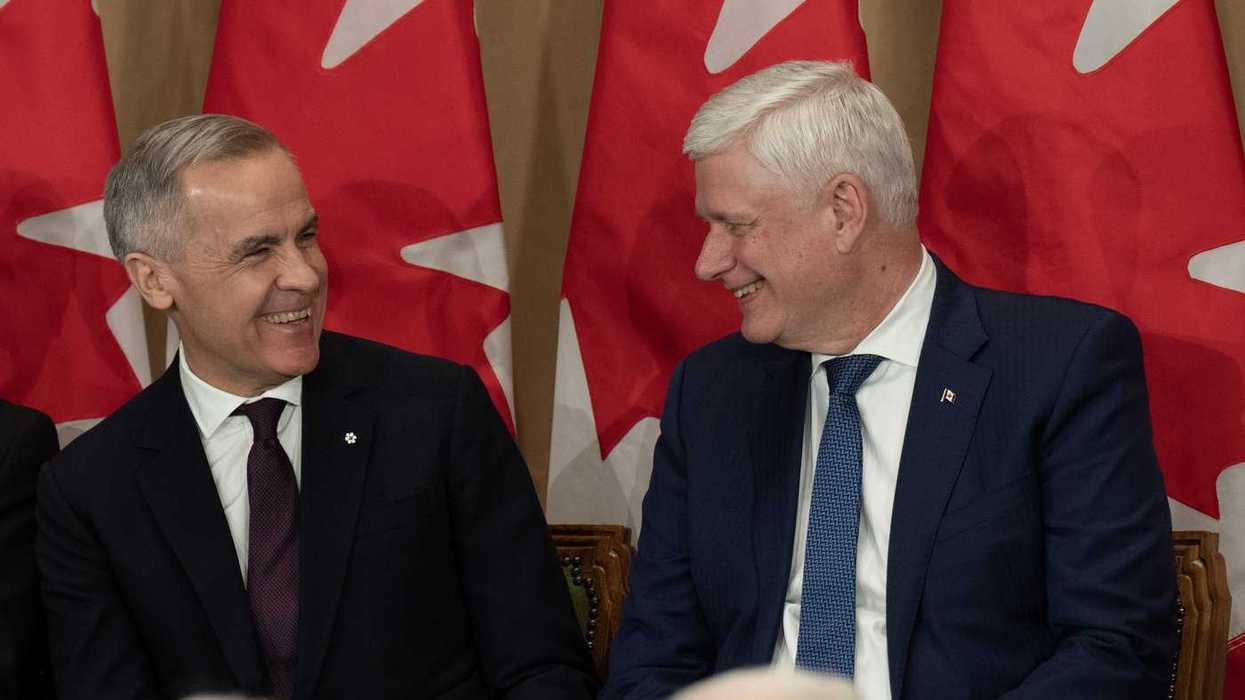
Former prime minister Stephen Harper says he offered Mark Carney, then the governor of the Bank of Canada, a role in his Conservative government in 2012 — though not as finance minister. Not right away, at least.
In his new book "Here for Canada: Memoirs of the 22nd Prime Minister," Harper says he told Carney the finance position was already taken but indicated that he would be next in line for the job when it became vacant.
"Obviously, I did not offer him the post of minister of finance, as it was then not available. However, I indicated that, if he chose to join the government, he would be the leading candidate should the post come open," Harper writes.
Carney said in an interview on CBC during the 2025 Liberal leadership race that Harper had "asked me if I would be his finance minister in 2012." He said at the time it wouldn't be appropriate to go directly from the Bank of Canada governorship to party politics.
In his book, released Tuesday, Harper says while Carney was "highly effective" as bank governor, his finance minister Jim Flaherty was "increasingly" worried in the wake of the 2011 election that Carney was nurturing political ambitions and might wish to seek the Liberal party leadership — something widely rumoured at the time.
"This was a serious concern for us," Harper writes.
Harper says he brought it up with Nigel Wright, his chief of staff, who suggested a job offer would either secure Carney's services for the government or force him to rule out a Liberal leadership bid, since he was in the non-partisan role of bank governor.
"Mark took some time to reflect on the opportunity, ultimately declaring that he should stay out of partisan politics," he said, noting Carney left soon after for the top job at the Bank of England.
The mention of Carney is just a small aside in the nearly 650-page memoir. Harper says he felt he should address the issue since it has "occasionally cropped up in the media."
The book offers Harper's perspective on his tenure in Canadian politics from start to finish, from uniting the right under the modern Conservative party through a decade in government.
It also contains a rare first-person account of Harper's final election campaign and the defeat of his government in 2015.
The former prime minister writes that he debated stepping down from the leadership in the summer of 2014 to rejuvenate the party.
Harper says after deciding to remain at the helm and lead his party into what he knew would be a tough race, he decided he would serve until just after the 150th anniversary of Confederation on July 1, 2017, then call a leadership race.
Harper also says he only learned of one of the most controversial episodes of the 2015 election — his party's embrace of a "barbaric cultural practices hotline" — during his preparation for the French leaders' debate in Montreal when the news "flashed across my screen."
The announcement of the proposed tip line — which frustrated Red Tories and hindered the party's outreach efforts with multicultural communities years after the fact — was fronted at the time by former cabinet ministers Kellie Leitch and Chris Alexander.
Harper writes he was "furious" upon learning about the policy, which he says he was not consulted on and had to defend on the campaign trail.
The book spans decades of Canadian political history. It includes Harper's description of face-to-face standoffs with Russian President Vladimir Putin at G8 meetings, his reaction to the 2008 parliamentary crisis — when opposition parties attempted and failed to form a coalition government to oust the Conservatives — and Harper's personal experience during the 2014 shooting on Parliament Hill, which happened when he was without his normal personal protective detail.
The former prime minister also offers up occasional reflections on current matters. While he attended the World Economic Forum in Davos twice during in his time in office, he now says he opposes it.
If he were prime minister today, Harper writes, he would end the Canadian government's participation in the WEF, an event he describes as a once-useful forum that has become a club for advancing the "narrow interests of its globalist, elitist attendees."
This report by The Canadian Press was first published Nov. 3, 2026.
By Kyle Duggan | Copyright 2026, The Canadian Press. All rights reserved.