Court quashes OHIP denial of out-of-country treatment for man with terminal cancer
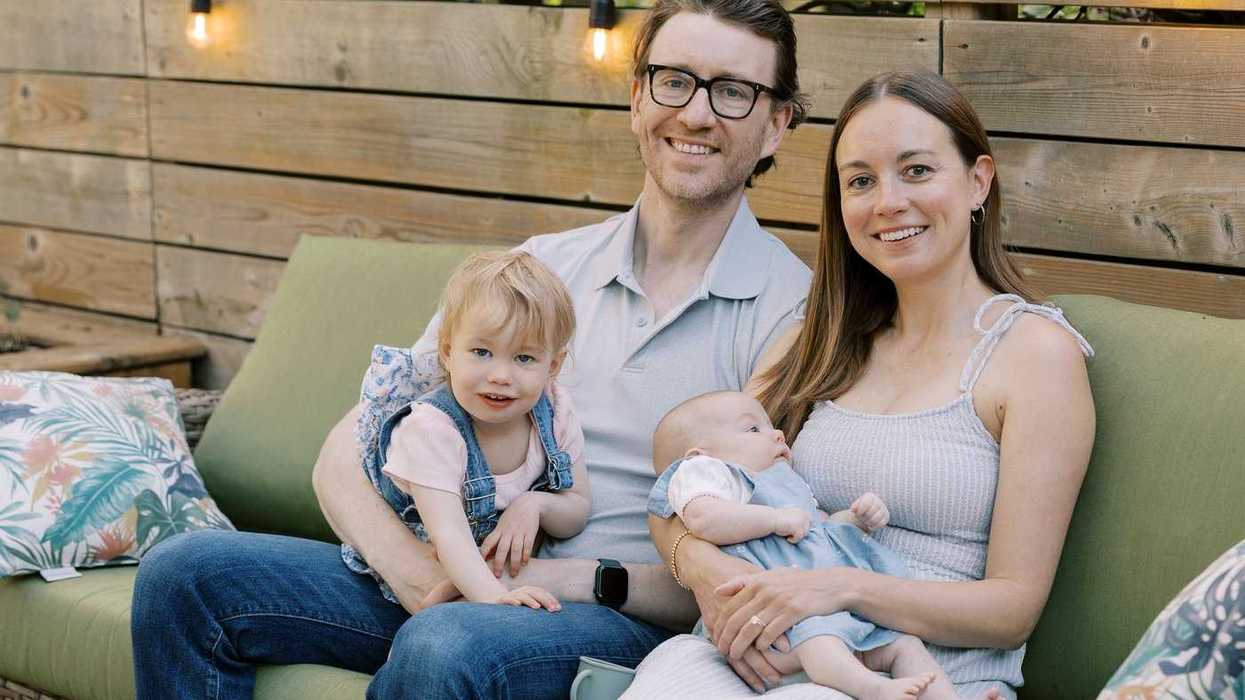
An Ontario court has quashed a decision denying provincial coverage for out-of-country cancer treatment to a young father with Stage 4 melanoma, saying the government offered no basis for its main reasoning.
Alex Shved's oncologist had applied to the Ontario Health Insurance Plan to fund tumour-infiltrating lymphocyte therapy for him in the United States, but that was denied both in an original decision and in a reconsideration.
Shved, 37, asked the Divisional Court for a judicial review, and the court has now ordered OHIP to issue a new decision by the end of next week.
"I felt quite vindicated by the decision," he said.
"(What) made me very happy was that every single point that the judges made were points that I've been arguing for months and months now."
The judges, in a split 2-1 decision, wrote that the core reason for OHIP's denial seems to be that approving Shved's request would undermine a possible future negotiation process with the drug manufacturer on pricing for public funding in Ontario.
The funding denial recommendation from OHIP's executive officer of Ontario public drug programs, however, offers no real basis for that, the two judges wrote.
"Put in the simplest terms, if the EO is going to refuse to recommend potentially life-saving treatment for Mr. Shved, without which Mr. Shved will likely die soon, the EO must do more than assert that it will prejudice 'the system,'" the court decision said.
"The reasons are inadequate and it is not at all evident that 'the system' would suffer any prejudice."
Shved has tried various treatments since first discovering a growing mole in 2020 and his doctors say he would be a good candidate for TIL therapy. It involves doctors removing tumours, extracting immune cells that have infiltrated the tumours, multiplying them in the billions and infusing chemotherapy, then injecting the multiplied cells back into the patient to attack the cancer.
A version of TIL therapy called lifileucel was approved for sale last year by Health Canada, and is now undergoing reviews for consideration of possible funding by provincial drug plans, a process that could take years.
It has a high cost of about US$600,000 – an undoubtedly high price, the judges wrote, but not so high as to preclude treatment that could be life-altering for Shved.
"The cost is not apparently so prohibitive nor the chances of benefit so apparently remote to justify denying Mr. Shved potentially life-saving treatment," the judges wrote. "If the EO concludes otherwise, he needs to explain that conclusion in more detail."
The executive officer of Ontario public drug programs wrote in his denial that Ontario has a "longstanding policy approach" on out-of-country funding requests for drug coverage when the drug is undergoing review processes.
"In my view, routinely funding drug therapies through the out of country program in advance of completion of these evidence-based review and negotiation processes would undermine the incentive structure that encourages manufacturers to participate in Canada's drug review processes," he wrote.
The executive officer failed to provide reasoning or data to explain his conclusion, "which seems counter-intuitive," the judges wrote.
The dissenting judge agreed with the reasons of the other two but wanted to go further and direct the executive officer of Ontario public drug programs to recommend funding, and for OHIP to expedite its new decision on the basis of that recommendation.
"The EO has now had two opportunities to explain why recommending this drug treatment for Mr. Shved would negatively affect Ontario’s process for approving and purchasing drugs for use in insured services," he wrote. "I would not give him a third opportunity."
Health Minister Sylvia Jones' office did not comment.
Shved said he is trying everything in his power to be around as long as possible for his young daughters, and hopes to get a positive new decision in the next few weeks. He is part of a clinical drug trial in Toronto and is stable, relatively speaking, though the disease continues to progress.
"I just spoke with (the trial doctor) today and we reviewed some of my scans that I did over the weekend," he said. "Her advice was, 'If you can get TIL, I would do them right now."
This report by The Canadian Press was first published Sept. 23, 2026.
By Allison Jones | Copyright 2026, The Canadian Press. All rights reserved.