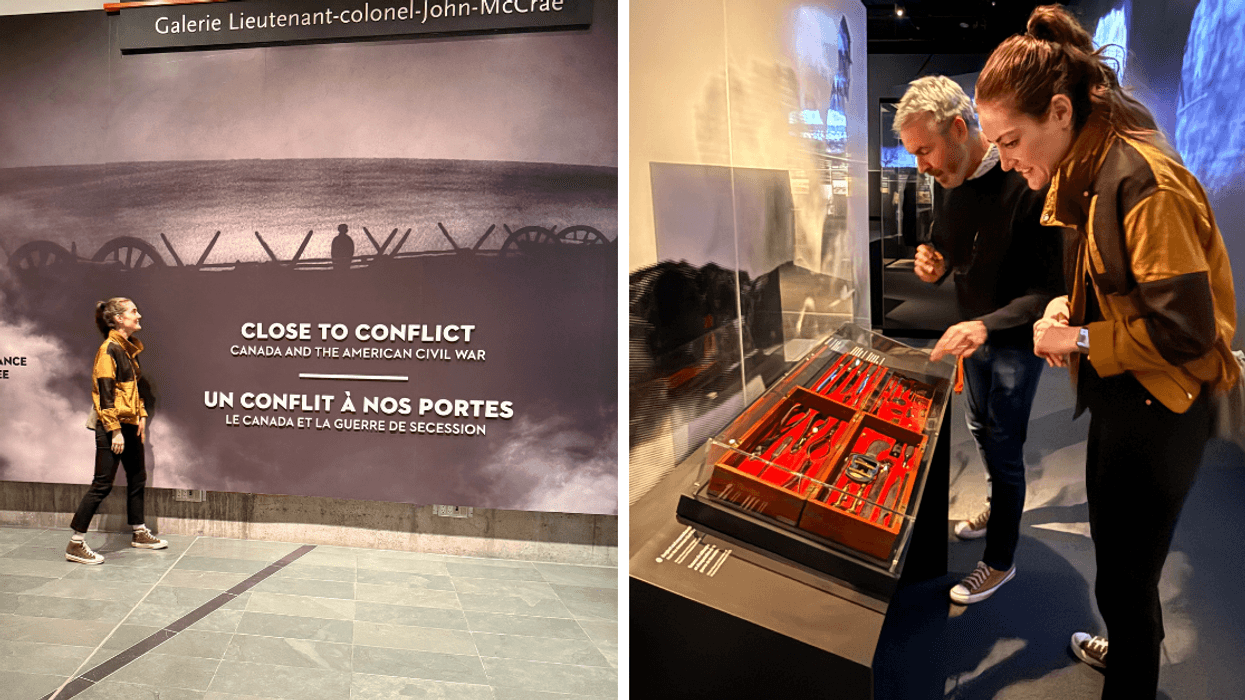
The Canadian War Museum has become one of my favourite places to spend an afternoon in Ottawa. Every time I visit, I end up learning something unexpected, even when the subject feels familiar.
That's why I was curious to check out Close to Conflict – Canada and the American Civil War, a new exhibition that explores how a historical event most of us probably think of as strictly American helped shape the Canada we know today.
I'll admit that before visiting, I didn't think that there was much of a connection between Canada and the American Civil War. But after experiencing the personal stories, artifacts and immersive displays, I realized just how deeply the conflict shaped modern Canada, influencing everything from Canadian society, politics, identity and international relations.
Close to Conflict – Canada and the American Civil War
Upon arriving, I met Tim Foran, who curated Close to Conflict, which runs until February 28, 2027. He gave me a tour of this fascinating exhibition, which is organized into five zones, each one exploring a different legacy of the Civil War. Together, they tell a story that feels surprisingly relevant more than 160 years later.
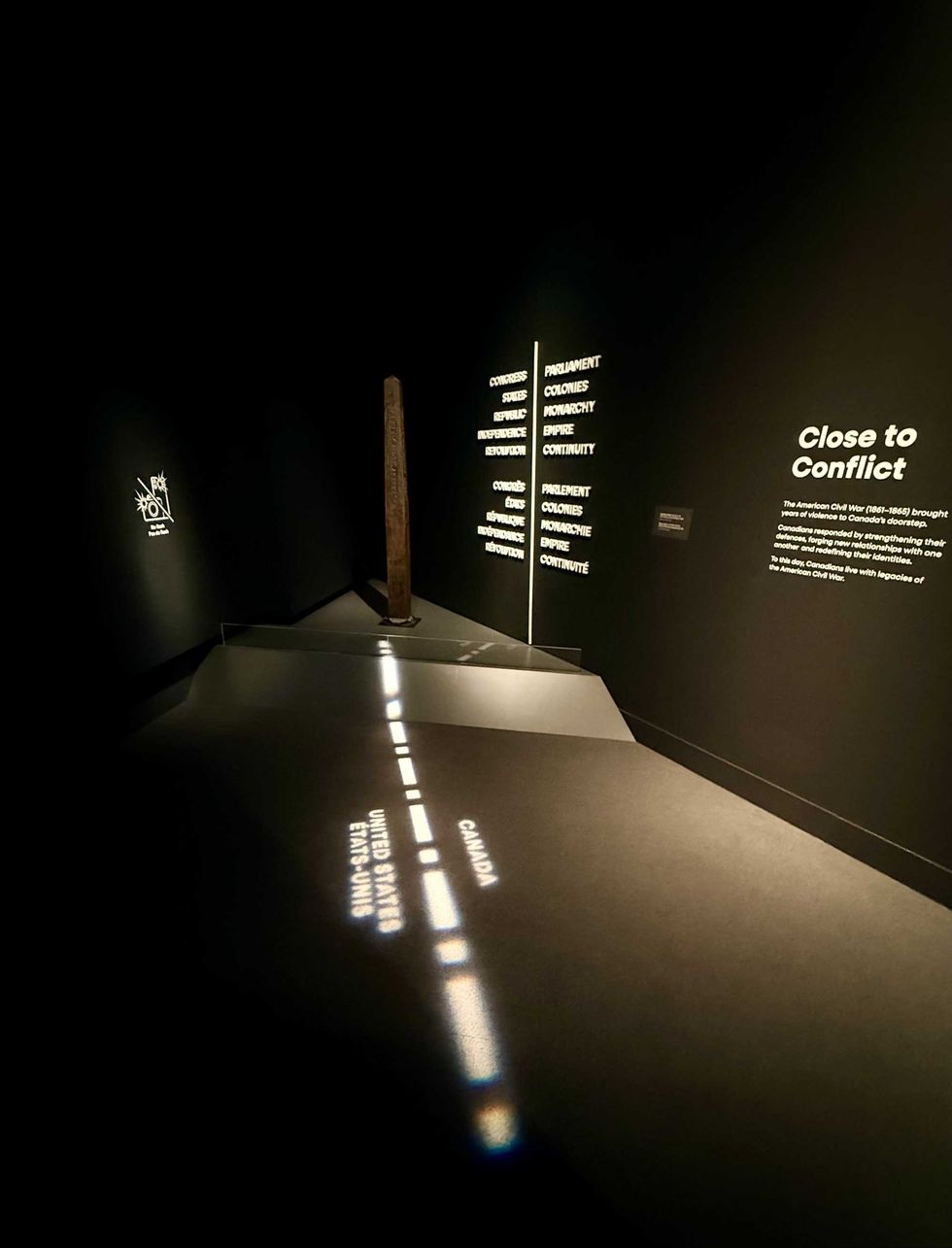 A historic border marker from the New Brunswick–Maine border.Elisha Barry | Narcity Media
I was immediately struck by the Canada-U.S. border marker you see as you enter the exhibition, immediately establishing the idea that two very different political and social projects were taking shape on either side of the line.
Freedom and hope
The first zone opens on Black history and the experiences of formerly enslaved people who sought freedom in British North America before the Civil War.
This zone was co-created with three prominent practitioners of Black public history: Toronto-based historian and educator Kathy Grant and Buxton-based historians and museologists Shannon Prince and Bryan Prince.
It was also one of the most memorable parts of the exhibition for me. Stories from communities like Buxton, Ontario, highlight how freedom seekers built thriving communities while continuing to fight for equality and justice.
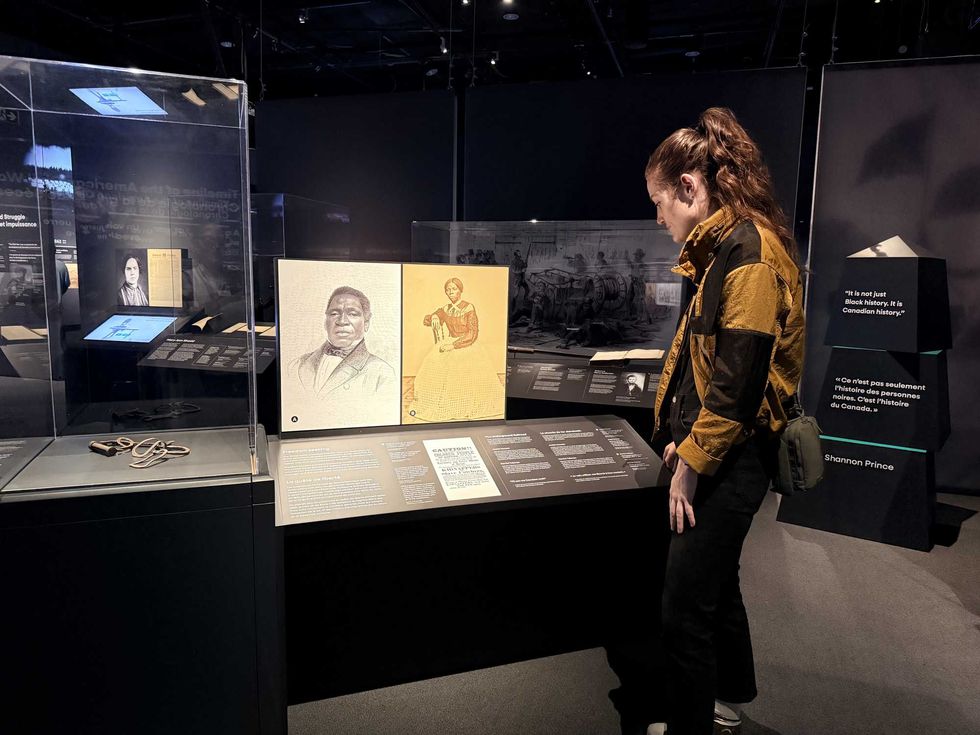 Elisha Barry in the Black history zone of the exhibition.Elisha Barry | Narcity Media
One thing that really stood out to me was an interactive installation where you can listen to current Buxton community members reading letters from Civil War-era community members, with portraits created by artist Kwame Delfish where no image of the letter writer exists.
Weakness and struggle
The second zone examines how British North America's vulnerability during the Civil War accelerated the development of Canada’s armed forces.
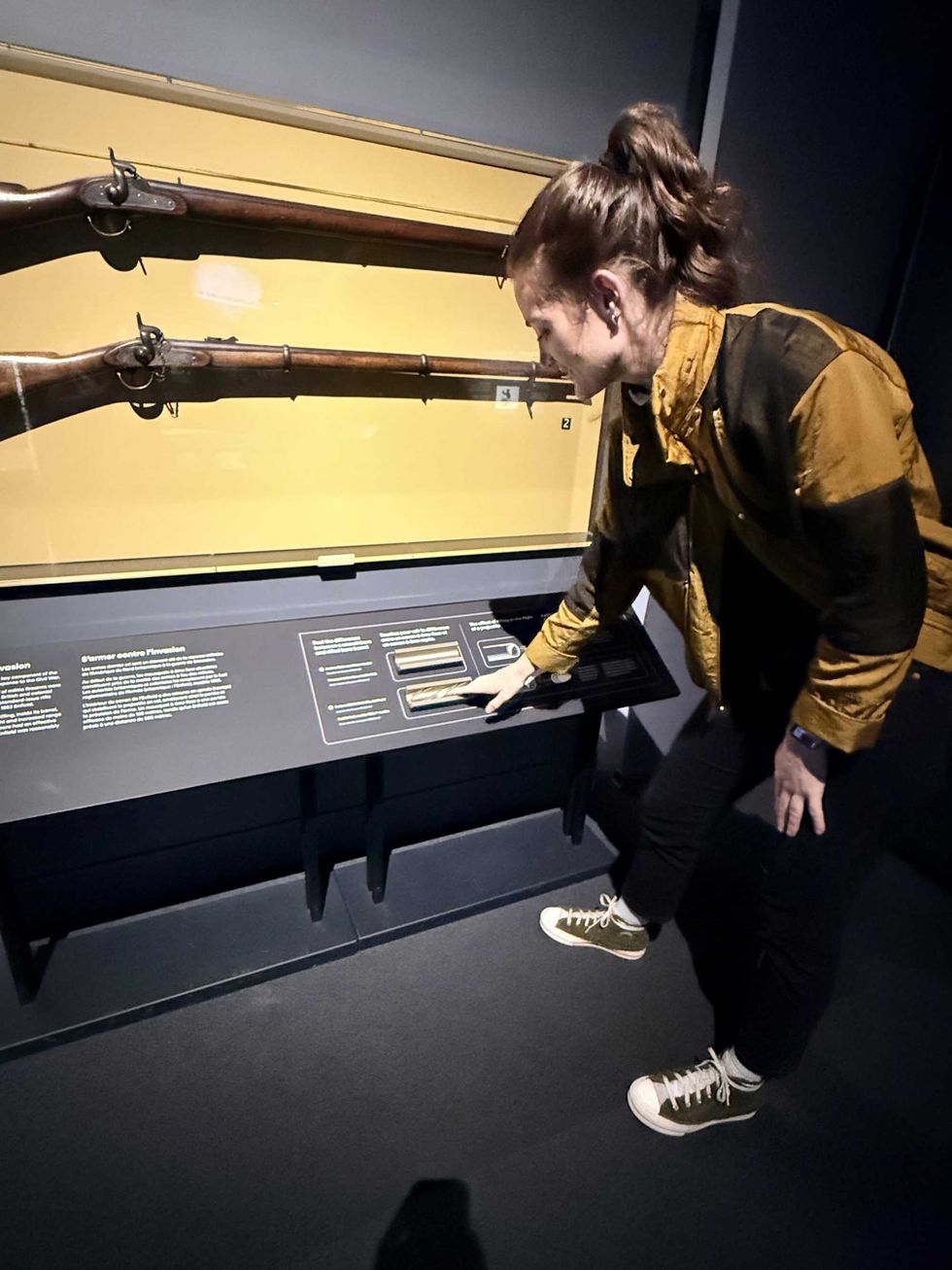 Elisha Barry feels the difference between older (smoothbore) and newer (rifled) musket barrels.Elisha Barry | Narcity Media
I hadn't realized just how seriously colonial leaders feared being pulled into the conflict or even facing invasion by the United States. Displays of militia uniforms and equipment used by colonial militia units preparing for threats that, fortunately, never materialized helped me understand how uncertainty and insecurity helped shape the country that would emerge a few years later during Confederation.
Embroilment
The third zone highlights how, despite Canada remaining officially neutral during the war, tens of thousands of people in Canada (recruiters, musicians, healers, chaplains and fighters) enlisted and fought on both sides of the conflict, contributing to a tradition of Canadians serving in foreign wars.
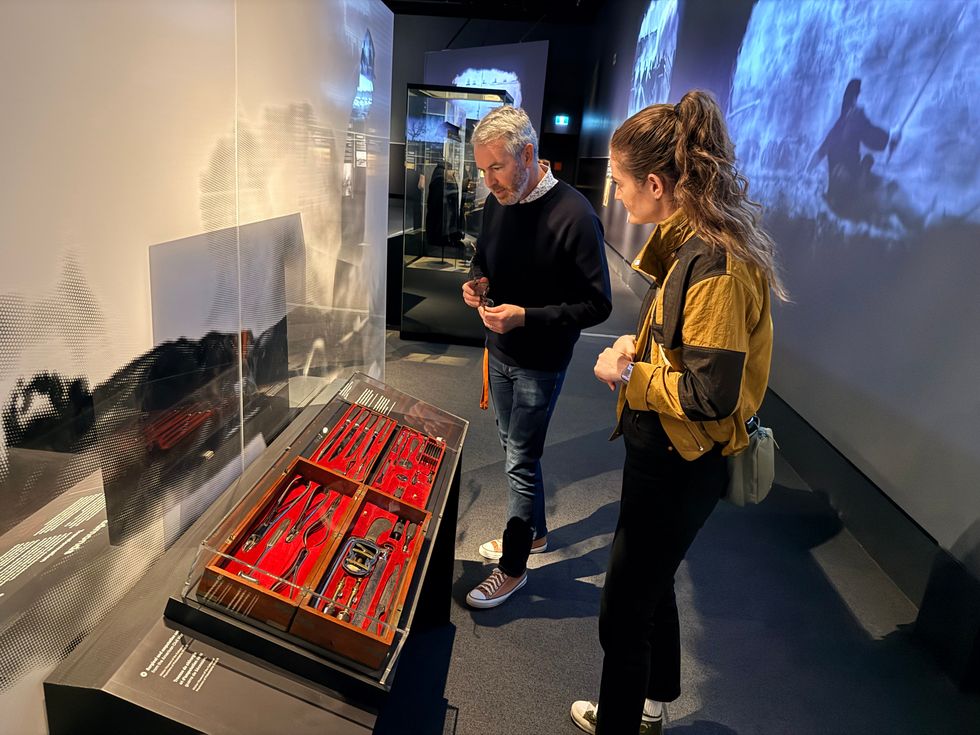 Curator Tim Foran shows Elisha Barry a Civil War surgical set.Elisha Barry | Narcity Media
Several artifacts stood out to me in this zone, including a surgical and amputation set from a Union surgeon in the Civil War, highlighting the grim realities of 19th-century battlefield medicine.
Nearby is a page from a Montreal hotel register signed by John Wilkes Booth, who would later assassinate President Abraham Lincoln. Seeing such a famous name connected to a Canadian location was one of those moments that made me stop and take in every detail.
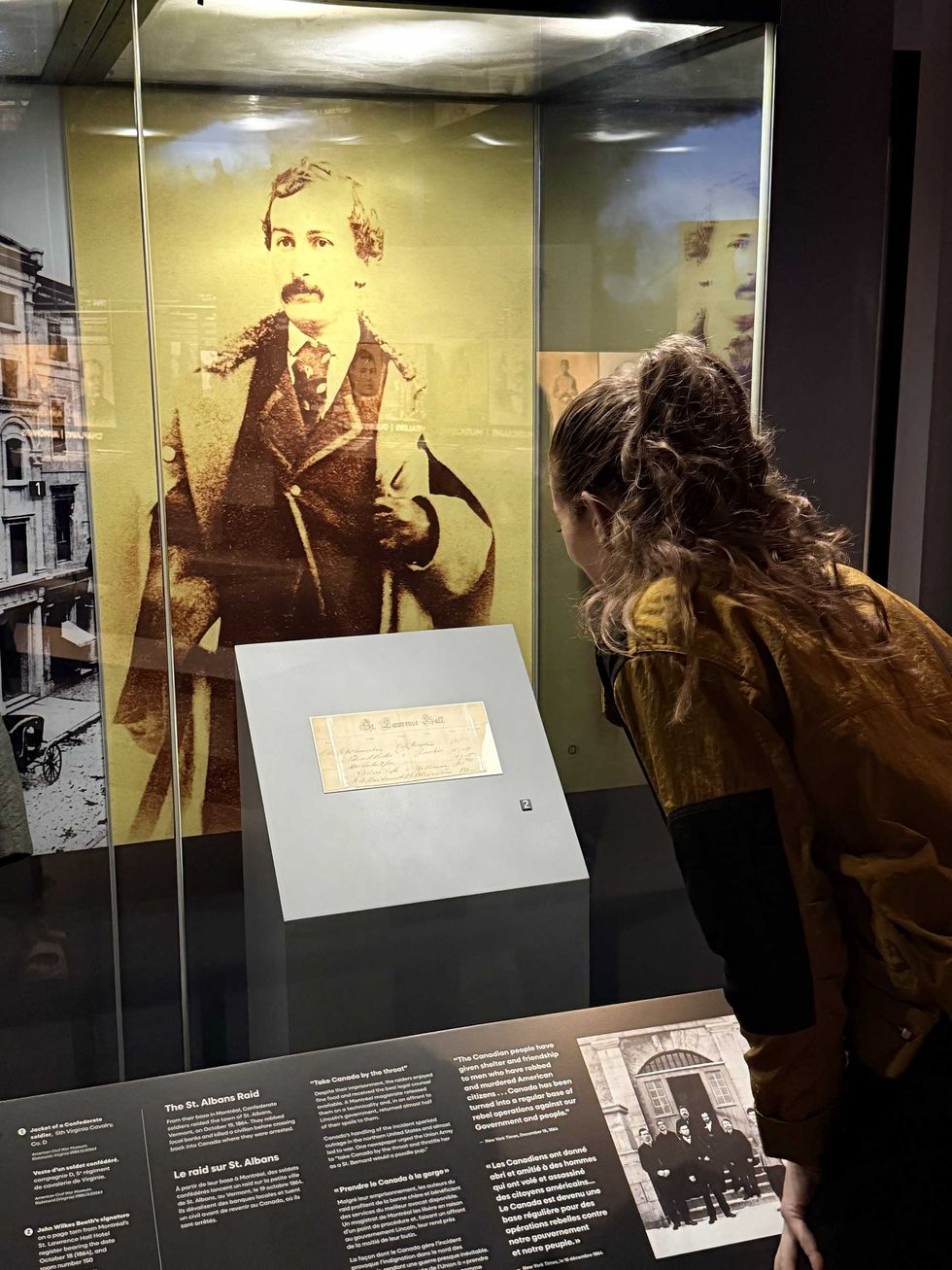 Elisha Barry looks at a Montreal hotel register signed by John Wilkes Booth.Elisha Barry | Narcity Media
Another highlight is the uniform and sword of Union Army Captain John Lonergan. His story illustrates just how complicated cross-border loyalties could be during this period.
Loyalty and resistance
By the fourth zone, the exhibition shifts toward Confederation. Like most Canadians, I learned about Confederation in school, but I didn't really know how much fear of American expansion and invasion influenced the push to unite the colonies.
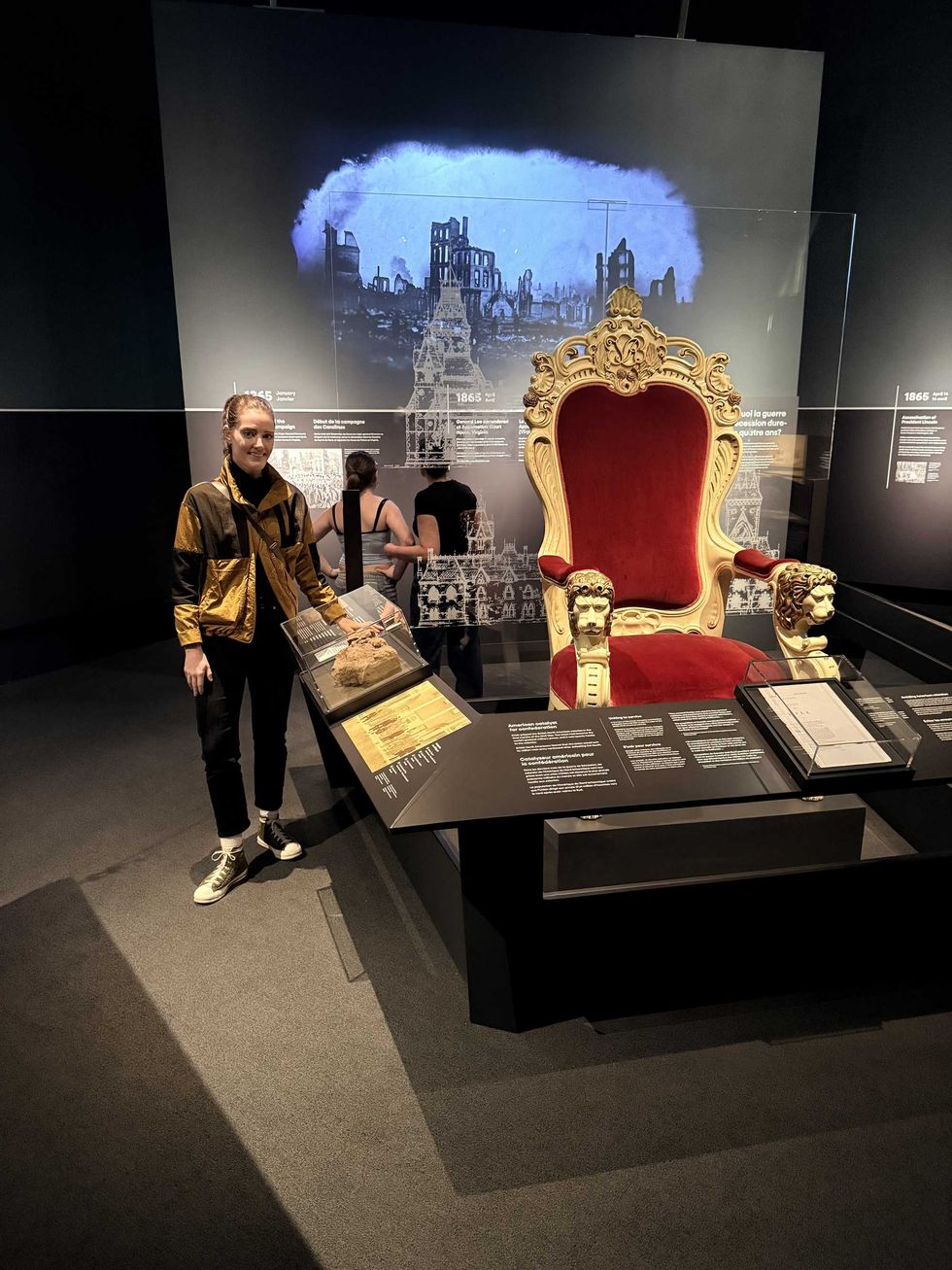 Elisha Barry next to the Governor General's throne.Elisha Barry | Narcity Media
The centrepiece here is the visually impressive Governor General's throne from the 1860s, which sat in Canada's first Senate in Ottawa.
The zone also explores westward expansion and the ways Canada sought to secure territory in response to American ambitions. First Nations and Métis perspectives encourage visitors to think critically about what "nation-building" meant for different communities.
Territory and haste
The final zone was co-created with Siksika Elder and Knowledge Keeper dr. linda manyguns and explores how governments imposed a boundary through Indigenous homelands after the Civil War, causing profound disruption for communities that were there long before the border.
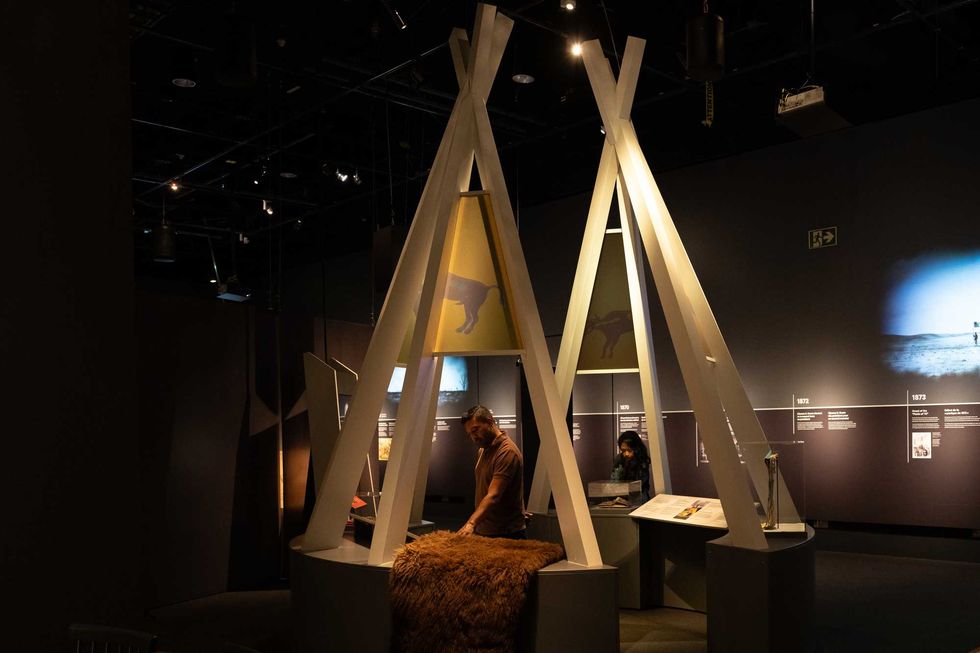 Visitors in the tipi featuring dr. linda manyguns' design.Courtesy of the Canadian War Museum
This section addresses the consequences of colonial expansion and treaty-making but also highlights resilience and cultural revitalization. The contemporary regalia and community stories show that the legacy of the Civil War is still shaping lives and communities today.
Final thoughts
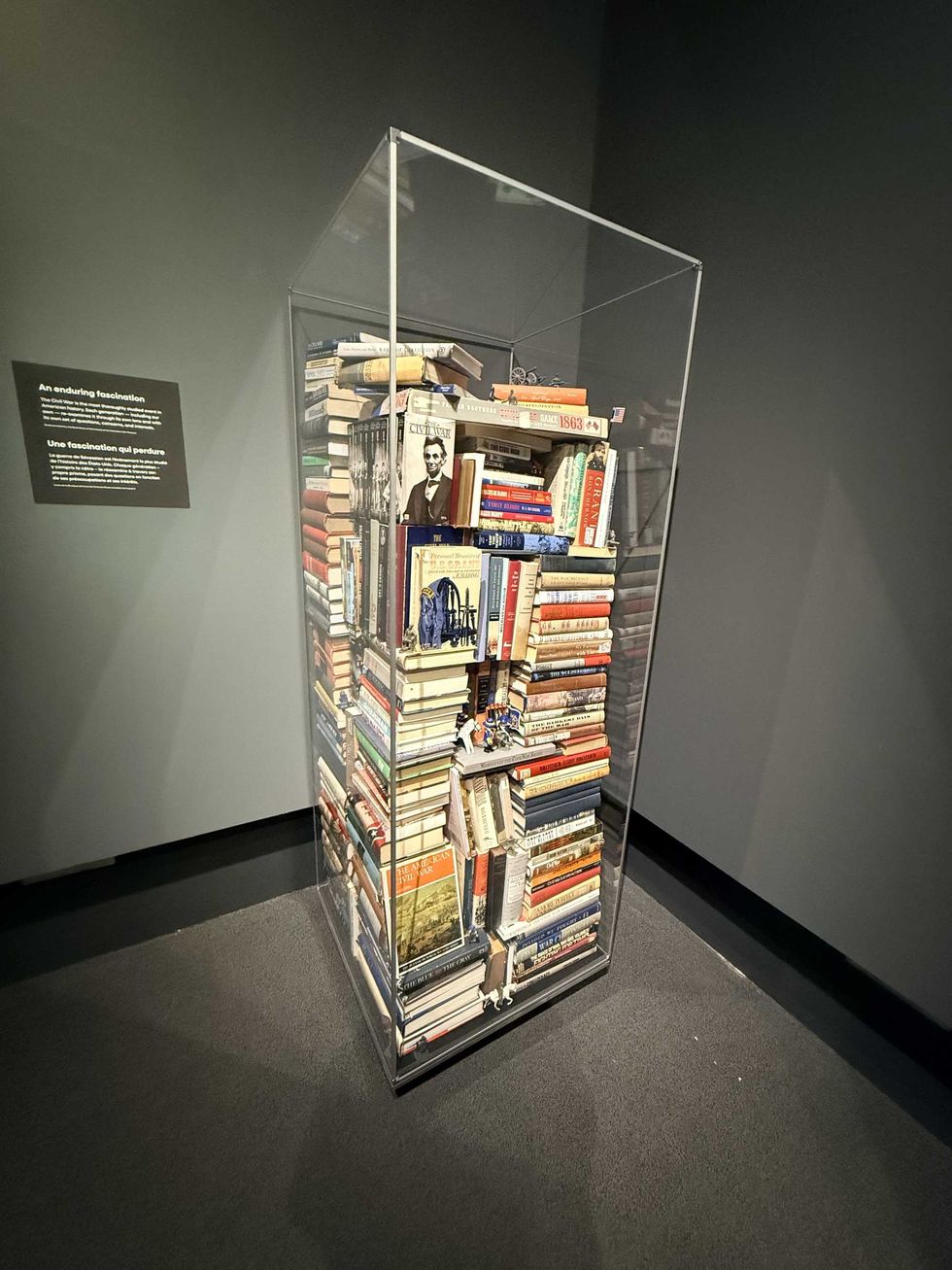 A display in the exhibition conclusion shows some of the countless books that have been written on the American Civil War.Elisha Barry | Narcity Media
I loved the interactive nature of the exhibition. The soundscapes and personal stories really elevated my experience, and it was really cool to learn so much from the curator himself, Tim Foran, who is clearly super passionate and knowledgeable.
Both new and past visitors will enjoy Close to Conflict – Canada and the American Civil War and will learn how deeply the conflict influenced everything from Canada's military and Confederation to civil rights movements and Indigenous experiences.
To learn more about Close to Conflict – Canada and the American Civil War, visit the Canadian War Museum website or follow them on Facebook or Instagram.
Although products were provided for free in this review, the author's opinions are genuine and do not reflect the views of Narcity Media.