Korchinski-Paquet's mother makes new allegation against police at coroner's inquest
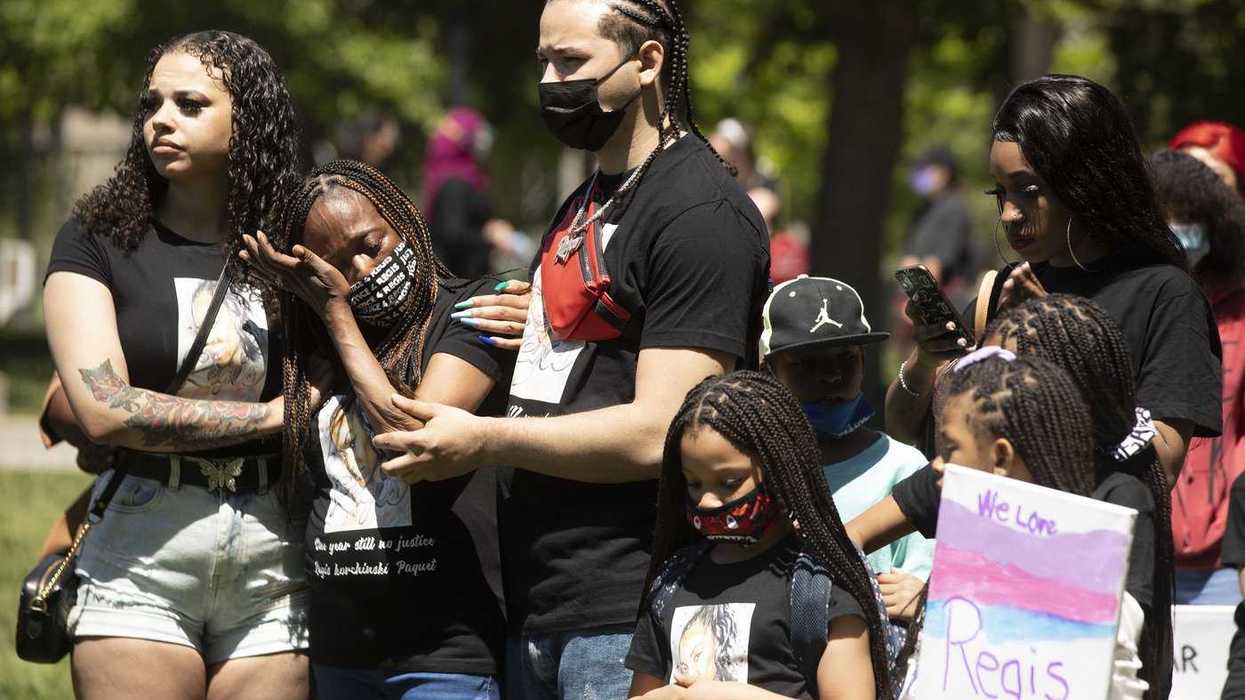
A coroner's inquest into the death of Regis Korchinski-Paquet was scrambling to find a way forward Thursday after the Toronto woman's mother unexpectedly made a new allegation against police officers during her testimony.
Korchinski-Paquet fell from her 24th-floor balcony in the late afternoon of May 27, 2020, while police officers were in the west-end apartment she shared with several family members.
As she described her memories of that day on Thursday, Claudette Beals told the inquest that she saw officers push her daughter toward the balcony, then shortly afterward, heard the 29-year-old woman call out to her for help.
"That's your belief?" inquest counsel Roger Shallow asked Beals after she summarized the sequence of events leading up to her daughter's death.
"That's my belief," Beals replied.
"I think it's important that you're able to speak your belief. I want to focus in on what you actually saw with your eyes versus what your belief is," Shallow said.
"I saw them pushing Regis towards the balcony. That's all I saw, but I saw that myself," Beals said.
Her comments prompted lawyers for several of the parties to raise concerns in the absence of the jury and witness about previously undisclosed evidence.
Among them were lawyers representing the officers at the scene, who said their clients weren't given a chance to respond to the allegation when they testified earlier this week.
Two officers, Const. Shane Beaudoin and then-Const. Adam Vandenbrink, testified Korchinski-Paquet moved quickly to the balcony after she was asked to speak to a paramedic. She had been allowed into the apartment because she needed to use the bathroom, they said.
The presiding coroner called a recess Thursday morning so that counsel could discuss how to proceed, which was then extended to the early afternoon. When the inquest reconvened, however, Dr. David Cameron said it would be adjourned until Friday morning.
The inquest had done well so far in exploring issues related to epilepsy, postictal delirium and their "intersection with police encounters," and plans to continue that exploration, Cameron told jurors.
"Exploring the circumstances of a death in terms of facts is also an important part of an inquest ... We're strategizing currently in how to best do that in the name of fairness and transparency and the parties to the inquest are working collaboratively to bring you that information in a clear and fair manner."
That process is "taking a little bit of time," he said.
The inquest has heard Korchinski-Paquet had a history of seizures from epilepsy, often followed by erratic and aggressive behaviour.
A neurologist who did not treat her but reviewed her records said that on multiple occasions, she showed symptoms in keeping with postictal delirium, an altered mental state that can follow seizures.
Korchinski-Paquet had experienced two seizures earlier in the day before police were called over a violent disturbance involving knives.
One of the province's police watchdogs later cleared the officers of wrongdoing in the fatal fall, which it said happened as she was trying to move from her apartment's balcony to a neighbour's.
The inquest's scope includes how first responders are informed and trained about epilepsy but is not meant to examine the various watchdog investigations into the case.
Jurors in a coroner's inquest do not assign legal responsibility but can issue recommendations meant to prevent similar deaths in the future. Those recommendations are not binding, however.
This report by The Canadian Press was first published Oct. 22, 2026.
By Paola Loriggio | Copyright 2026, The Canadian Press. All rights reserved.