Trade tensions with Canada not top of mind for Republicans at convention
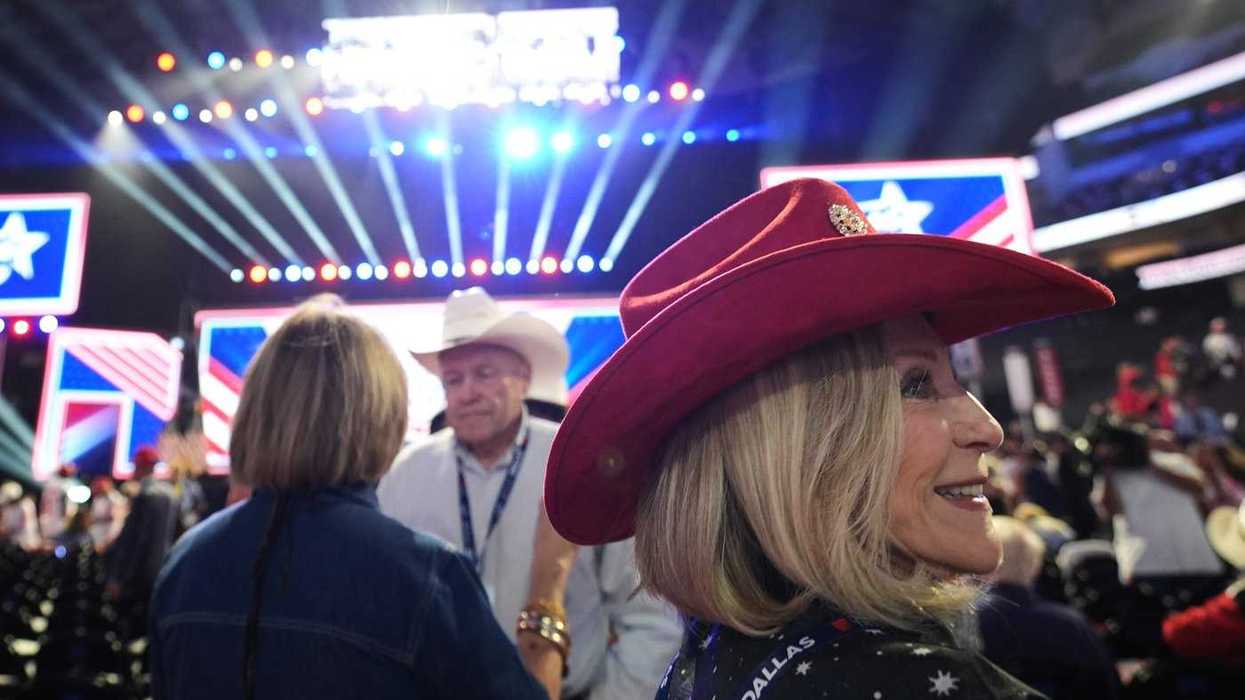
U.S. President Donald Trump told his most ardent followers Wednesday that Canada "very much wants to make a deal" while headlining a highly unusual Republican convention a day after escalating his trade war.
Trump also mused about his move to change the name of Lake Ontario to "Lake America," but among party faithful gathered in Dallas, his targeting of Canada was not on the radar.
Ken Moore called the trade war an "interfamily spat."
"Canada and the United States are going to be friends for a long time," he said. "We'll get past this."
Moore said few of his family and friends talk about the bilateral relationship with America's neighbour to the north, and that most "probably don't even know about the tariff war with Canada."
Trump was enveloped in cheers of "U.S.A." throughout his speech. He largely relied on regular talking points: criticism of the Democrats and immigration, claims of his ability to pull in foreign investment and an often-repeated anecdote about how tariff is his favourite word.
The convention, billed as "Trump-a-Palooza," is meant to be a fundraiser and a means to build momentum behind Republicans ahead of the midterm elections — at a time when Trump faces low approval ratings.
Normal political conventions are held every four years. This was the Republicans' first time holding a midterm event. It was not like the usual political gathering and was set up as a celebration of Trump from start to finish.
Tying Trump to their ticket, however, could prove problematic for some Republicans, who are facing criticism over inflation, an unpopular war with Iran, rising gas prices and Trump's tariffs ahead of the midterms.
The midterm vote could change control of Congress and possibly put guardrails on the president's expansive use of executive power for the second half of his second term.
The president, recognizing the stakes of the election, pledged during his speech that if Republicans hold control of Congress, every adult in America would get a $5,000 Trump "dividend." He has previously promised other cheques, including from tariff revenue, that never materialized.
Convention attendees looked forward to seeing Trump and said they wanted to hear how his administration would tackle concerns over election integrity and affordability.
Many said they aren't worried about the relationship with Canada, even as polling shows Trump's tariffs and his move to rename Lake Ontario are widely unpopular.
"I don't really think about that from our perspective," Brian Becker said as he walked through the American Airlines Center where thousands gathered Wednesday.
Becker, president of the Irving Professional Firefighters Association, said he wanted to show his support for what the Trump administration has done for firefighters.
Becker credits the administration with boosting a benefit program to help firefighters with job-related cancer and getting rid of regulations that affected their social security.
Asked about the trade war, he said he was focused on improving the lives of firefighters.
"I don’t really know about all that stuff, to be honest," he said.
The relationship between Canada and the United States was upended upon Trump's return to the White House. Canada soon found itself the target of tariffs and threats of annexation from a president who sees it not as a close ally but an adversary.
While Canadians have been laser-focused on the upheaval, many Americans have been oblivious to the downturn in the relationship.
And while more Americans may have become aware of the rift after trade talks between Ottawa and Washington broke down last month — causing Trump's trade war and rhetoric toward Canada to rapidly escalate — it's not a concern broadly shared by those at the convention.
Beyond the quick comment about Ottawa wanting to make a deal and the name of the Great Lake, Trump didn't mention the trade war with Canada.
Republicans from northern border states have reported being anxious about how trade tensions and tariffs on Canada would affect their vulnerable seats in the midterms.
Many political observers have predicted the House to flip to the Democrats. Trump's targeting of Canada could also put the Senate in play. Republicans have worried about retaining seats in Alaska, Iowa, Maine, Michigan and Ohio — states reliant on trade with Canada.
Maine Republican Sen. Susan Collins has said the tariffs on Canada make the job of re-election harder.
Many Republican party members, including those facing tight races, have said they are skipping the two-day convention, some citing conflicting obligations.
Michigan Senate nominee Mike Rogers, who received praise from Trump during his speech, is set to make an appearance at the convention. He is running a high-profile race against Abdul El-Sayed, a Democrat who has explicitly made Canada a key election issue.
"This vanity war is not a war with Canada," El-Sayed said last week. "It's a war on Michigan because we have to pay the price.
"And we pay it every single day for goods that should not cost as much as they do."
This report by The Canadian Press was first published Sept. 9, 2026.
— With files from The Associated Press
By Kelly Geraldine Malone | Copyright 2026, The Canadian Press. All rights reserved.