Two former Alberta premiers call for better education, civic engagement with referendum over
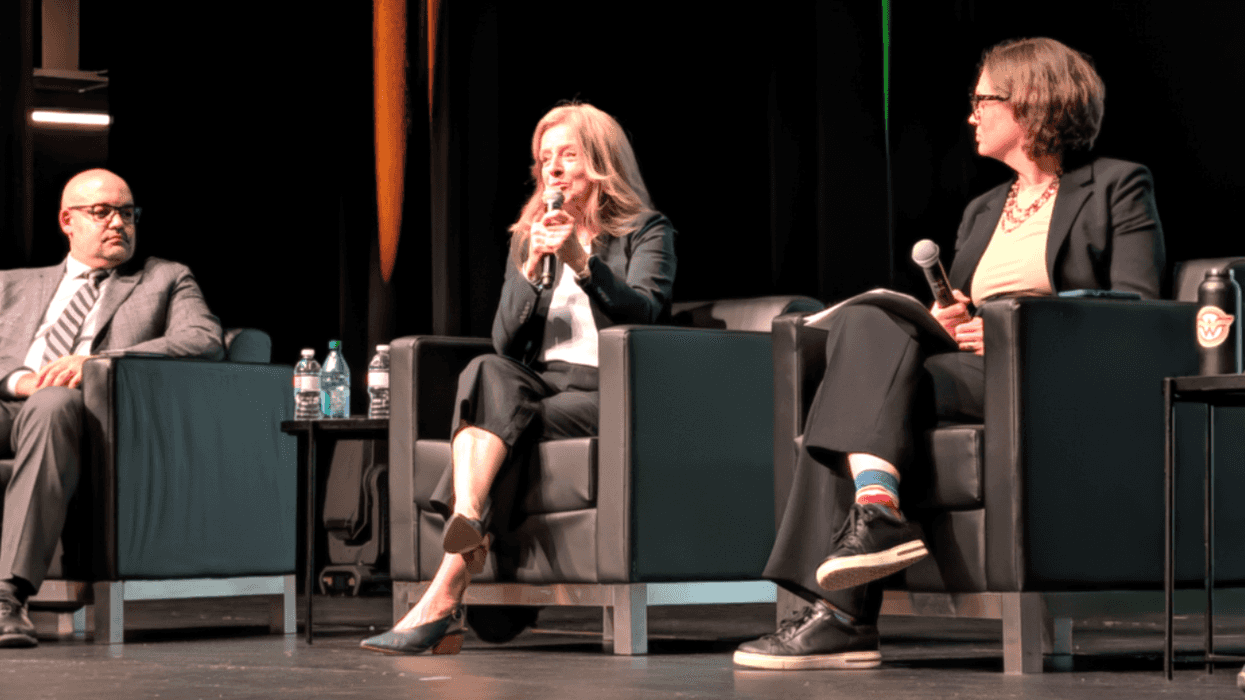
Alberta's most recent premiers are seeing different ways forward for the province after the referendum.
Rachel Notley and Jason Kenney had teamed up in the days and weeks leading up to the vote on Oct. 19, encouraging Albertans to vote and stressing the importance of voting for Alberta to remain in Canada on question 10.
Notley took it further, even impressing upon voters to say no to other nine questions.
On Monday, Notley participated in a panel at the University of Alberta which broke down the results, where she said the results don't reflect well on the current premier.
"First thing the results tell us is that we don't have a very good premier," said Notley.
While Smith said throughout the referendum campaign that she was supportive of Alberta remaining in Canada, she also asked for a mandate on the other nine questions about constitutional and immigration reform.
While Albertans voted for the five immigration reform questions, they rejected the other constitutional reform asks, something Notley noted.
"It takes one heck of an unpopular public figure in Alberta to lose on the Senate question," she said. "We've all heard about it in school for decades, both the left and the right have a pretty robust critique on the Senate and yet, they lost on that.
Notley noted her focus was on a few things going forward, chief among those things being the upcoming release of the provincial election maps.
"I'm very worried that sometime later this week, this premier is going to roll out what is a history-making effort to steal the next election through an unprecedented gerrymandering effort," said Notley. "We've seen a draft set of ridings that literally stretch from downtown Lethbridge to the B.C. border, the U.S. border, and the Saskatchewan border, dividing the city into four ridings. Utterly ridiculous."
Results didn't surprise Alberta's first UCP premier
As for Premier Jason Kenney, the results didn't catch him offguard.
"I had been concerned about turnout," said Kenney. "Federalists, especially older folks, participated in huge numbers in the mail-in balloting. I think that the ballot 85-15 in favour of national unity, but it was much closer on election day. I think this was a partly decided by people, really a large portion of the population, giving a damn."
Kenney had been waving the federalist flag throughout the campaign, touting the benefits of staying in Canada while also being a strong advocate for Albertans voting for option one on question 10, the question concerning Alberta's place in Canada.
For Kenney, he said older folks grew up with an stronger sense of patriotism, and wants to see that return in the younger generation.
"What you can see in the polling is a significant decline in pride, in an attachment to Canada amongt younger people. I think this is partly a reflection of an education system which effectively stopped teaching Canadian history," he said.
What gives Kenney hope is governments coast to coast co-operating, especially now in B.C. with a newly elected Conservative government that seems open to more Canadian energy infrastructure reaching the west coast.
Canadian philosopher and social critic George Grant's famous work Lament for a Nation from 1965 argued about Canada's state as a nation. For Kenney, not only is it possible for Canada reclaim its national identity, it's on its way there.
However, he said a few things must change first.
"Where I'm concerned that we have a whole generation that's been taught almost nothing but negativity about Canada. And that really needs to change."
Copyright 2026, St. Albert Gazette. All rights reserved.
David Boles, Local Journalism Initiative Reporter, St. Albert Gazette.