481-metre Alaska tsunami a warning for B.C.
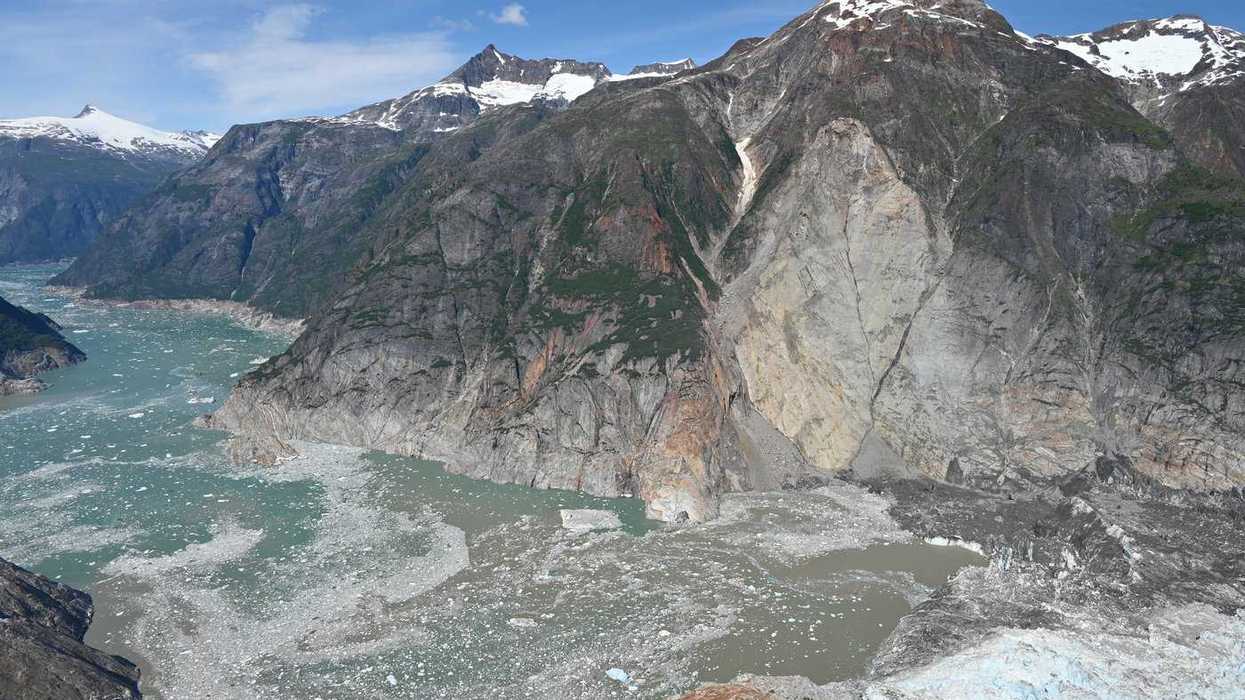
When millions of tonnes of rock fell one kilometre into an Alaskan fiord last year, it set off one of the largest tsunamis ever recorded, a monstrous 481-metre wave higher than the tallest viewing platform of the CN Tower, a new study shows.
Dan Shugar, an associate professor at the University of Calgary and the corresponding author of the study, says the scale of the Tracy Arm Fjord tsunami shows the catastrophic potential of such waves and why their risk needs to be a stronger focus for policymakers, particularly in British Columbia.
"On the West Coast, we do have Prince Rupert and Port Alberni, we do have towns at the heads of some of these fiords," said Shugar.
"There's also a pretty big ecological impact, you know, there's a lot of trees that got completely obliterated and habitat and probably animals, etc., that got obliterated by this tsunami."
The study, published in the journal Science on Wednesday, finds that the tsunami in the southeast region of Alaska near the northwest B.C. border might not have happened but for the rapid retreat of a glacier that would have been in the landslide's path.
It concludes that continued warming, alongside "increasing exposure due to the expansion of infrastructure and cruise ship tourism," means the hazards from landslide-triggered fiord tsunamis are growing.
"Similar hazard cascades could result in future disasters," it says.
The study says that at 5:26 a.m. on Aug. 10 last year, a landslide of more than 64 million cubic metres fell 1,000 vertical metres into narrow and deep Tracy Arm Fjord.
The resulting wave had the second highest wave run-up — or onshore height above sea level — ever recorded at about 481 metres.
The fiord usually sees about three cruise ships a day, but in summer months more than 20 ships visit Tracy Arm and nearby Endicott Arm fiords daily.
Luckily, the one cruise ship in the fiord at the time was not in the tsunami's path — it would have been "unsurvivable" for cruise ships at the head of the fiord, said Shugar, an associate earth and environment professor at the University of Calgary.
The landslide raised the fiord like water sloshing up the edges of a bathtub, said Shugar.
The research, which also involved academics from Alaska, Denmark, Britain and elsewhere, found the South Sawyer Glacier near the landslide had retreated substantially, about 500 metres, in the months ahead of the landslide.
Had it not retreated, the landslide would have collapsed onto the glacier ice or not fallen at all, it says.
Shugar said warming near the fiord in the past 200 years or so could be almost completely blamed on humans, and it had led to glaciers thinning and retreating.
He likened the landslide to a child cleaning their room by stuffing their closet full of teddy bears and other debris — then latching the door closed.
"The door is the rock wall, but it's being held there by the latch, right? And the latch is the glacier," he said.
"And you pull the glacier away, you unlatch the door, and the door swings open and all the teddy bears fall out."
Shugar said he doesn't believe potential tsunamis should prohibit cruise ships and tankers off the Canadian coast.
However, with cruise tourism increasing and the potential for increased tanker traffic — amid discussions of a new oil pipeline to the B.C. coast — there could be a threat from such tsunamis.
"We really ought to be looking at these slopes very carefully to assess the risk or the hazard that they pose and thinking about investing in all sorts of instrumentation that might be able to provide early warning," he said.
He said the Geological Survey of Canada is already studying the hazard potential of fiords but that it should be considered by policymakers on a national scope.
This report by The Canadian Press was first published May 6, 2026.
By Dayne Patterson | Copyright 2026, The Canadian Press. All rights reserved.