Bank of Canada’s key rate ‘too blunt’ to fix housing unaffordability: official
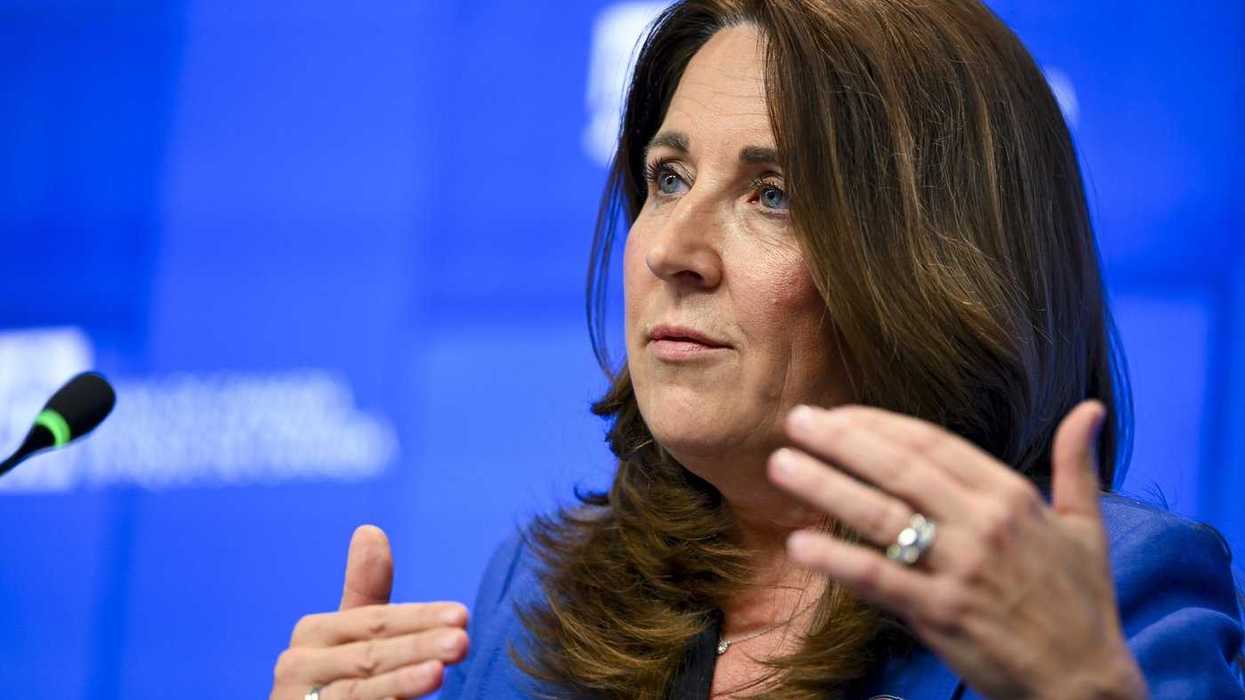
A top official at the Bank of Canada says monetary policymakers are struggling to find new tools and pathways to address persistent housing affordability challenges.
Senior deputy governor Carolyn Rogers gave a speech in Victoria, B.C., on Thursday that laid out the complex interplay between housing, regulation, the economy and the Bank of Canada.
One of the reasons housing is such a thorny issue to tackle is because of the outsized role it now plays in Canada’s economy relative to other jurisdictions.
Rogers recalled that in 2000, residential investment accounted for 4.3 per cent of Canada's gross domestic product, while business investment in equipment and machinery sat at 8.3 per cent. Those shares are now largely reversed, she said.
Recent declines in home prices have offered buyers relief in some markets, Rogers noted. But because of housing's importance to household wealth and the broader economy, prolonged declines in value can have widespread effects, including slowing the pace of new construction.
Efforts to address instability in the housing market with measures like the mortgage stress test have also historically raised barriers to buying a home, the senior deputy governor said, even if those regulations helped maintain stability.
Rogers said the central bank's key interest rate is "too blunt" to fix housing affordability alone because lower rates fuel rising prices while higher borrowing costs box out prospective buyers.
Different markets in Canada also sometimes need different policy responses — many of which are out of the Bank of Canada's purview.
"We set one interest rate for the whole economy. We cannot set one rate for housing and another for everything else. And interest rates cannot directly address supply constraints. They can’t build homes, rezone land or speed up permits," Rogers explained.
She also defended the Bank of Canada's actions during the COVID-19 pandemic against criticisms that the central bank stoked a run-up in prices over that period.
The Bank of Canada lowered its policy rate rapidly down to a floor of 0.25 per cent in the early days of the pandemic to cushion the economy against uncertainty, but critics argued keeping it low for too long fuelled surging home prices.
Rock-bottom interest rates indeed made credit cheaper and lowered the barrier to homebuying, Rogers acknowledged.
But strong immigration levels, tight restrictions on building new supply and the speculative view of housing as a path to wealth also encouraged demand.
"The story is more complicated than low interest rates. But that doesn’t let monetary policy off the hook," she said.
Rogers also detailed the ways the Bank of Canada has tried to incorporate a housing affordability lens in its five-year mandate review with the federal government set for this fall.
Tracking home prices as part of its measures of inflation is a complicated endeavour, she explained, because housing is an asset as well as a cost for buyers.
Canadians can also get confused by the Bank of Canada's actions to tame inflation with higher interest rates, Rogers noted. Since rising mortgage interest costs feed into shelter price data, it can seem counterintuitive that higher interest rates dampen inflation rather than fuel it.
"The most important lesson we took from our review is that we need to explain these trade-offs better and be clear with Canadians about what monetary policy can and cannot do," she said.
Rogers told the business crowd in Victoria that the path to restore housing affordability needs a mix of policies to boost supply while reducing the economy's reliance on perpetually rising home prices.
That job won't fall to the Bank of Canada alone, she said. It will require "patience and co-ordination" multiple levels of government, regulators and the private sector to strike the right balances.
This report by The Canadian Press was first published Oct. 1, 2026.
By Craig Lord | Copyright 2026, The Canadian Press. All rights reserved.