
The City of Calgary says 911 operators broke rules leading to a delay of almost an hour before the alert went out for missing 11-year-old Parker Wells.
The boy's disappearance in July sparked a massive search that went on for two weeks until his body was found in a system of pipes under a city freeway. Foul play was ruled out.
Iain Bushell, the city’s head of emergency management, told reporters Tuesday that a review of the 911 handling of the call led to disciplinary action and one person "is no longer with the city." He declined to provide details.
The review, also released Tuesday, concluded that 911 operators had the information they needed to alert police to their highest priority call right away that July morning, but did not.
"We discovered that some mistakes were made, that procedure was not followed correctly,” Bushell said. "At 911, I can tell you that whole room feels awful that this has happened.
“We take it to heart that the public expects excellence from us.”
The city said it has made changes: more supervisors and more checks along with updated training reviews.
Parker walked away from his day home in north Calgary on the morning of July 16.
The review determined that when the initial call came in from the day home at 10:53 a.m., the 911 operator did not flag it as an emergency because the day home did not want to officially list Parker as missing.
The review found that regardless of what the day home wanted, the 911 operator had enough information to alert police, which would have triggered other emergency search procedures and notifications in those crucial early minutes.
Soon after, the review said, a 911 supervisor reviewed the call and didn't take action.
"The supervisor should have more fully considered the totality of available information, specifically the child's age and the inability of day home staff to locate the child," the review said.
A half-hour after the first call, the day home called back to officially report the child missing. The alert then went out to police but not until 11:41 a.m. — a total of 48 minutes after the first call.
The search for the boy captured the attention and emotion of the city. Hundreds of police and volunteers checked and rechecked homes, boats, sheds, garages and waterways trying to find the child.
The search was complicated by Parker's neurological condition. Police cautioned that the boy could become more scared if confronted by strangers. Searchers played some of Parker's favourite Disney songs from patrol vehicles to try to draw him out. Some left out Goldfish crackers.
After two weeks, the search was called off. A day later, Parker’s shoe was found near a culvert. His body was found a short distance away in a network of pipes under the north end portion of the Deerfoot Trail expressway. The spot was about three kilometres from the day home.
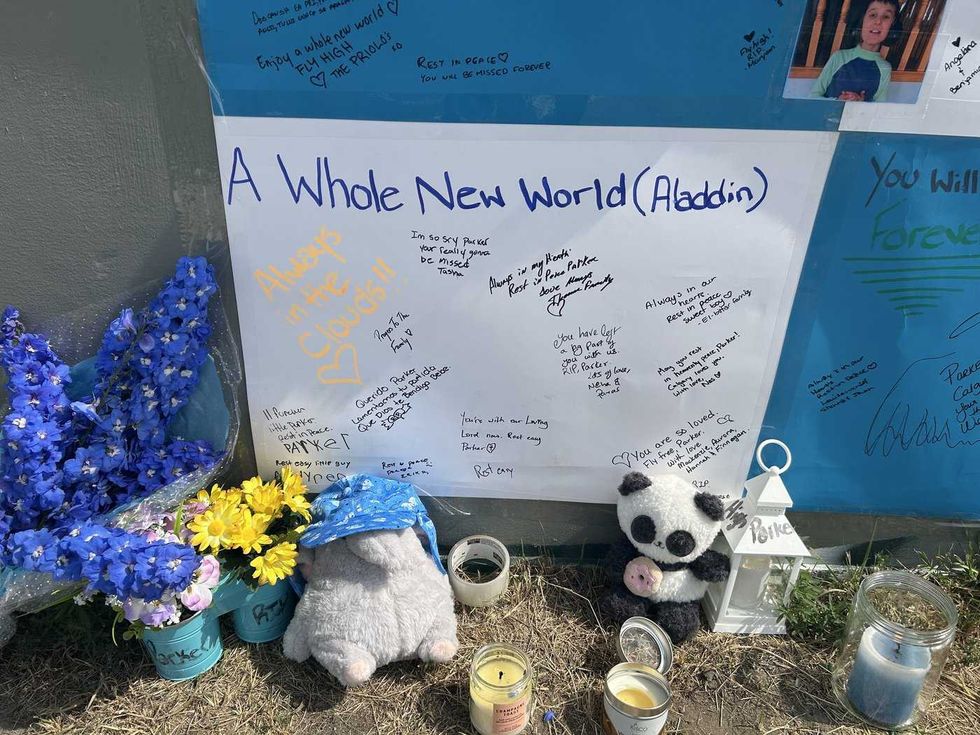 A makeshift memorial for Parker Well, who went missing in July and found dead two weeks later, is pictured on a footbridge in Laycock Park, on Thursday, July 30, 2026.THE CANADIAN PRESS/Bill Graveland
In the days that followed, a makeshift memorial of flowers, stuffed toys and candles grew by a footbridge near where his body was found.
The tragedy has also prompted petitions to change Amber Alerts.
Such alerts are broadly disseminated warnings for children believed to have been abducted and in serious danger. In Parker's case, an Amber Alert was issued as a special exemption but not until the second day of the search.
The Alberta government is now reviewing criteria for Amber Alerts.
Calgary Mayor Jeromy Farkas said he supports calls from advocates for the creation of an Indigo Alert -- an advisory specifically for vulnerable youth.
"This is an incredible tragedy and how we find the silver lining is through improving processes,” Farkas said.
This report by The Canadian Press was first published Sept. 22, 2026.
By Dayne Patterson | Copyright 2026, The Canadian Press. All rights reserved.