These are Canada's highest-paying job fields right now and #1 isn't medicine, law or finance
Turns out the biggest salaries don't always require a fancy education. 👀
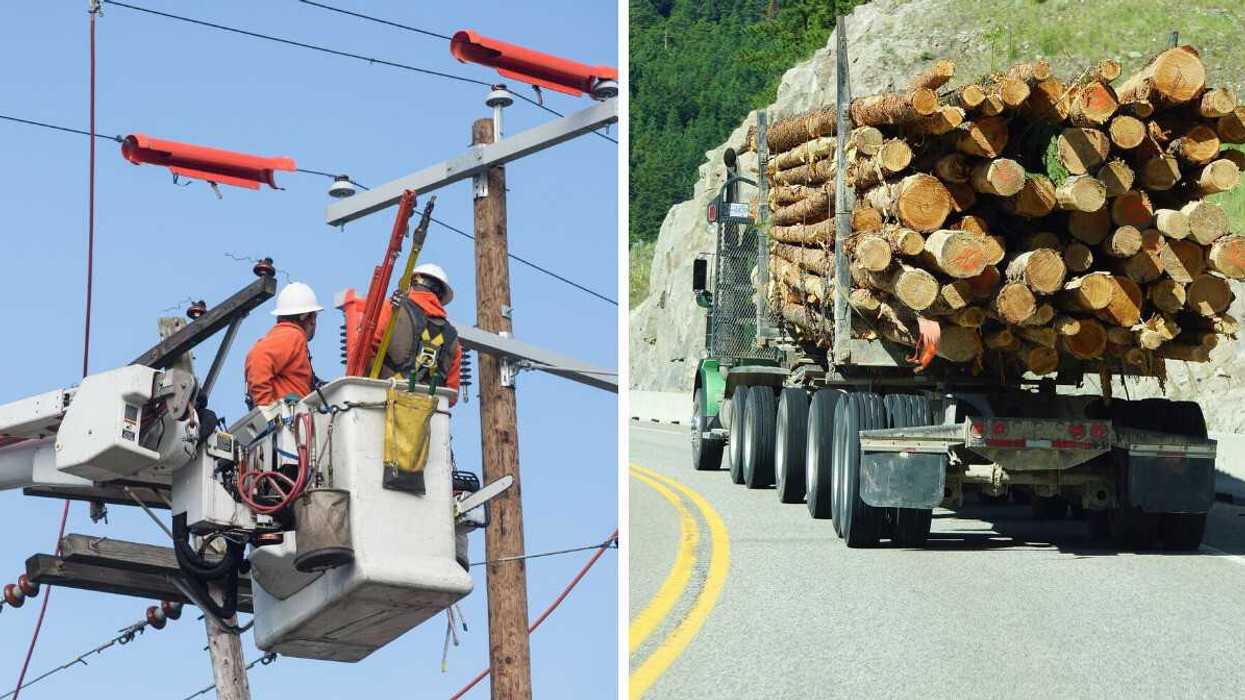
The highest-paying job fields in Canada in May 2026 were revealed, and they might not be what you expect.
If you're wondering what the highest-paying jobs in Canada are right now, new data from Statistics Canada offers a fresh look at which job fields are delivering the biggest paycheques so far in 2026 — and it may not be the ones you expect.
While medicine, law and finance are often seen as some of Canada's top-paying careers, the newest wage data shows that several other industries are paying workers even more on a typical week, with one sector pulling well ahead of the pack.
The industry rankings are part of Statistics Canada's new Labour Force Survey data for May 2026, released Friday. Rather than looking at individual occupations, the figures compare broad job fields across the Canadian economy, from construction and manufacturing to health care and professional services like law and finance.
The latest Labour Force Survey was released as Canada's job market showed signs of improvement, with employment rising by 88,000 positions in May and the unemployment rate falling to 6.6%, according to Statistics Canada.
To make the comparison as fair as possible, we focused on full-time employees between the ages of 25 and 54, a group Statistics Canada considers "core-aged" workers. That helps reduce the impact of part-time work, student jobs, retirement transitions and other factors that can skew wage data.
We also ranked industries using median weekly wages instead of averages. This offers a clearer picture of what a typical worker earns in a given week because they're less affected by a relatively small number of extremely high earners. The figures include all wages and salaries earned before deductions, along with tips, commissions and bonuses.
So whether you're exploring a career change, comparing salaries or just wondering where your industry stacks up, here's how Canada's highest-paying job fields rank in 2026 based on median weekly earnings, from lowest to highest.
Accommodation & food services
Median weekly wage: $800.00 (equivalent to $41,600 per year)
This category covers many of the jobs Canadians interact with every day, including restaurant staff, bartenders, hotel workers, cooks, servers and employees at cafes and fast-food chains.
Even when looking only at full-time, core-aged workers, accommodation and food services remains Canada's lowest-paying major industry. According to Statistics Canada, the typical employee in the sector earned a median of $800 per week in May 2026, putting it a full $200 per week — over $10,000 per year — behind the next industry on the list.
The good news for workers in the field is that wages appear to be moving in the right direction. Median weekly earnings were up 5% compared with May 2025, one of the stronger year-over-year increases among the industries tracked by Statistics Canada.
The sector has also been seeing some employment growth lately. According to the latest data, accommodation and food services added 17,000 jobs in May alone, while employment was up 34,000 positions compared with a year earlier.
Business support services
Median weekly wage: $1,000.00 (equivalent to $52,000 per year)
Officially called "business, building and other support services" by StatCan, this broad category includes many of the behind-the-scenes services that keep other businesses running, such as staffing agencies, call centres, janitorial and cleaning companies, security services, waste management operations and more.
Unlike many other sectors, wage growth here has been virtually nonexistent. Median weekly earnings were essentially unchanged from a year earlier, sitting almost exactly where they were in May 2025. Wages also dipped slightly month over month, though those short-term movements can be volatile because the data is not seasonally adjusted.
The sector's position near the bottom of the rankings reflects the wide variety of jobs it includes. While some management and specialized support roles can pay well, the industry also contains many lower-wage service positions, which helps pull the median down.
Agriculture
Median weekly wage: $1,070.80 (equivalent to $55,682 per year)
This category includes a wide range of agricultural jobs, from farm workers and ranch employees to greenhouse staff and other workers involved in food production and harvesting.
It's worth noting that this data isn't seasonally adjusted, and agriculture is one of the industries where earnings can vary significantly depending on the time of year, weather conditions and harvest cycles.
Even so, the longer-term trend isn't especially encouraging. Agriculture posted the largest year-over-year wage decline of any industry in the latest data, with median weekly earnings falling 4.2% compared with May 2025. That made it one of only a handful of sectors where workers were earning less than they were a year earlier.
The industry also tends to include a wide mix of jobs with very different pay levels, from lower-wage seasonal and labour-intensive roles to specialized positions that can command much higher earnings.
Sales
Median weekly wage: $1,120.00 (equivalent to $58,240 per year)
Listed by Statistics Canada as "wholesale and retail trade," this category covers a huge range of sales-related jobs, from cashiers and retail associates to wholesale distributors, account representatives and auto parts sales staff.
The sector has seen fairly strong wage growth lately. According to Statistics Canada, median weekly earnings were up 5.9% compared with May 2025, one of the larger year-over-year increases in the country.
At the same time, the industry's employment picture has been moving in the opposite direction. The latest Labour Force Survey shows wholesale and retail trade lost 35,000 jobs in May, and employment was down 64,000 positions from a year earlier.
That combination can make wage trends tricky to interpret. While workers may genuinely be earning more, it's also possible that some of the increase reflects lower-paying jobs disappearing from the sector, which would push the median wage higher even if individual workers weren't seeing bigger paycheques.
Other services
Median weekly wage: $1,173.20 (equivalent to $61,006 per year)
This catch-all category covers service jobs that don't neatly fit elsewhere, including repair and maintenance shops, personal care services, pet care, dry cleaning, religious organizations, civic groups and some non-profits.
Wage growth was sluggish over the past year. Median weekly earnings were up 1.7% compared with May 2025, meaning this sector lagged behind many others on the list and wage growth hasn't kept up with inflation.
Pay can also vary a lot within this group because it bundles together very different types of work, from skilled repair jobs to lower-paid personal services and community roles.
Health care & social assistance
Median weekly wage: $1,250.00 (equivalent to $65,000 per year)
Health care and social assistance covers far more than doctors and surgeons. The category also includes nurses, personal support workers, social workers, counsellors and many other roles that support Canadians' health and well-being.
That's one reason the sector ranks lower than you might expect. While some medical specialists earn very high salaries, the industry's median wage reflects the earnings of all workers across the field.
Wage growth has also been pretty low lately. Median weekly earnings were up just 0.9% compared with May 2025, slightly below the 1.0% increase recorded across all industries and well below recent inflation rates.
Still, health care remains one of Canada's largest and most stable sources of employment. Demand for workers continues to be supported by an aging population and ongoing staffing needs across hospitals, long-term care homes and other medical settings.
Transportation & warehousing
Median weekly wage: $1,300.00 (equivalent to $67,600 per year)
Transportation and warehousing includes the workers who move people and products across the country, from truck drivers, pilots and transit operators to warehouse staff, couriers, rail workers and employees in the shipping and logistics industry.
It's also one of the few sectors where wages moved in the wrong direction over the past year. Median weekly earnings were down 3.3% compared with May 2025, making transportation and warehousing one of only a handful of industries to post a year-over-year decline.
At the same time, employment in the sector has been growing. Statistics Canada's latest Labour Force Survey shows transportation and warehousing added 19,000 jobs in May and was up 36,000 positions compared with a year earlier.
That combination of rising employment and falling median wages could suggest that some of the growth is coming from lower-paying roles entering the workforce.
Manufacturing
Median weekly wage: $1,346.00 (equivalent to $69,992 per year)
Manufacturing covers a huge range of industries that make physical products, including auto assembly, food processing, machinery production, pharmaceuticals, consumer goods and more.
What's especially notable is how quickly pay has been growing. Median weekly earnings were up 6.8% compared with May 2025, making manufacturing one of the fastest-growing sectors for wages in Canada despite ongoing uncertainty tied to U.S. tariffs and trade tensions.
The industry's job market has been more mixed. Statistics Canada's latest Labour Force Survey shows manufacturing added 15,000 jobs in May, but employment remains down by 44,000 positions compared with January 2025. StatCan notes the sector has faced heightened economic uncertainty since early 2025, driven by U.S. tariff policies.
Even with those challenges, manufacturing workers have seen some of the strongest wage gains in the country over the past year, helping the sector climb higher on this ranking than many people might expect.
Information, culture & recreation
Median weekly wage: $1,470.00 (equivalent to $76,440 per year)
This industry brings together a surprisingly diverse mix of jobs, including workers in media, broadcasting, publishing, telecommunications, film and television, museums, performing arts, spectator sports, recreation facilities and cultural organizations.
According to Statistics Canada, the typical full-time worker aged 25 to 54 in the sector earned a median weekly wage of $1,470 in May 2026, making it the first sector to pass the all-industry median of $1,408.
Wages have been relatively flat over the past year. Median weekly earnings were up 2.4% compared with May 2025, but that's still just short of the latest inflation rate of 2.8%.
The industry also saw a notable boost in employment last month, with 19,000 new jobs added in May, making it one of the biggest sources of employment growth during the month.
Given the wide range of occupations included here, from professional athletes and celebrity entertainers to museum staff and recreation workers, earnings can vary dramatically depending on the specific role. Still, the sector remains one of the better-paying fields in Canada overall.
Construction
Median weekly wage: $1,600.00 (equivalent to $83,200 per year)
Construction includes many of Canada's skilled trades and building-related jobs, from electricians, plumbers and carpenters to heavy equipment operators, contractors and site supervisors.
Wages have slowly increased here, with median weekly earnings rising 2.1% compared with May 2025 — though it's still not quite enough to keep up with inflation. The sector also saw strong job growth, adding 27,000 positions in May, the largest increase of any industry during the month.
Pay also tends to be relatively consistent across the industry here compared with many other high-paying industries. While top earners can still make substantially more than the median worker, the gap between average and median earnings is smaller than in many other sectors, suggesting fewer extreme outliers at the top end of the pay scale.
For workers willing to pursue a skilled trade, the latest data suggests construction remains one of the more reliable paths to an above-average paycheque in Canada.
Finance, insurance, real estate & leasing
Median weekly wage: $1,615.20 (equivalent to $83,990 per year)
This high-paying sector includes a wide variety of financial and property-related jobs, from banking, investing and insurance to mortgage lending, real estate services, equipment leasing and vehicle rental businesses.
This is also one of the fastest-growing sectors for wages, with median weekly earnings up 7.3% compared with May 2025 — the second-strongest year-over-year increase among all industries and well above inflation.
But despite the strong median wage, finance still doesn't crack the top five on this list. That's partly because several less-publicized industries pay even more on a typical week than many Canadians might expect.
The category also covers a much broader range of jobs than its name might suggest. While high-paying roles in banking and investment management help pull wages higher, the sector also includes many administrative, customer service and support positions with more modest earnings.
Education
Median weekly wage: $1,633.80 (equivalent to $84,958 per year)
Educational services includes teachers, professors, instructors, educational consultants and many other workers employed by public and private schools, colleges, universities and training organizations.
Wages were up 4.9% compared with May 2025, meaning workers in the field saw earnings grow faster than inflation over the past year. While that's not the biggest increase on this list, it represents solid real wage growth at a time when many industries are struggling to even just keep pace with inflation.
Education also tends to be one of the more stable sectors in the Canadian economy. Compared with industries where a small number of executives or specialists earn dramatically more than everyone else, earnings in educational services are generally distributed more evenly across the workforce.
Public administration
Median weekly wage: $1,747.60 (equivalent to $90,875 per year)
Public administration includes workers across all levels of government, from federal departments and provincial ministries to municipal governments. The category covers a wide range of roles, including policy analysts, inspectors, administrators, firefighters, police officers, park wardens and many other public-sector employees.
Government jobs are some of the highest-paying in Canada, but perhaps even more notable is how consistent that pay tends to be. Compared with sectors that have large numbers of very high earners at the top, public administration has a smaller gap between median and average wages, suggesting earnings are spread more evenly across the workforce.
Wage growth, however, has been relatively weak lately. Median weekly earnings were up just 1.0% compared with May 2025, meaning pay increases in the sector have not kept pace with inflation.
Even so, public administration continues to stand out for its combination of above-average wages, stable employment and relatively predictable career progression, factors that help make government jobs attractive even when pay growth slows.
Professional, scientific & technical services
Median weekly wage: $1,769.25 (equivalent to $92,001 per year)
This is where you'll find a lot of Canada's high-skill, white-collar jobs, including lawyers, engineers, accountants, architects, software developers, consultants, researchers and scientists.
While the pay is high, wage growth has been relatively weak over the last year. Median weekly earnings were up just 2.2% compared with May 2025, just below Canada's latest inflation rate.
But even though this industry includes many of the careers people usually think of when they picture high-paying jobs, there are still two big industries that rank higher.
Utilities
Median weekly wage: $2,030.80 (equivalent to $105,602 per year)
This sector covers many of the essential services Canadians rely on every day, including power generation, water supply and waste management.
The industry's pay growth has been a bit of a mixed bag lately. Median weekly earnings were down 3.7% from May 2025, making utilities one of just a handful of sectors where workers were earning less than they were a year earlier. Even so, it remains one of the highest-paying industries in Canada by a wide margin, and one of only two sectors where the median pay is six figures.
In short, utilities remains one of the country's most lucrative industries, even if it narrowly misses out on the top spot.
Natural resources
Median weekly wage: $2,240.00 (equivalent to $116,480 per year)
This industry includes resource-extraction jobs in areas like forestry, fishing, mining, quarrying, oil and gas.
With a median weekly wage of $2,240 in May 2026, it topped every other industry in Canada by a comfortable margin. That's more than $600 per week above the national median across all sectors and more than $200 ahead of the second-place industry.
Many of the jobs in this field are physically demanding, highly specialized or located in remote areas, which helps explain why employers often have to pay a premium to attract workers. According to Statistics Canada, the sector also had the strongest year-over-year wage growth of any industry in May, with median weekly earnings jumping 9.9% from a year earlier.
Of course, those high earnings don't come without tradeoffs. Many jobs in the industry involve long hours, shift work or time away from home. But for Canadians focused on maximizing their paycheque, no other sector came close to matching natural resources in 2026.
READ NEXT: These Government of Canada jobs with CBSA pay up to $101,000 a year