6 easy things you can do before December 31 to maximize your 2025 tax refund
Don't leave money on the table! 💸
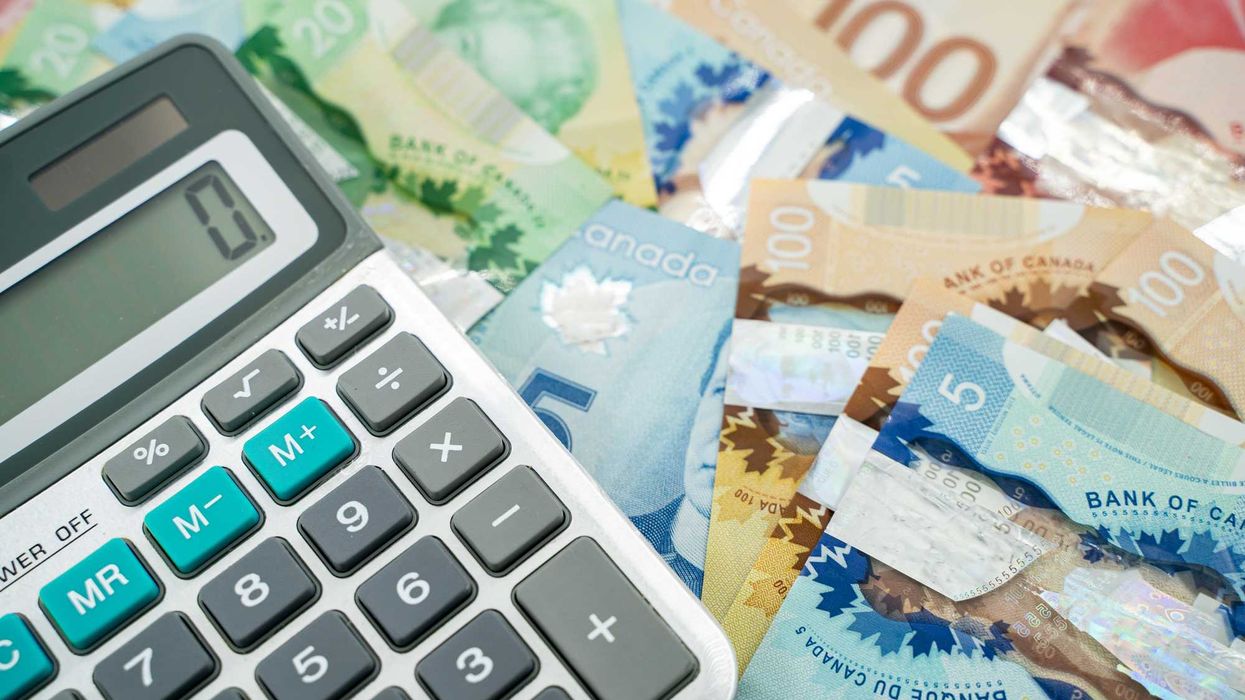
Doing these small moves before the end of the year could add up to a much bigger refund come tax time.
If thinking about tax season makes your eyes glaze over, we see you. For a lot of people, tax planning feels intimidating, confusing or like something only accountants and high earners with fancy investments need to worry about.
But you don't need a finance degree or a six-figure salary to make a few smart moves that can pay off big time when you file your 2025 taxes in Canada.
For many tax measures, the Canada Revenue Agency draws a hard line at December 31, and once the clock runs out, certain opportunities tied to tax credits, deductions and registered accounts are gone for good.
We're not talking about aggressive investing manoeuvres or loopholes reserved for high earners. These are everyday decisions that regular Canadians make all the time, often without realizing they can affect what you owe the CRA or how big your tax refund could be — especially when you do them at the right time.
READ ALSO: Here's the maximum income you can earn without having to pay taxes across Canada in 2026
With about two weeks left in the year, there are a few simple, realistic moves Canadians can make now that could translate into real money back when you file your tax return.
If you care about stretching your dollars, making the most of programs like the tax-free savings account and keeping more of your money out of the federal government's hands, here are some easy things you can do before the end of the year to maximize your 2025 tax refund.
Time your medical expenses
Medical expenses are one of those income tax credits that sound great until you realize there's a catch. You only get to claim them if your total eligible costs pass a minimum threshold, which is why timing matters.
On your 2025 tax return, you can claim eligible medical expenses paid in any 12-month period ending in 2025, as long as you didn't claim those expenses the year before and, crucially, as long as your total expenses for the period are over the minimum threshold.
That threshold is 3% of your net income, capping out at $2,759 (i.e., at an income of $91,967 or higher), and you only get to claim the amount above that.
For example, let's say you earned $50,000 in 2025, so your threshold is $1,500. If you had $5,000 in medical expenses for the year, you can claim $3,500 of it. But say you had $1,500 or less — you wouldn't be able to claim any of it.
If you're close to hitting (or have already passed) that cutoff, it might make sense to pay certain expenses before December 31. That could mean booking a dental visit, getting an eye exam, buying a new pair of glasses, squeezing in one last therapy session or treating yourself to a massage. As a bonus, paying those expenses now may also help you use up any health benefits before they reset in January.
On the flip side, if you're nowhere near the threshold, it may be smarter to wait and group those costs into next year instead, if you think you may be more likely to hit the threshold then.
Make charitable donations
If you were already planning to donate to a charity for the holidays or before the end of the year, it may be worth doing it before December 31. That way, you have more options — you can claim the donation right away on your 2025 tax return or wait to claim it in a future year if you prefer.
According to CRA rules, charitable donations can only be claimed if they were made by December 31 of the current tax year. You can carry unused donation amounts forward for up to five years, but you can't claim a donation that was made after the current tax year ended.
It's worth noting that the CRA did extend the charitable donations deadline for the 2024 tax year to February 28, 2025, as a one-time measure during last year's Canada Post strike. But there's been no indication that the same extension will apply this year, so you should assume December 31 is the cutoff, as usual.
One more thing to keep in mind: Many charities only issue tax receipts for donations above a certain amount, often $20. You'll also want to make sure the organization you are donating to is a registered charity recognized by the CRA, otherwise you won't be able to claim it.
Make any planned withdrawals from your TFSA
If you already know you're going to pull money out of your tax-free savings account (TFSA) in early 2026, it may be worth doing it before December 31 instead. The reason is all about timing.
While you don't lose your TFSA contribution room completely when you withdraw, any amount you withdraw from a TFSA gets added back to your contribution room on January 1 of the following calendar year. If you wait until 2026 to take the money out, you won't get that room back until January 1, 2027. Whereas if you withdraw now, your room is restored at the start of 2026.
This can be especially helpful if you're planning a big purchase like a car, a home renovation or another major expense early next year and want the flexibility to re-contribute sooner. Just be careful not to put the money back in during the same year unless you know you have available room, since over-contributions are taxed.
Of course, there are other factors to consider, like how your investments are performing, but if a withdrawal is already coming up soon, the timing alone could work in your favour.
Contribute to (or open) an FHSA
If you're eligible, contributing to a First Home Savings Account (FHSA) before the end of the year can be one of the most powerful income tax moves you make all year. FHSA contributions must be made by December 31 to count for that year's tax return — unlike an RRSP, there's no extra 60-day grace period.
FHSA contributions are tax-deductible, meaning they reduce your taxable income, just like an RRSP. But the money also grows tax-free, like a TFSA. It's essentially the best of both worlds.
Contributing the full $8,000 can translate into real savings at tax time. Depending on your tax bracket and which province or territory you live in, that deduction could be worth at least $1,480 in tax savings at the low end, and up to about $4,700 at the high end.
Even if you can't afford to contribute yet, opening an FHSA could still be a good idea, if you haven't already. That's because unlike TFSAs and RRSPs, you only start accumulating FHSA contribution room once the account actually exists, and you can open one without putting any money into it.
That means the sooner you open your account, the more contribution room you can bank for future years when you may have even more than the $8,000 limit to contribute.
To open an FHSA, you must be a Canadian resident aged anywhere from 18 to 71 and meet the CRA's definition of a "first-time homebuyer." That generally means you haven't been a homeowner of your main residence in the current year or the previous four years.
In fact, you don't even need to be planning on buying a home to open an FHSA. You can keep the account open for up to 15 years, and if you never buy a home, you can transfer the balance into your RRSP later without affecting your RRSP room or triggering taxes.
Start thinking about RRSP contributions
You don't have to rush this one quite as fast as the others, but it's still worth thinking about now. Unlike FHSA contributions, deposits to a Registered Retirement Savings Plan (RRSP) for the 2025 tax year can be made up until March 2, 2026.
RRSPs work by letting you deduct your contributions from your taxable income, which can lower your tax bill or boost your refund. Even a relatively small contribution can help. For example, putting $1,000 into your RRSP could be worth at least $185 in tax savings at lower tax rates, and significantly more if you're in a higher bracket, where you could get back over half of what you contributed.
Plus, if you've already maxed out your own, you can even contribute to your spouse or common-law partner's RRSP and claim the deduction yourself. This is usually most helpful when you earn more than they do and therefore fall into a higher tax bracket.
You can find your available RRSP contribution room on your latest notice of assessment or online through your CRA My Account. Just keep in mind that if you're eligible for an FHSA and haven't maxed that out yet, it's usually the better place to put your money first.
Make strategic RESP moves
If you're saving for your child's (or your own) education, there are two Registered Education Savings Plan (RESP) moves worth thinking about before December 31: when to take money out, and when to put money in.
If the RESP beneficiary attended an eligible college, university, trade school or apprenticeship program in 2025, it may make sense to take out Educational Assistance Payments (EAPs) before year-end.
EAPs, which include government grants and investment growth, are taxed as income for the student. Taking money out before December 31 can make the most sense in a year when the student has little to no other income — especially if they're graduating soon, doing a co-op or expecting to earn more next year.
On the contribution side, RESP deposits must be made by December 31 to qualify for this year's Canada Education Savings Grant (CESG). The CESG generally adds 20% to the first $2,500 you contribute, up to $500 per year, with higher matches available for some families.
If you were planning to contribute anyway, doing it before the year ends ensures you don't miss out on that free government money.
READ NEXT: Canada's 2026 federal income tax brackets are out — Here's how much you'll pay next year
This content is for general informational purposes only and does not constitute financial, investment, legal, tax or accounting advice.
- Canada is increasing a bunch of benefits soon — Here's how much more you can get in 2026 ›
- Here's the maximum income you can earn without having to pay taxes across Canada in 2026 ›
- Canada's 2026 federal income tax brackets are out — Here's how much you'll pay next year ›
- Here are all the benefit payments Canadians can get from the CRA & Service Canada in 2026 - Narcity ›