New report finds 3 million Canadians are now taking GLP-1 drugs like Ozempic & Mounjaro
More than half say weight loss, not diabetes, is their main reason for taking the drug.
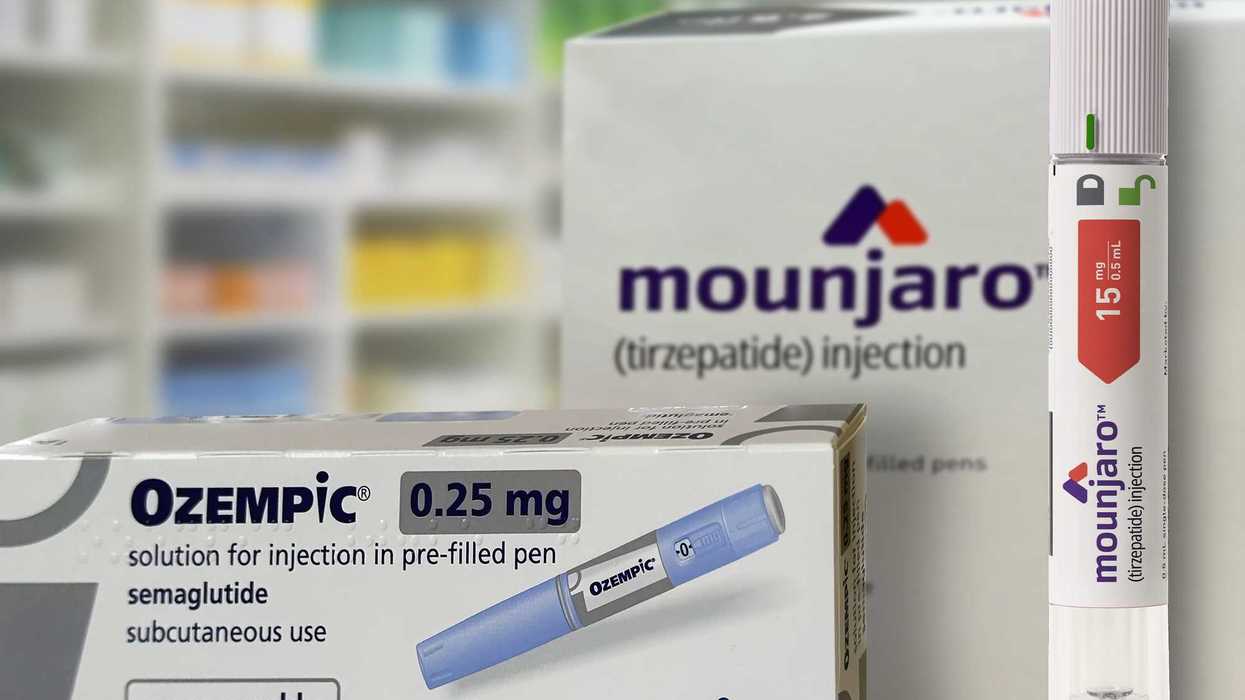
Ozempic and Mounjaro are two popular brands of GLP-1 drugs.
A new survey suggests about three million Canadian adults are currently taking GLP-1 drugs such as Ozempic or Mounjaro and that many more would like to, but cost is a barrier.
The poll conducted by Leger Healthcare says more than half of the people surveyed who are taking the medications reported decreased appetite and 40 per cent said they have fewer food cravings.
Leger Healthcare said those effects are reshaping how GLP-1 users are spending their money, with about 30 per cent going to restaurants or getting takeout food less often.
The survey released Tuesday said about a third of them are buying more fresh fruits and vegetables, as well as protein-rich foods.
It said weight loss is the number-one reason people are taking or considering taking GLP-1 medications, followed by diabetes.
Eight per cent of the respondents said they were taking a prescription GLP-1 medication. Using 2025 adult population statistics, Leger Healthcare extrapolated that would equal about three million Canadian adults.
Similarly, six per cent of respondents said they were interested in taking a GLP-1 but weren't. The researchers extrapolated that would translate to more than two million Canadian adults.
GLP-1 use was even higher in the U.S., the survey said, with 11 per cent of Americans surveyed saying they take the medication.
The survey suggested Americans were twice as likely as Canadians to want to take the medications, with 12 per cent of those surveyed expressing interest.
More than half of people interested in taking the medication in Canada said having insurance coverage or lower-cost generic options would affect their decision.
"GLP-1s are no longer a niche health topic. They're a mainstream consumer and health-care story," Melicent Lavers-Sailly, vice-president of research at Leger Healthcare, said in an interview.
"What the research found is that the impact of GLP-1s is showing up in shopping baskets and behaviours, not just prescriptions."
In addition to not going to restaurants as often, about 35 per cent of people taking the medications said they order smaller portions than they used to, choose "lighter or healthier options," or don't finish their whole meal.
Thirty-six per cent said they have decreased their alcohol consumption.
GLP-1 use is also changing what people buy outside of the grocery store, the survey said, with increased spending on clothes, personal care products, beauty services and fitness.
The survey findings also estimate that about two million Canadian adults are not taking the medications but would like to.
Although lack of insurance coverage and cost were barriers for about half of respondents interested in taking GLP-1s, another 36 per cent said they would take the medication if the risk of side-effects was lower.
Some people experience gastrointestinal side-effects including nausea, vomiting, constipation and diarrhea.
More severe complications can include gall bladder inflammation and pancreatitis, but most side-effects are minor, doctors say.
Fifty-eight per cent of people taking or considering taking GLP-1 drugs said weight loss was their main driver, while 42 per cent said diabetes was their primary reason.
Twenty-two per cent said they wanted to take a GLP-1 for their heart health. Men were more likely to cite this reason than women.
The survey found a quarter of the respondents taking GLP-1 medications were paying for the drugs — which can cost hundreds of dollars a month — completely out of pocket.
The medication was fully covered by either private or public insurance plans for 28 per cent of them.
Almost half said they had partial insurance coverage.
Leger Healthcare conducted the online survey with 1,536 Canadians and 1,012 Americans aged 18 and over from Feb. 6 to 9, 2026.
The polling industry’s professional body, the Canadian Research Insights Council, says online surveys cannot be assigned a margin of error because they do not randomly sample the population.
This report by The Canadian Press was first published March 3, 2026.
Canadian Press health coverage receives support through a partnership with the Canadian Medical Association. CP is solely responsible for this content.