8 hidden-gem vacation destinations in Europe that locals don't want you to know about
Europe's best-kept secrets... just don't tell anyone that I told you. 🤫✈️
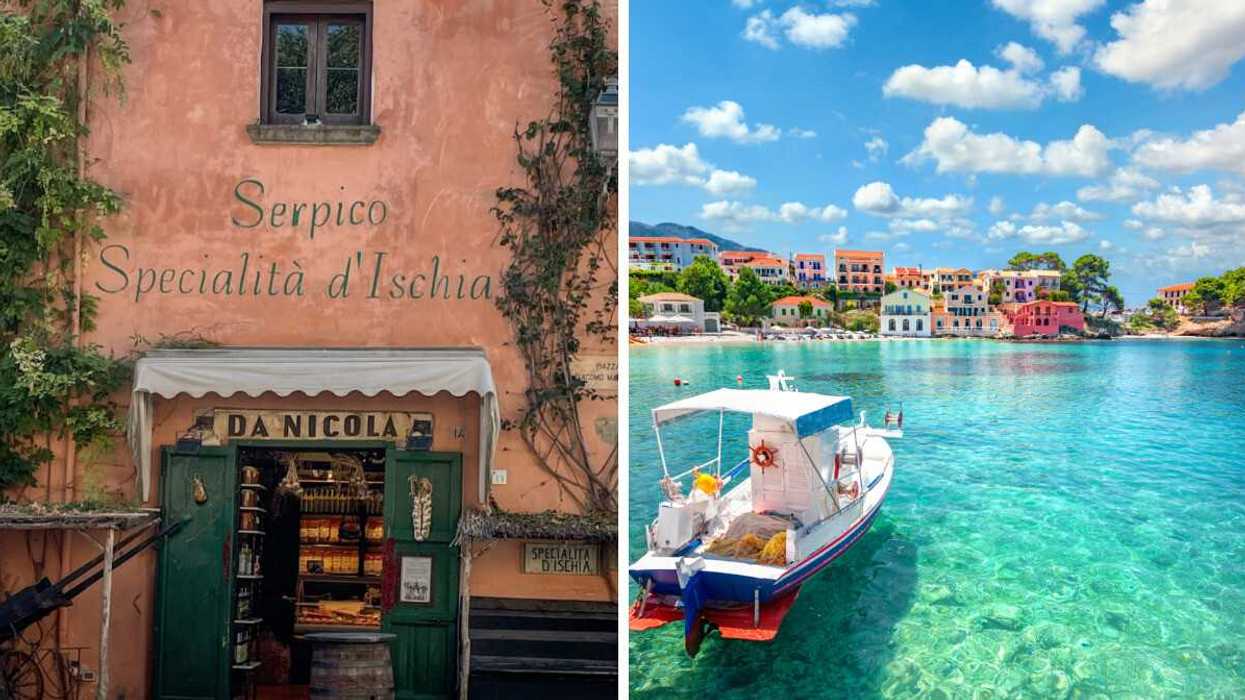
Locals don't want you to know about these incredible vacation destinations.
There's no shortage of reasons to book a flight to Europe. The cobblestone streets, ancient ruins, Renaissance art, centuries-old castles, and sheer variety of landscapes packed into a relatively small part of the world — it all adds up to something that's genuinely hard to find elsewhere.
But here's the thing about travelling to Europe from Canada: the flight alone is a commitment. You've crossed an ocean and burned through your vacation days. The last thing you want is to spend your precious time off queuing in 30 C heat outside the Colosseum, only to be jostled past one of the world's great landmarks in under four minutes.
After living in the U.K., I've had a front-row seat to Europe's best and worst tendencies — and one thing that becomes clear pretty quickly is that the most iconic European destinations aren't always the most rewarding ones.
That doesn't mean you have to go completely off the map, though. There's a middle ground between "tourist trap" and "you've never heard of it" — destinations with real name recognition, stunning scenery and incredible food, but without the grinding crowds and inflated prices that have started to define spots like Paris and Rome in peak season.
So whether you're after a candy-coloured medieval city that makes Dubrovnik look overcrowded, a volcanic island in the Bay of Naples that Italians have been keeping to themselves, a tiny nation packed with ancient castles, or a Swiss capital with a glacier river running straight through it — this list is for you.
These are the European destinations worth the transatlantic flight... just don't tell anyone where you heard about them.
Valletta, Malta
Malta is an island nation the size of a small city, sitting in the Mediterranean between Sicily and North Africa. Its capital, Valletta, is one of the smallest capital cities in the world, but what it lacks in size it more than makes up for in marvel.
The city is a UNESCO World Heritage site, and every street seems to lead to a baroque church, a sea view, or a fortification wall that's stood since the Knights of St. John ruled the island in the 16th century. The architecture is beautiful too, with warm, honey-coloured limestone that glows gold in the afternoon light.
For Canadians, there are a few other appealing details: English is one of Malta's two official languages (a holdover from British colonial rule), the weather is warm for most of the year, and it's easy to reach from any major European hub.
Ischia, Italy
Everyone who visits the Amalfi Coast has heard of Capri and Sorrento. Far fewer have made it to Ischia, the volcanic island sitting just across the Bay of Naples that has been quietly drawing in Italians for centuries while international tourists look the other way.
The island's volcanic origins give it something Capri can't offer: natural thermal springs scattered across the coastline, many of which feed into open-air thermal parks where you can drift between heated pools cut into the rock above the sea. Poseidon Gardens is the most famous, but smaller, less-visited spots dot the island's shores.
Beyond the thermals, Ischia has a dramatic medieval castle, metropolitan pine forests, excellent local wine from grapes grown in volcanic soil, and some of the best seafood you'll find anywhere in southern Italy.
The main towns — Ischia Porto, Forio, Sant'Angelo — each has a distinct feel, ranging from a lively harbour town to a sleepy cliffside village. Ferries run regularly from Naples, and the crossing takes around an hour.
Kefalonia, Greece
Santorini and Mykonos have cornered the market on Greek island content for so long that it's easy to forget Greece has dozens of islands worth visiting — many of them larger, wilder and considerably less overrun.
Kefalonia, the biggest of the Ionian Islands off Greece's western coast, is one of the best arguments for looking beyond the postcard favourites. Myrtos Beach, on the island's northwestern tip, has a steep crescent of white pebbles dropping into water so intensely blue it looks like someone turned up the saturation.
The island's interior is equally dramatic — dense with cypress and olive trees, dotted with mountain villages and home to the cave of Melissani, an underground lake where light filters through an open roof and turns the water an iridescent turquoise.
Bern, Switzerland
Switzerland's actual capital city gets almost no attention, which is remarkable given what it's got going for it. While Zurich absorbs most of the country's tourist traffic and Lucerne handles the postcard-perfect lake crowd, Bern quietly gets on with being one of the most beautiful and walkable cities in Europe.
The old town, a UNESCO World Heritage site, is built on a narrow peninsula above a dramatic bend in the Aare River, with six kilometres of covered sandstone arcades lining its streets, making it one of the longest covered shopping promenades in the world.
In summer, locals use the Aare itself as a lazy river: swimmers float downstream through the city in the glacier-cold current, hauling themselves out at the far end and doing it all over again.
Back in the city, the Zytglogge (a medieval clock tower dating back to the 13th century) chimes on the hour to a mechanical display that people have been stopping to watch for 600 years. The city's bear park, home to live bears along the river's edge, is a nod to Bern's centuries-old heraldic symbol.
The view from the Rose Garden above the old town — looking back over the terracotta rooftops and the river below — will be the kind of thing that makes you wonder why you didn't visit sooner.
Albania
Albania is one of those destinations that travel writers have been quietly flagging for years, and it still hasn't tipped into mainstream consciousness, which means now is exactly the time to go.
Despite the whole country being smaller than Vancouver Island, it has two coastlines, a UNESCO-listed medieval city, ancient mountain villages and some of the most dramatic landscapes in the Balkans, all at prices that will make you feel like you've stumbled into Europe circa 2005.
Berat — known as the "city of a thousand windows" for its Ottoman hillside houses stacked improbably on top of each other — is among the most beautiful towns in Europe and still sees a fraction of the visitors that comparable spots in Croatia or Greece attract.
Further south, the Albanian Riviera stretches along the Ionian Sea with turquoise water and clifftop beaches that rival anything in the Mediterranean. Gjirokastër, a cobblestoned castle city in the mountains near the Greek border, adds another layer of drama to a country that's already full of it.
San Sebastián, Spain
Few cities in Europe take food as seriously as San Sebastián. The Basque coastal city has more Michelin stars per square metre than almost anywhere on earth, and that obsession with quality filters all the way down to the pintxos bars of the old town, where small bites of extraordinary food line every counter and a round of drinks and snacks for two rarely sets you back more than €20.
But San Sebastián isn't just a food destination. La Concha, the crescent-shaped bay at the city's heart, is consistently considered among the most beautiful urban beaches in the world.
The city is elegant, walkable and culturally rich. And, despite its growing international reputation, it still hasn't hit the saturation point of Spain's bigger tourist draws.
Kotor, Montenegro
If Dubrovnik is starting to feel more like a theme park than a coastal town — and locals will tell you it is — Kotor is the answer. Montenegro's walled medieval city sits at the edge of Europe's southernmost fjord, framed by steep limestone mountains that plunge dramatically into the bay.
The Old Town is small enough to feel quaint, but intriguing enough to get properly lost in, with narrow stone streets, cat-filled squares (Kotor has an entire museum dedicated to its resident cats) and Byzantine churches dating back to the 9th century.
The city walls stretch up the mountainside behind the town, and climbing them rewards you with views that are hard to describe without resorting to clichés.
Montenegro as a whole remains one of the most underrated destinations in the Balkans — significantly cheaper than Croatia next door, with a coastline that's just as stunning and Adriatic water that's just as clear.
Wales, U.K.
Tucked into the western edge of Britain and reachable in under an hour from several English cities, Wales is home to some of Europe's most dramatic landscapes, hiding in plain sight. A country of mountain ranges, ancient castles, windswept coastlines and villages where Welsh is still spoken as a first language.
Snowdonia in the north is the obvious starting point — a national park built around a mountain that'll transport you to a scene from The Lord of the Rings. Hike it on a clear day, and the views stretch as far as Ireland.
The south is a different proposition entirely: the Pembrokeshire Coast offers some of the best coastal walking in Europe, and Tenby, a medieval walled town perched above a harbour of pastel-coloured houses, is the kind of place that makes you feel like you've wandered into a romance novel. Further inland, Hay-on-Wye — a tiny border town with more secondhand bookshops than pubs — has quietly become one of the most beloved literary destinations in the world.
The castles alone justify a visit. Wales has more castles per square mile than almost anywhere on earth, including Caernarfon and Conwy, both UNESCO World Heritage sites, built by Edward I in the 13th century and still standing in extraordinary condition.
Before you get going, check out our Responsible Travel Guide so you can be informed, be safe, be smart, and most of all, be respectful on your adventure.