Food prices in Canada are set to rise in 2026 and here's what will cost you the most
You might want to stock up on these ASAP. 👇👀
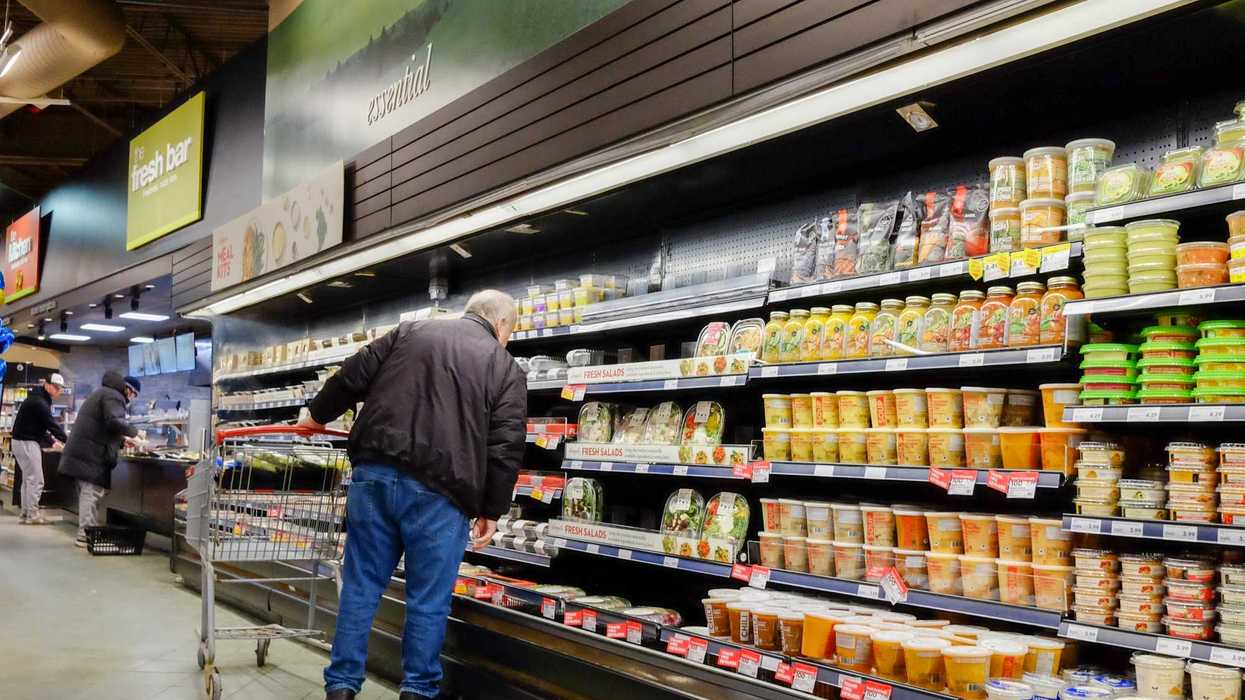
Canadian grocery prices have been outpacing inflation for years, and a new report suggests that's not stopping anytime soon.
If you thought your grocery bill couldn't possibly get any higher, brace yourself. A new report is forecasting how Canada's food prices are expected to climb in 2026, and things are looking... bleak.
The 2026 edition of Canada's Food Price Report predicts grocery prices in Canada will climb by 4 to 6% next year, meaning the average family of four could spend nearly $1,000 more on groceries than they did this year.
According to the report released Thursday by Dalhousie University and seven other Canadian schools, that family will fork over up to $17,571.79 for food in 2026 — an increase of $994.63 from 2025.
It's just the latest in a string of price hikes over several years of record inflation in Canada that have left food prices over 30% higher than pre-pandemic levels.
READ ALSO: Galen Weston Jr. could cut every Loblaws shopper a huge cheque and STILL be a billionaire
Inflation is stabilizing — but your grocery bills aren't
While Canada's inflation rate is expected to settle around 2% and hold steady through 2026, that doesn't mean relief is coming for your wallet at the checkout. The consumer price index for food has been climbing way faster than overall inflation, and researchers say that trend isn't slowing down.
Food affordability remains a top concern for Canadian households, according to the report. A quarter of all Canadian families are now considered food insecure, and nearly 2.2 million people visited food banks monthly this year.
"Although inflation was relatively steady in 2025, food prices are still 27% higher than they were five years ago, and consumers are feeling the strain of these higher prices at the grocery store," researchers noted in the report. Nearly 85% of Canadians reported that their household food expenses increased in the past 12 months.
What's driving up food prices?
The report points to several factors affecting Canadian grocery prices in 2026.
For one, labour market pressures from reforms to the Temporary Foreign Worker Program could lead to shortages in agriculture, where businesses rely heavily on seasonal workers. Those extra costs will likely be passed on to customers.
Climate change continues to disrupt agricultural production globally, with increasingly severe and unpredictable weather events creating supply challenges that ripple through to store shelves.
Canada's new Grocery Code of Conduct becomes fully operational in January 2026, but researchers note it remains to be seen whether it will be effectively enforced. Five grocery chains — Loblaws, Sobeys, Metro, Costco and Walmart — still control at least 80% of the national market share, according to Canada's Competition Bureau.
The ongoing trade dispute with the United States continues to loom over Canada's food system too, researchers say. While the Canadian government rolled back almost all counter-tariffs on U.S. goods in September, the damage had already been done.
Canadian export volume plummeted 7.5% in the second quarter of 2025 — the largest quarterly drop since the 2008 recession. Manufacturing fell 3.2% mid-year, with more than half of manufacturers reporting that tariffs were impacting their businesses.
"Tariffs' inflationary pressures are real — and they'll continue well into the new year, keeping costs high across global supply chains, including here in Canada," researchers said in the report.
Not all provinces are inflating equally
Where you live in Canada will have a surprisingly big effect on how much more you'll pay for groceries next year.
Alberta, New Brunswick, Nova Scotia, Ontario and Quebec are all forecast to experience food price increases above the national average in 2026.
British Columbia and Manitoba, which saw above-average or average price increases in 2025, are expected to fall below the national average next year.
Meanwhile, Saskatchewan and Prince Edward Island should see average increases, researchers say.
Canadians are making tough choices about nutrition
As food costs rise, many Canadians are compromising on nutrition. Researchers found that 86% of consumers reported eating less meat due to its high price point, yet only 17% reported increasing their consumption of plant-based protein.
Meanwhile, a quarter of Canadians are buying more frozen food because of lower prices and longer shelf life. Nearly 25% said they would eat healthier, and 20% would buy higher-quality food, if they had bigger food budgets.
"In trading-down markets, consumers will make nutritional compromises, eventually," researchers warned. This trend could lead to increased health-related challenges and a decline in overall public health, the report notes.
Which food prices are rising most in 2026?
The report breaks down food price forecasts into eight categories, ranging from fresh foods to pantry staples and even restaurant dining. Here's what Canadians can expect to pay more for next year, from the smallest to the largest projected price hikes.
#8: Seafood
Seafood remains one of the more stable categories, with prices forecast to rise just 1% to 2% in 2026.
Seafood has stayed stable compared to other proteins over the last several years — the consumer price index shows it increased by a modest 2.7% in 2025, and is up 16% since October 2019.
For context, the widely accepted target inflation rate is 2% annually — which also means that over six years, prices would ideally increase no more than around 12% to 13%.
Within the category, shrimps and prawns have been particularly stable, rising only 9% over the past six years — miraculously, one of only three items that came in lower than the target inflation rate since the pandemic.
#7: Fruit
Fresh fruit is also expected to remain reasonable, with a projected price increase of 1% to 3% next year.
The category actually saw prices drop by 1.1% in 2025, after rising just 18% from pre-pandemic levels.
Some fruits are more sensitive to inflation than others, though — while bananas have remained the single most stable food item since 2019 with just a 7% increase, other items like oranges have climbed more dramatically, up 35% over the past six years.
#6: Dairy & eggs
Dairy and eggs are projected to increase 2% to 4% in 2026, according to researchers.
Prices in this category are up 31% since October 2019, but they seem to have settled down in recent years — they rose just 1.9% in 2025, according to the report.
Once again, though, it depends what you're buying. Eggs, fresh cheeses and butter all saw much larger increases than things like cheddar, mozzarella and milk.
#5: Bakery
Bakery products are also forecast to rise by 2% to 4%. This category saw minimal inflation in 2025 at just 0.6%, well below the predicted range from last year's report.
That said, bakery items are still 28% more expensive than they were six years ago, according to the latest Statistics Canada data.
#4: Vegetables
Vegetable prices are expected to increase by aorund 3% to 5% next year, researchers say.
Like fruit, vegetables actually saw prices decline in 2025, albeit modestly. They dropped by 0.9% last year, but fresh vegetables still 27% more expensive than pre-pandemic prices.
Lettuce, in particular, has jumped 41% over the last six years, while tomatoes are up 34%.
#3: Restaurants
You've probably noticed eating out is getting pricier, and restaurant meals forecast to rise an additional 4% to 6% in 2026.
Restaurant food increased by 3.3% in 2025, and is up 28% since October 2019. Interestingly, fast food and takeout have seen steeper increases than table-service restaurants, climbing 33% since pre-pandemic times and over 5% in the last year alone.
#2: Other foods
The "other" category — which includes products like frozen meals, snacks, baking supplies, condiments, coffee and baby food — is also expected to rise by 4% to 6%. This broad category increased by 5.5% in 2025, above the predicted range from last year's report.
Coffee has been hit particularly hard, with "roasted or ground coffee" (as opposed to instant) taking the #1 spot as the most-inflated food item since 2019. Coffee prices have risen by an eye-watering 80%, effectively nearly doubling over the last six years.
Oil and margarine are up 63% since pre-COVID, while condiments, spices and vinegars are up 41.2%.
Baby food, meanwhile, tells two very different stories — infant formula has jumped 35% since October 2019 and risen 5.9% year-over-year, while canned baby foods have increased just 8.7% over six years — and actually dropped 6.1% in the past year.
#1: Meat
It should probably come as no surprise, but meat is taking the biggest hit, with beef prices leading the charge.
Researchers predict meat prices in Canada will increase by 5 to 7% — the highest of any food category, and around three times worse than the target inflation rate.
Beef prices alone jumped 19% in just the first quarter of 2025, and the latest CPI data from October shows them jumping by an eye-watering 62% since 2019.
The problem? Cattle herds in Canada hit their lowest numbers since 1988 this year, according to the report. Western Canada's summer drought and sharply rising input costs (like cattle feed and overhead) have made things worse for farmers.
Canada has turned to Mexico and Australia to import more beef from abroad, but researchers say they "don't see how beef prices could normalize before mid-2027."
But if you thought chicken was a safe alternative, think again. Many Canadians have been switching to chicken as beef prices continue to soar, but that backup plan is becoming less viable.
Chicken prices are set to rise "substantially" in 2026 due to underproduction, according to the report. The industry failed to meet its targets for nine consecutive periods — an extremely rare occurrence.
To make matters worse, mild fall temperatures meant wild fowl stayed in Canada longer before migrating, leading to a sudden rise in avian flu among commercial flocks. There were 15 new outbreaks confirmed by the CFIA across six provinces in October 2025 alone.
"Very rarely have we seen all three main components of the meat trifecta — beef, chicken, and pork — become more expensive at the same time in a single year," researchers noted.
So, how much will you actually spend?
The report also breaks down predicted annual food costs by age and gender. Perhaps unsurprisingly (especially to parents of teenage boys), it estimates that a boy or man aged 14 to 18 will have the highest individual predicted cost at $5,020.88 next year. Meanwhile, a child aged one to three will have the lowest at $2,547.68.
For a family of four — for example, a man and woman aged 31 to 50, a teenage boy aged 14 to 18, and a girl aged nine to 13 — the report predicts annual food costs will hit $17,571.79 in 2026. A couple in the same age bracket without kids can expect to spend $8,532.36 on food next year.
Those costs add up quickly — and for many Canadians already struggling with affordability, it looks like there may be little relief in sight. As the report rather gloomily puts it: "If 2025 was difficult for Canadian households, 2026 is unlikely to be any easier."
Which price increase will affect you most?
READ NEXT: Canadians got real about the things they've stopped buying because they're too expensive
- Galen Weston Jr. could cut every Loblaws shopper a huge cheque and STILL be a billionaire ›
- Canadians got real about the things they've stopped buying because they're too expensive ›
- Here's what 12 grocery staples cost in each province and the difference is huge ›
- Here's the maximum income you can earn without having to pay taxes across Canada in 2026 - Narcity ›