The 'freest' Canadian provinces were ranked and one came out way ahead
It's not Ontario... 😬
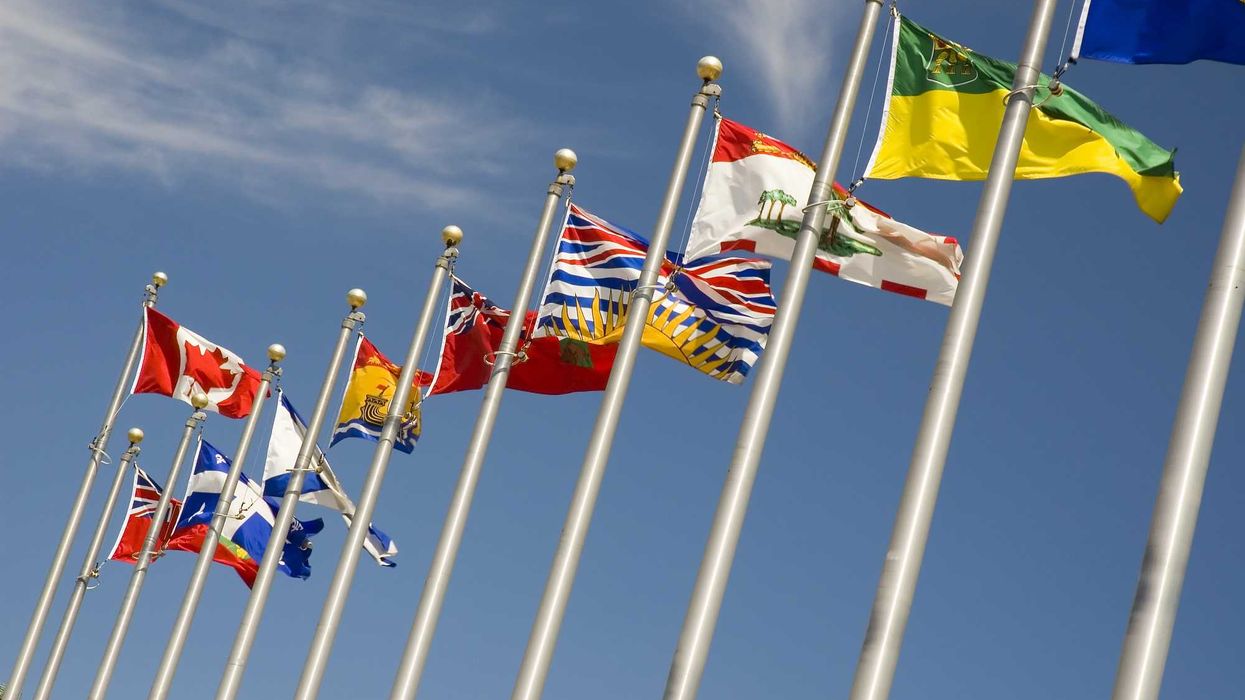
The 'freest' provinces and states in North America were ranked, and only one Canadian province even made the top 50%.
If you've been feeling lately like you're drowning in taxes, red tape or government rules, you may want to hear this.
A new report has just ranked every province in Canada on how "free" they are economically, and the results show some major gaps between provinces — and even bigger ones between Canada and the United States.
The 2025 Economic Freedom of North America report from the Fraser Institute, released Tuesday, breaks down how much control people really have over their own money, businesses and jobs in different parts of the continent. And spoiler alert: Canada's not looking too hot compared to our neighbours to the south.
The report defines economic freedom as how much say people have in their financial decisions — like where to work, what to buy and how to run a business — without being weighed down by government spending, high taxes or strict regulations.
READ ALSO: The cheapest provinces to live in Canada were revealed and they're not where you'd expect
Among Canadian provinces, Alberta came out on top — by a long shot.
But before all you Wild Rose Country dwellers start celebrating, it only managed to land in 30th place overall when Canadian provinces were ranked side-by-side with U.S. states. Ouch.
What does economic freedom actually mean?
The Fraser Institute calculates economic freedom by looking at things like how much governments spend, how high their taxes are and how strictly they regulate things like jobs and businesses. Researchers combined all that data to give each region a score from 0 to 10.
People who live in the most economically free places tend to be richer, healthier and more satisfied with their lives, the report says.
Incomes in the top 24 freest states and provinces in North America were 19 times higher than those in the bottom 24, according to the report. Between 2014 and 2023, incomes in the freest U.S. states grew nine times faster than those in the least free ones.
Economic freedom also tends to mean more flexible labour markets and better opportunities to start or grow a business.
In short, it's not just a political talking point — it hits your wallet directly.
Alberta leads Canada, but the US dominates
Alberta has long had a reputation for being more hands-off when it comes to government, especially in areas like business regulation and taxes. That shows in the data.
In the index comparing just Canadian provincial policies, Alberta scored a 6.44 out of 10 — way ahead of second-place Ontario (5.67). Quebec landed at the bottom of that version of the ranking, with a pitiful 3.10.
But zoom out to the all-government index, which adds in federal policies and other states across North America, and Alberta drops to 30th place overall, tied with West Virginia.
The top spot went to New Hampshire — fitting for a state whose motto is literally "live free or die" — followed by South Dakota and Idaho, all scoring above 8 out of 10. Meanwhile, all 32 Mexican states and Puerto Rico made up the bottom third of the list.
The Canada–US freedom gap
One of the most striking parts of this year's report is how far behind Canada is falling compared to the United States. A whopping 29 U.S. states ranked higher than Alberta, Canada's freest province, and only two other provinces ranked higher than any U.S. states at all.
The average economic freedom score for U.S. states was 7.96. Meanwhile, for Canadian provinces, it was 7.69. That may not seem like a huge difference, but when you look at how it translates into income growth and opportunity, the gap is real — and growing more noticeable to everyday Canadians.
Some of that difference comes down to the federal level. The report's "all-government" index includes national policies, and those tend to be more heavy-handed in Canada than in the U.S.
"High taxes, high levels of government spending and overly-burdensome regulations continue to depress economic freedom across much of Canada," explained Matthew Mitchell, a senior fellow at the Fraser Institute and co-author of the report, "which makes it harder for businesses to thrive and create jobs."
With tensions heating up between Canada and the U.S., and divisions growing between provinces like Alberta and the rest of the country, debates about taxes, freedom and government control are only getting louder.
So, how does your province rank?
Here's how each of Canada's 10 provinces scored on the Fraser Institute's all-government index of economic freedom — which includes both federal and provincial policies — and how they ranked when put up next to the 50 U.S. states:
- Alberta — 30th place overall (7.94/10)
- British Columbia — 47th (7.81)
- Ontario — 49th (7.77)
- Manitoba — 54th (7.69)
- Saskatchewan — 55th (7.68)
- Quebec — 56th (7.66)
- New Brunswick — 57th (7.61)
- Nova Scotia — tied for 58th (7.59)
- Prince Edward Island — tied for 58th (7.59)
- Newfoundland and Labrador — 60th (7.58)
For those keeping track, that means 7 out of 10 Canadian provinces scored worse than every single U.S. state. — and none cracked the top 25 in North America.
The Fraser Institute says the main culprits are high taxes, government overspending and too much regulation that can make it harder for businesses to grow and for people to get ahead.
Whether you're a business owner or just someone trying to stretch your paycheque, it's clear that where you live can make a real difference in how much freedom you have to make your own economic choices. And right now, that difference is starting to look pretty stark.
Does this ranking feel accurate to you?
READ NEXT: Canada was just voted one of the best countries by Americans — and the feeling isn't mutual
AI tools may have been used to support the creation or distribution of this content; however, it has been carefully edited and fact-checked by a member of Narcity's Editorial team. For more information on our use of AI, please visit our Editorial Standards page.
- The cheapest provinces to live in Canada were revealed and they're not where you'd expect ›
- 3 Canadian cities were just ranked among the best in the world but Toronto isn't one of them ›
- Here are Canada's cheapest provinces to live in with the best quality of life for 2025 ›
- This Canadian city has the 'best quality of life' in North America — and it's not even close - Narcity ›