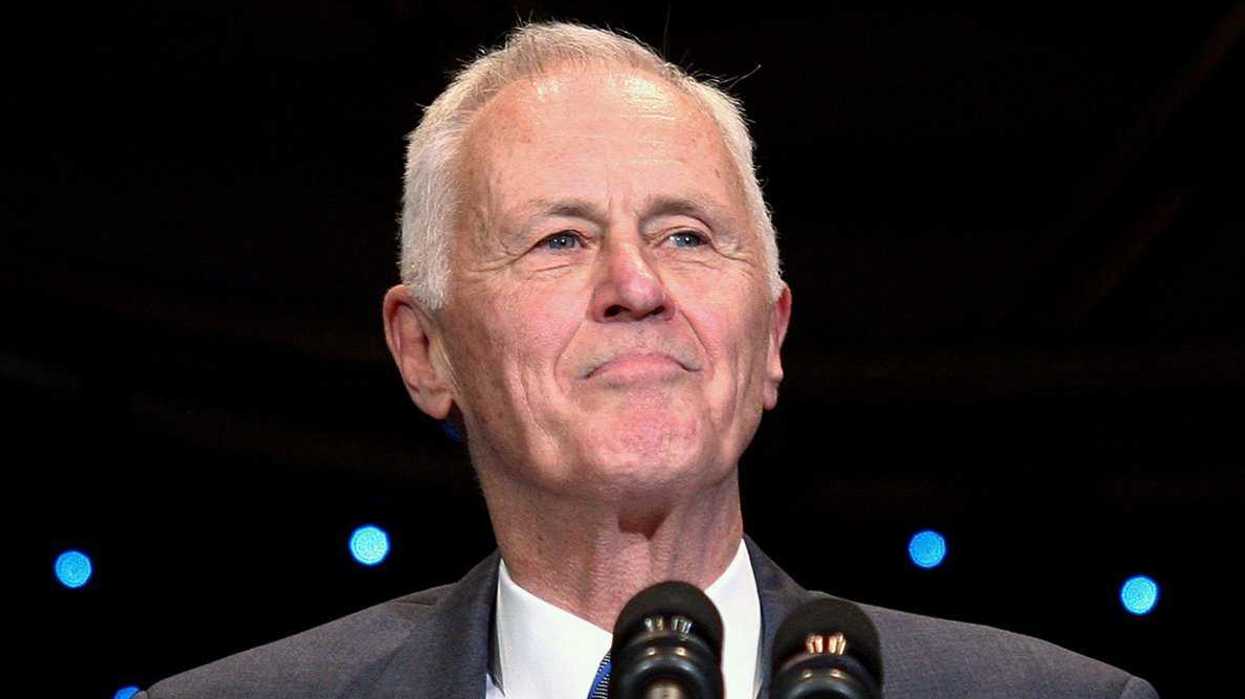
John Hamm, the small-town doctor who went on to become the 25th premier of Nova Scotia, is being remembered for his soft-spoken but direct approach to politics that helped reshape the province’s economy.
A family doctor for 30 years before entering politics in the early 1990s, Hamm served as premier from 1999 until his retirement in 2006. He died Monday at the age of 88.
“He taught us to be true to ourselves and to put our province first, before politics,” said Rodney MacDonald, a minister in Hamm’s government who went on to succeed him as premier in 2006, in an interview.
“That's what he did as premier. He was sincere. He was honest. He said if we said we were going to do something, then we should do it.”
Once described as ''dull as dishwater,'' Hamm garnered a reputation for his single-mindedness and lack of pretence. He had a boyhood love of hockey, a penchant for the music of Johnny Cash and a well-known love for milk.
MacDonald remembers walking into the office for the first time as premier to find a personal note from Hamm — sitting next to a tall glass of milk.
One of Hamm’s crowning achievements was the renegotiation of the Atlantic Accord, which outlined how offshore energy royalties were split between Ottawa and the provinces. Hamm fought hard to revamp the deal in 2005 to give Nova Scotia and Newfoundland and Labrador 100 per cent protection from clawbacks on equalization payments. The deal brought Nova Scotia an estimated $1.1 billion over the following eight years.
Rob Batherson, Hamm’s former press secretary and director of communications, remembers Hamm working with former Newfoundland and Labrador premier Danny Williams, known for his passionate, outspoken style in contrast to Hamm’s quiet statesmanship.
“The federal government kind of tried to split us up at the time,” Batherson said in an interview Monday. “But, I think they mistook John Hamm's quiet way (as) somehow being the weaker link of the two, but he was hell-bent to stay united."
Hamm entered provincial politics in 1993 representing the riding of Pictou Centre. He said he intended to run only once to support his friend and premier at the time, Donald Cameron.
He ended up winning the Progressive Conservative leadership in October 1995 at a time when the party was still recovering from the taint of scandal and financial mismanagement leftover from the era of former premier John Buchanan.
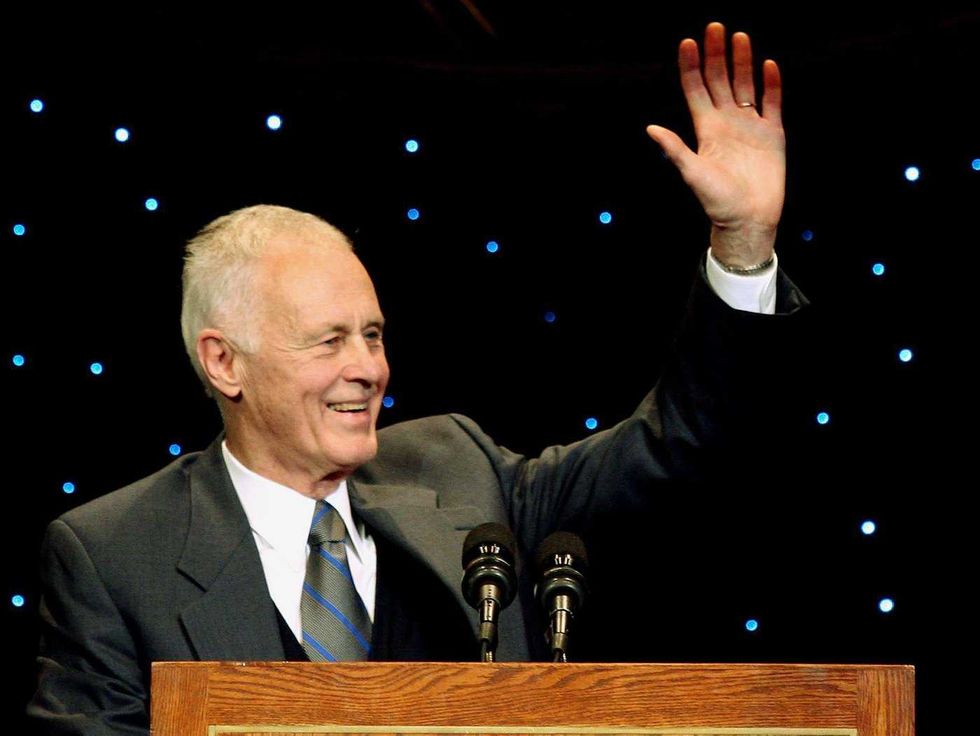 Nova Scotia Premier John Hamm waves to the crowd during a tribute to Hamm at the Nova Scotia Conservative Leadership Convention in Halifax, N.S. on Friday, Feb. 10, 2006. (CP PHOTO/Darren Calabrese)
Hamm gradually rebuilt the party to the point where it held the balance of power following the 1998 election. He supported Russell MacLellan's Liberal minority for just over a year before joining with the NDP to bring it down over the provincial budget in 1999.
Hamm's Progressive Conservatives won a majority in that July's election. His government's first term was marked by deep spending cuts as he attempted to eliminate the deficit.
The Tories sold off the province's debt-ridden offshore oil and gas development company; eliminated a number of agencies, boards and commissions; and closed Cape Breton's money-losing Sydney Steel Corp. It resulted in Nova Scotia's first balanced budget in 40 years in 2002.
Barry Barnet, one of Hamm's cabinet ministers, said the former premier was laser-focused on finances, requiring his ministers to attend cabinet meetings with the total number of active full-time jobs in their department.
“He wanted to make sure that nobody was overspending,” Barnet said in an interview.
Barnet said there were sides to Hamm the public didn’t get to see. He said the former premier did a spot-on impression of former "Saturday Night Live" comedian Gilda Radner, loved movies and could talk about them for hours, and could name the make and model of any vehicle on the road.
By the summer of 2003, the public was in a mood to punish Hamm for the deep spending cuts and returned the Tories to power with a minority government. Critics saw him as inflexible at times, and pointed to his refusal to back down in the face of discontent over his government's cost-cutting measures, the closure of Sydney Steel, intense pressure to allow Sunday shopping and high-profile protests by the province's nurses.
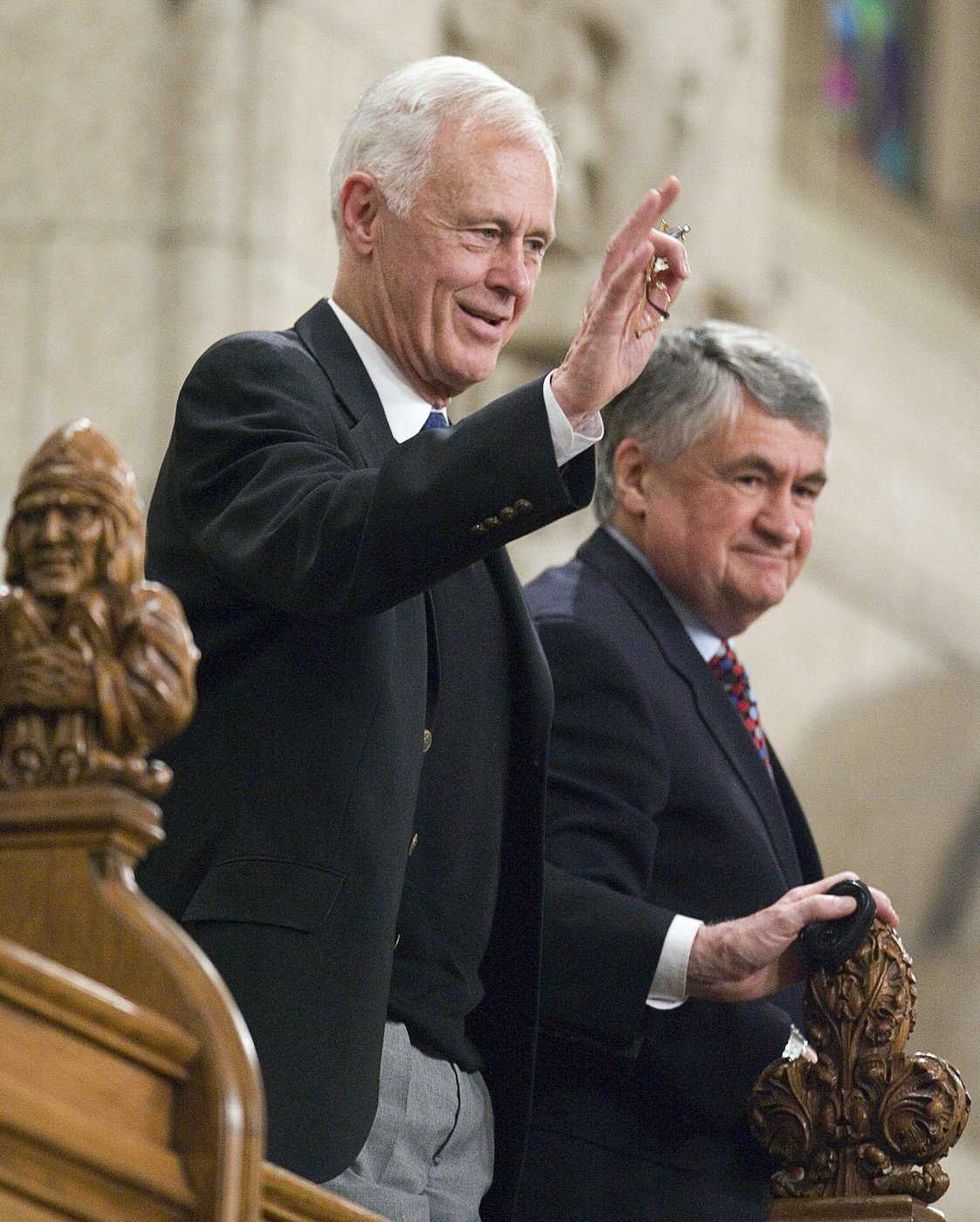 Former Nova Scotia Premiers John Hamm and Russell MacLellan (left to right) stand in the House of Commons as they are recognized after Question Period Wednesday, April 18, 2007, (PHOTO/Fred Chartrand) CANADA
Peter Spurway, Hamm’s former communications director, says the ability to make unpopular decisions separated Hamm from most politicians.
"He was a doctor and he would diagnose a problem, a situation and then he would prescribe a treatment," Spurway said in an interview. "And if it was uncomfortable, well, the outcome was more important than his political standing in the moment.”
Hamm was born April 8, 1938, in New Glasgow, N.S., and grew up in nearby Stellarton. The former infantry soldier was a graduate of the University of King's College and Dalhousie University and served as president of the Nova Scotia Medical Society. His early career was in family medicine at the Aberdeen Hospital in New Glasgow and he later had a family practice in Stellarton. Hamm was made an officer of the Order of Canada in 2009.
“I will remember Premier Hamm for his strength, his quiet dignity and for his determination to improve the lives of the people he served,” Nova Scotia Premier Tim Houston said in a statement Monday.
Prime Minister Mark Carney also offered his condolences, and in a statement later Monday, called Hamm "a dedicated public servant and staunch advocate for Nova Scotia."
Hamm is survived by his wife Genesta, and their three children — John, Jeffrey and Jennifer.
This report by The Canadian Press was first published July 13, 2026.
By Devin Stevens | Copyright 2026, The Canadian Press. All rights reserved.