LeBlanc meets with U.S. trade rep in Washington as tariff deadline nears
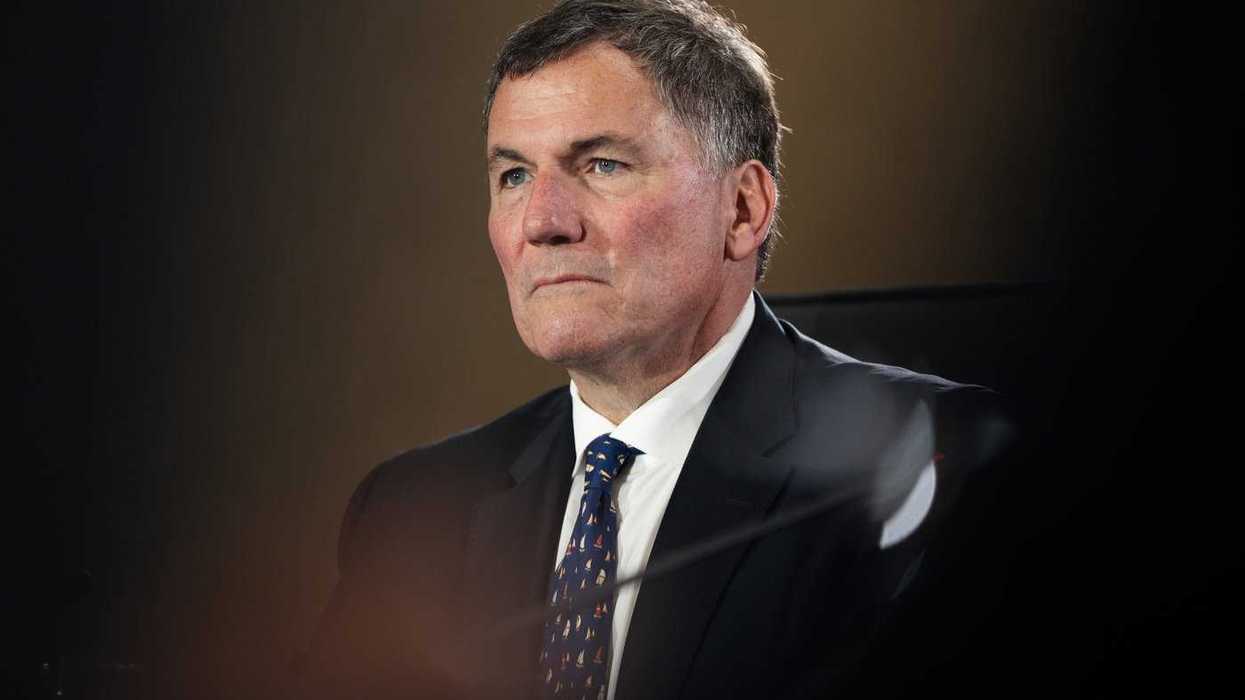
Canada-U.S. Trade Minister Dominic LeBlanc met with United States Trade Representative Jamieson Greer on Thursday with less than a week to go until U.S. President Donald Trump's latest tariff deadline.
A new round of 50 per cent tariffs on a range of Canadian goods is set to take effect Aug. 19.
Unlike most of Trump’s other tariffs, these would have no exemptions for goods that comply with the Canada-U.S.-Mexico agreement on trade, widely known as CUSMA.
LeBlanc and Janice Charette, Canada's chief trade negotiator, have been in Washington since Monday and Thursday's meeting will be their second with Greer this week.
Greer has said the threatened tariffs are a response to provincial bans on U.S. liquor, Canada's supply managed dairy system and quotas on certain U.S. vehicles.
LeBlanc said on social media Thursday evening that negotiations are ongoing.
"We continue to advance Canada’s interests," he said.
Greer is set to tour a tire manufacturing plant in Iowa on Friday to tout President Donald Trump’s tariffs after meeting with Canadian officials earlier this week.
CUSMA was negotiated during the first Trump administration to replace the North American Free Trade Agreement.
Speaking to reporters Thursday, Ontario Premier Doug Ford called on Ottawa to get a "fair deal" that protects the auto, steel, aluminum, forestry, manufacturing and agricultural sectors.
"We'd be more than happy to bring booze back on the shelves, only if we have a deal that's going to protect those sectors," Ford said.
"Every single tariff we have to match tariff-for-tariff. We can't negotiate through weakness. They can't put tariffs on our autos and we aren't putting tariffs on theirs."
Meeting with economic stakeholders in Montreal on Thursday, Quebec Premier Christine Fréchette said some industries may find themselves in "survival mode" if the Aug. 19 tariffs come to pass.
"We're expecting negotiations to intensify over the coming days," Fréchette said in French.
"There are some lines that can't be crossed. Supply management is part of that, and protection of our culture and language. Those are essential to preserve."
Bea Bruske, president of the Canadian Labour Congress, said in an email that Canadian workers have a lot riding on these negotiations.
"We want to see Canada and the United States reach a fair deal that protects jobs and provides stability for workers on both sides of the border," she said. "But the threat of job losses cannot be used to pressure Canada into accepting a bad deal."
Bruske said Canada can't make concessions without getting something meaningful in return.
"We encourage Minister LeBlanc and Canada’s negotiating team to stay firm, defend Canadian workers and push for an agreement that delivers fair and reciprocal outcomes for both countries," she said.
Mahmood Nanji, a fellow at Western University's business school and former Ontario associate deputy finance minister, said in an interview that this is probably the more intense period of negotiations since last October when Ontario's anti-tariff TV ad blitz scuttled trade talks.
The ad, which featured archival footage of the late U.S. president Ronald Reagan railing against tariffs almost 40 years ago, went viral after Trump lashed out against it in several Truth Social posts.
"I think the last 10 days has clearly demonstrated that there's some intense negotiations going on," said Nanji.
Nanji said both Canada and the U.S. are under pressure to get a deal, including because U.S. midterm elections are coming up and that Trump will likely want to brag about reaching a deal.
"The Trump administration is under a lot of pressure from governors, folks in Congress, in the Senate, business leaders, and interestingly enough, in the last couple of weeks, from union leaders," he said.
Nanji said it seems like the U.S. wants to take a "piecemeal approach," while Canada is aiming to reach a broader agreement. He also said he believes any new agreement will have some baseline tariffs.
"There's already a perception that Canada has yielded too many concessions so far," he said. "I suspect that Prime Minister Carney and the negotiating team and the premiers are going to have to make some tough decisions around supply management and will probably have to yield a little bit there."
The supply management system that protects Canadian dairy has been cited by the U.S. as a key irritant in trade negotiations and Trump has repeatedly complained about the level of U.S. dairy farmers’ access to Canada’s market.
Other trade irritants flagged by the U.S., where American negotiators are pushing for concessions, include the federal government’s “Buy Canadian” procurement policy, quotas on certain U.S. vehicles and provincial bans on sales of U.S. alcohol.
Last week, Dairy Farmers of Canada warned against any concessions involving their sector, arguing that "a bad deal is not worth the cost."
An ideal outcome, Nanji said, would be for the incoming tariffs to be postponed giving negotiators more time to work towards an agreement.
"What Canada doesn't want to do is go through this whole process of negotiating a comprehensive agreement only for Donald Trump to wake up one morning and say, oh, by the way, I'm imposing 10 per cent tariffs across the board for every country, regardless of whether there's an agreement or not," he said.
This report by The Canadian Press was first published Aug. 13, 2026.
-With files from Nick Murray, Catherine Morrison and Kyle Duggan
By The Canadian Press staff | Copyright 2026, The Canadian Press. All rights reserved.