Minister says tax credits will spur investment to expand electricity grid
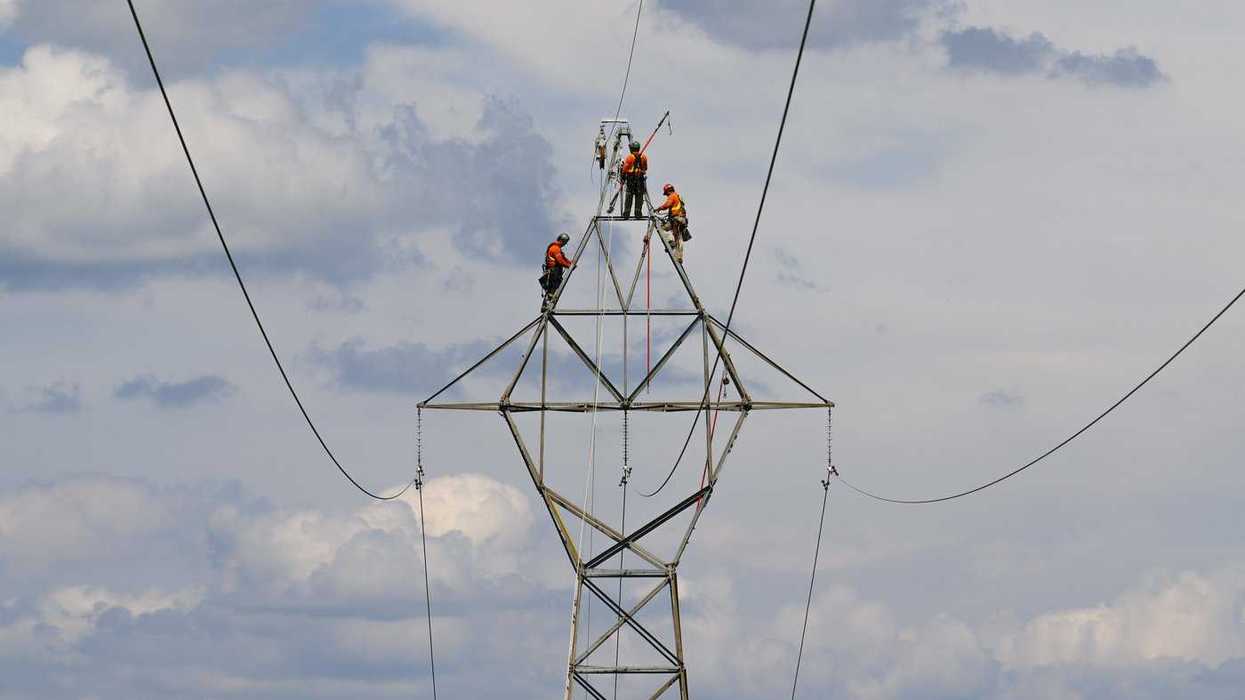
Environment Minister Julie Dabrusin says she's confident billions of dollars in tax credits in the new federal budget will encourage private investment to build out Canada's electricity grid.
Thursday's federal budget committed $50 billion to help implement Ottawa's electricity strategy, which looks to double the size of the grid by 2050. More than $38 billion was committed to tax credits the government says will stay in place until 2042.
Speaking to The Canadian Press on Thursday, Dabrusin said the measures came from government consultations on the electricity strategy.
"These are the things that people have set out for us when we have done consultations," she said.
"We put out our electricity strategy earlier this year. This is what was told to us is what was needed, and I think that this is a huge step forward for how we build up clean energy for our country."
Thursday's budget included measures to extend the existing Clean Technology and Clean Electricity Investment tax credits to the end of 2040 — the former was supposed to be phased out in 2034. The budget also proposed to expand eligibility for the latter tax credit "for the highest-voltage intra-provincial electricity transmission lines in each province" for property acquired.
The budget also signalled Ottawa's intent to update the Clean Electricity Regulations. The government said the goal is to introduce flexibility into the current system.
That includes allowing power plants to operate for longer and laying the groundwork for the government's planned LNG buildout, as Ottawa indicated in its electricity strategy.
The strategy, released in May, placed a heavy emphasis on expanding the role of natural gas in powering the grid.
“Under some interpretations of the current electricity regulations, it would be difficult to build some additional natural gas that would complement much bigger builds,” Prime Minister Mark Carney said at the time.
“We have some of the cheapest gas in the world in Canada,” he said, citing natural gas as an affordability play in the strategy. Carney said at the time the strategy had a goal of lowering energy costs for 70 per cent of Canadian households.
The budget also promised $4 billion over 10 years for electricity infrastructure, including new funding for a Natural Resources program to expand renewable energy.
That program has paid out more than $1.3 billion for more than 100 projects dating back to 2021.
In a media statement, Clean Energy Canada, a think tank out of Simon Fraser University, welcomed the focus on building clean electricity supply but said the government must set clear goals.
"Today’s federal budget provides significant investments in electrifying Canada’s economy and households, but further work will be required to establish the concrete goals needed to fully realize a generational opportunity," executive director Rachel Doran said.
"While moving from plans to action is critical, without concrete goals, Canada risks trading a climate plan with an accountability metric to one that is a list of actions without a final destination.”
This report by The Canadian Press was first published Nov. 6, 2026.
By Nick Murray | Copyright 2026, The Canadian Press. All rights reserved.