Proposed class action alleges Quebec and Canada are denying prisoners the right to vote
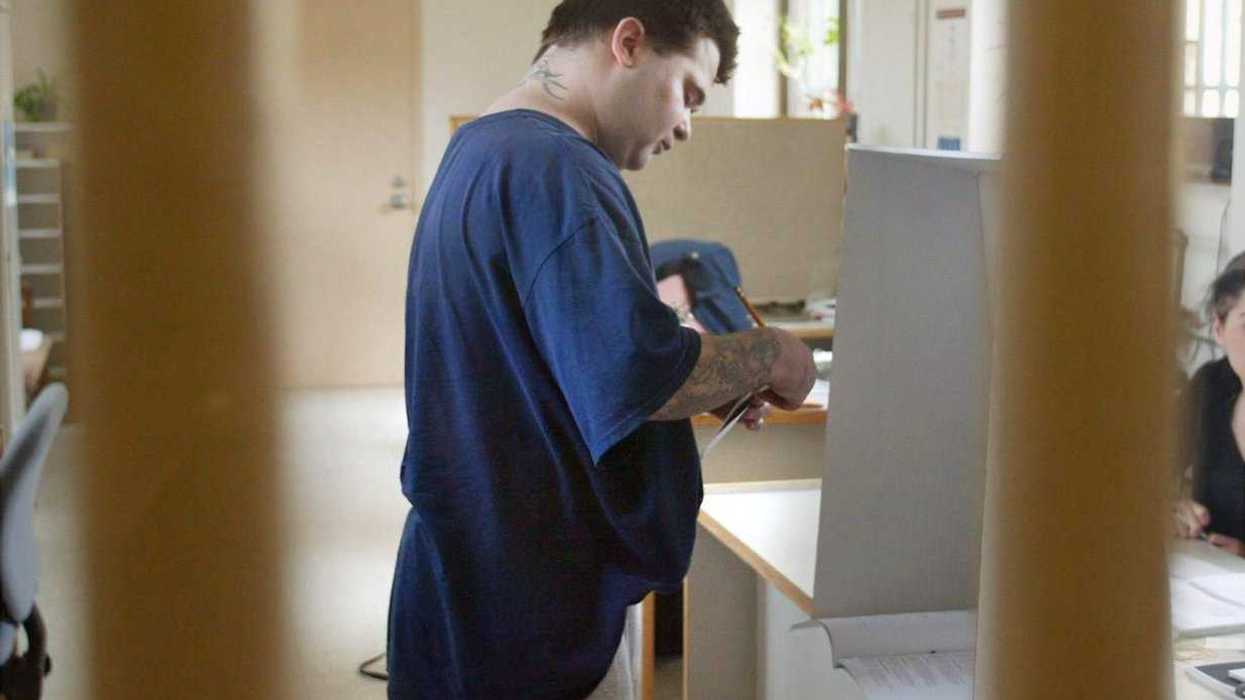
Quebecers head to the polls on Oct. 5, but some of them won’t have access to a ballot to cast.
“For many years, the Canadian and Québec governments have deprived thousands of individuals in detention of the ability to vote,” alleges a proposed class action lawsuit.
Inmates at Quebec institutions who are incarcerated in the days leading up to an election can miss the deadline to receive a mail-in ballot, which is the only way for those behind bars to take part in the election.
The lawsuit, which is awaiting authorization at the Quebec Superior Court, was brought by lead applicant Cédric Poirier against the attorneys general of Canada and Quebec.
Poirier had been admitted to Quebec’s Amos prison four days before the federal election of 2025. No mechanism existed for him to exercise his right to vote, he alleges.
According to the Canada Elections Act, incarcerated electors must vote at the correctional facility’s booths 12 days before a general election. In the case of a by-election, the list of eligible voters must be confirmed 19 days ahead of time so they can receive special mail-in ballots.
Similar provisions apply provincially. Under the Quebec Election Act, the director of a correctional facility must compile a list of voters 16 days before election day and send the ballot envelopes to Élections Québec no later than four days before the polls open to the public.
Since mail-in ballots are the only way for those behind bars to participate in provincial elections, the cutoff dates allow Élections Québec to “take into account logistical and operational requirements as well as the security measures necessary to ensure the integrity of the elections,” a spokesperson told the IJF.
Poirier’s lawsuit would represent detainees who were allegedly denied a ballot within this window of time between the effective voting deadline at a prison and the official election day.
The proposed class action seeks reparations from both federal and provincial governments for elections or by-election as far back as 2019. The desired monetary damages are set at $15,000 per member, per vote they were deprived of.
“We are seeking authorization to institute a class action for what we consider are violations of the right to vote, a right which the Supreme Court of Canada reaffirmed [...] when it declared that ‘in a constitutional democracy, every vote counts’,” said Éva Richard, one of the lawsuit’s lawyers.
Reciting another decision, Richard added “Denying citizens the right to vote not only strikes at the heart of their fundamental rights, but also comes at the expense of their dignity and their sense of self-worth.”
‘Ballots Behind Bars’
Rick Sauvé was serving a life sentence for first-degree murder at Ontario’s Collins Bay Institution when the Charter was born.
Unlike Quebec, which was the first province to enfranchise inmates under its 1979 Elections Act, most provincial legislatures and their federal counterpart denied prisoners the right to vote before the Canadian Charter of Rights and Freedoms was established in 1982.
While serving his sentence, Sauvé was finishing his high school studies, and would later earn a bachelor’s degree in psychology and another in criminology from Queen’s and University of Ottawa, respectively.
“When I got convicted and ended up in prison, not only were you stripped of your freedom of movement and other things, I found out that I wasn’t eligible to vote anymore,” he recalled.
By 1993, Sauvé won a Supreme Court case that found banning prisoners from voting violated Section 3 of the Charter, “every citizen of Canada has the right to vote in an election.”
But his fight for suffrage wasn’t over.
When Parliament amended the Canada Elections Act to disqualify all inmates serving sentences of two years or more from voting, Sauvé went to court again, this time as a parolee.
“I actually got to go to the Supreme Court of Canada to hear the arguments, which was really cool,” he said in an interview with the IJF.
In 2002, he won the landmark decision that affirmed inmates’ right to vote, regardless of sentence length, after two decades of advocacy.
“Part of the voting case for me was to be recognized that I was still a citizen of Canada, I still had rights that everybody else had,” Sauvé told the IJF.
It’s been over 30 years since Sauvé was released on parole, but he still frequents correctional facilities across Ontario as an activist and community organizer. In addition to the current lawsuit pending authorization in Quebec, Sauvé foresees another potential class action about prisoners’ voting rights around the corner.
“You have to vote in your home riding when you’re a prisoner and you can vote where you got arrested, but for anybody serving a long sentence, they’re considered residents of the institution they’re in,” he said. “I think they should be entitled to vote where they are. It should be their choice.”
After visiting five federal correctional institutions across Canada during the 2025 federal elections, Senator Bernadette Clement made a similar recommendation.
In her report, she said many incarcerated electors may not have connections to their home communities and that finding a postal code to serve as their residence poses a barrier to voting.
She added that the inmates’ votes “are spread across the country and they are not able to speak with one voice.”
Sauvé agrees. “Elected officials don’t engage with constituents in prisons because you got a splintered vote,” he said. “If most of the people are voting for ridings in remote communities, it doesn’t affect the local politicians that much.”
By amending the Elections Act to allow inmates to register to vote using the institution’s address, Sauvé believes that members of parliament would become less “indifferent” to those residing behind bars.
Clement, who also recommended more access to political education for the incarcerated, believes that this amendment would empower prisoners as a collective, and in return make local candidates running for office more aware of the issues at Canadian correctional facilities.
“Parliamentarians have a right to go into prisons. We cannot be denied access,” said Clement to the IJF. “[Inmates] are paying attention. They’re part of the constituency, and more people need to understand incarceration and what that means. Candidates would have to become more knowledgeable about [Correctional Service Canada] so that better decision making takes place.”
‘A day out of prison’
Rick Sauvé remembers the thrill at Collins Bay during the first federal election where he and his peers could cast a ballot in 1988.
“They actually had enumerators come into the prison. There was a real buzz going around. The guys were getting to vote for the first time. They would be talking in the dining hall, ‘oh, there’s an election,’ ‘who are you going to vote for?’” he said.
But the day Senator Clement went to Collins Bay for the federal elections almost 40 years later, a lockdown stopped people from coming together to line up before voting booths. Instead, voters were let out of their cells individually.
“What should have been a freer access election actually had to take place more along a maximum security type of process,” she said.
As the use of lockdowns become more frequent across Canadian prisons, educational programs in prisons are defunded, and in the absence of physical polling stations for provincial elections in Quebec, Sauvé argues that prison conditions are deteriorating.
“Going to the prison’s poll stations, it feels like a day out of prison when you’re doing stuff like that,” Sauvé said.
Instead of, or in addition to, mail-in ballots, he called on Quebec to organize physical voting stations inside correctional facilities for provincial elections, like it does for federal elections.
“When you’re out there casting a ballot and thinking about what’s taking place, a lot of people become a little more socially conscious. When election time is coming, all of the sudden they start reflecting on things more. It creates more of a community than just an individual sending in a ballot.”
The third and last recommendation in Clement’s report was to reconsider the timeline of voting. She noted that since incarcerated electors had to cast a ballot 12 days before the general public, they missed both the English and French debates in the last election cycle.
“It is my opinion that given today’s ability to ship across the country quickly, the Elections Canada Act should be amended to decrease the 12-day time frame to bring the voting date for incarcerated electors closer to the general election date,” she wrote.
If prisoners can be constituents of the same riding as the institution detaining them and vote in person, many of the logistical complexities that are currently liable to lawsuits could disappear. But the onus to make those changes is on the provincial legislature.
“If a court ruling were to find in the plaintiff’s favor, Élections Québec cannot amend the Election Act; that responsibility falls to MNAs,” wrote Élections Québec spokesperson Julie St-Arnaud-Drolet.
“Our mandate is to promote access to the ballot, and we will always be available to work with lawmakers to find ways to improve access to the ballot while ensuring the integrity of elections.”
Copyright 2026, Investigative Journalism Foundation. All rights reserved.
Ghazal Azizi Kashi, Local Journalism Initiative Reporter, Investigative Journalism Foundation.