N.S. ban on entering woods was unreasonable: court
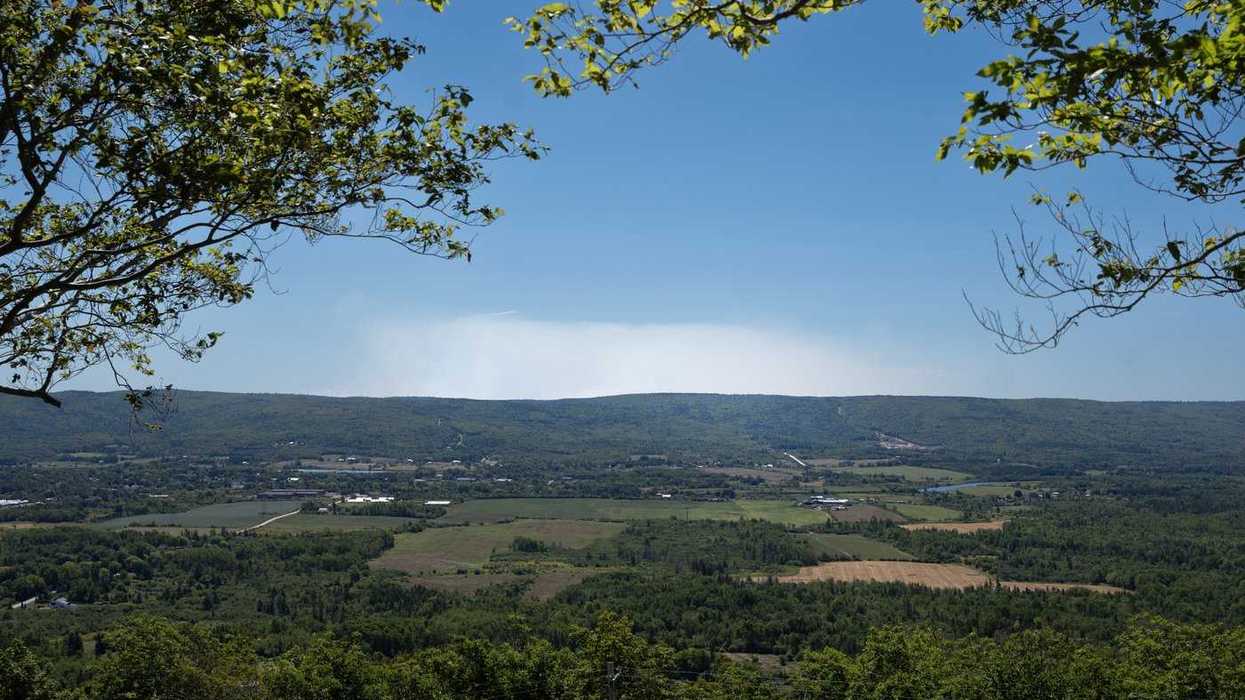
A Nova Scotia Supreme Court judge says the provincial government made an unreasonable decision last year when it banned most people from entering the woods to prevent wildfires during an extreme drought.
In a decision released Friday, Justice Jamie Campbell said the provincewide ban imposed on Aug. 5, 2025, did not meet the standard for reasonableness because the province failed to consider the impact on Charter rights.
"It was not a fleeting or insignificant restriction," Campbell wrote. "It substantially affected peoples' lives."
The ban prohibited "entry into the woods for the purposes of travelling, camping, fishing or picnicking or any other purpose, without a valid travel permit in all counties in Nova Scotia."
Campbell’s judicial review found the travel ban limited the right of citizens to move freely within Canada — a right protected under Section 6 of the Charter of Rights and Freedoms.
"The record shows no consideration having been given to that issue,” Campbell wrote. "The issue here is not the balancing of community safety and individual rights. It is about the decision-making process."
While the government had considered the rights of commercial users by establishing a permit system for them, the judge found no consideration was given to the potential impact on the mobility rights of those who use the woods for purposes other than commercial gain.
"The decision (to impose the ban) may have been justifiable had those rights and values been considered and balanced against government objectives at the time,” Campbell wrote.
Campbell cited a Supreme Court of Canada decision informing lawmakers that when they make decisions that affect Charter rights, those rights must be addressed in a meaningful way.
"That may be difficult to do in the context of a quickly evolving emergency," the judge wrote. "But with the benefit of hindsight, it might be something that can be considered before the next (emergency)."
The judge's decision did not strike down the ban because it is no longer in effect.
Last summer, Premier Tim Houston's government was under intense pressure to limit the damage caused by wildfires.
In 2023, the province experienced its worst wildfire season on record, losing more than 200 homes to fires that also forced 22,000 people to flee their homes and businesses. A total of 220 wildfires scorched about 25,000 hectares of land that year.
By the time the travel ban was imposed last August, all areas of the province were facing a high, very high or extreme risk of wildfire, with no rain in the forecast for the next 10 days.
By late September, the month-long Long Lake wildfire in western Nova Scotia was finally brought under control after it had destroyed 20 homes and burned 84 square kilometres of land. The Lake George wildfire broke out Sept. 28 and raged out of control for two weeks, forcing the evacuation of 350 civic addresses near Aylesford, N.S.
"This case … isn't about whether the Nova Scotia government had to act urgently to reduce the threat of further destructive fires," Campbell wrote. "It is about whether the travel ban covering the woods in the entire province … was within (its) legal authority."
The ruling stems from a constitutional challenge filed by lawyers representing Nova Scotia resident Jeffrey Evely. He was fined more than $28,000 for deliberately violating the ban by walking into the woods near Sydney, N.S., and then posting a video on social media.
Evely’s lawyers argued that Nova Scotia’s natural resources minister had exceeded his authority under the Forests Act because the ban was to vague for people to understand, the judge’s ruling said.
“That is because it banned travel in all woods, not just designated areas within the woods,” the ruling says.
The legal challenge was paid for by the Justice Centre for Constitutional Freedoms.
Evely issued a statement saying Canadians "have a sacred, civic duty to safeguard these rights and freedoms we’ve inherited for future generations …. This decision is a win for the future of Canada.”
Marty Moore, one of Evely’s lawyers, said the ruling confirms governments must respect fundamental freedoms, even during emergencies.
“We hope the government of Nova Scotia, and other governments in Canada, heed this warning, and respect the individual rights of Canadians in their decisions," Moore said in a statement.
This report by The Canadian Press was first published April 18, 2026.
By Michael MacDonald | Copyright 2026, The Canadian Press. All rights reserved.