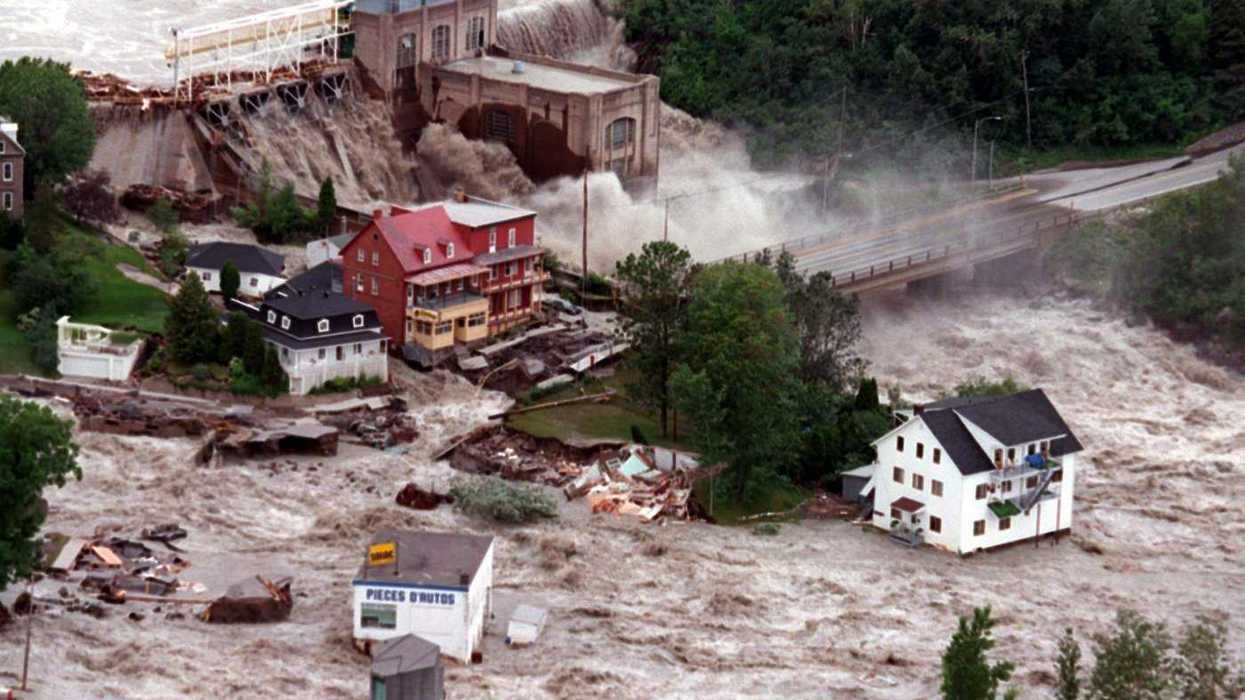
Thirty years after catastrophic flooding devastated Quebec’s Saguenay region, a local official says the disaster changed how the area prepares for extreme weather, leaving it far better equipped to face another natural disaster.
“I’m convinced of it,” Saguenay mayor Luc Boivin said Monday. “What we lived through then serves today to make sure we're better prepared today.”
Between July 19 and 21, 1996, torrential rain triggered one of Quebec’s worst natural disasters, killing 10 people and forcing roughly 14,000 residents from their homes.
More than 155 millimetres of rain fell in some areas in just 24 hours, turning rivers into destructive torrents that swept away homes, roads and bridges.
Entire communities were cut off in a disaster that caused nearly $1 billion in damage, according to Quebec's statistics institute in 2003, and led to years of reconstruction, including new reservoirs, upgraded dams and other flood-control measures.
For France Roy, those days remain impossible to forget.
“It’s a memory that’s still engraved in my mind,” Roy said Monday from her home in Chicoutimi. “When I think about it 30 years later, it still makes me sad.”
Roy was living in the rural sector of La Baie, near the Rivière-à-Mars, when the river burst its banks.
“I saw the river starting to come into our driveway,” she recalled. “The water was so loud. The river made so much noise.”
Roy said her sister rushed to warn her that the river was about to overflow. Alone with her three children, all under the age of seven at the time, she watched the water rise until a neighbour helped them escape in his camper van.
“We had to leave using old trails because the roads were flooded,” she said. “It was terrifying.”
By the time the floodwaters receded, about four feet of water had filled her basement. The family spent three weeks away from home. The Canadian Red Cross said 18,000 people ultimately received assistance following the disaster.
“The stress it caused … it really affected me,” Roy said.
She still remembers watching houses being swept away and uprooted trees carried downstream.
“It was like a horror movie,” she said. “Seeing rooftops floating, seeing those huge tree trunks in the Saguenay River … it really disturbed me.”
The disaster that upended Roy’s life also transformed the region. Boivin said the flood marked a turning point in how Saguenay manages flood risks and responds to emergencies.
“There was disaster management before the flood and after the flood,” he said. “The management of dams, high-risk zones and emergency response plans all changed.”
The lessons from the disaster extended far beyond the region, said Boivin.
“If Quebec has good risk-management plans today, the flood certainly contributed to that,” he said.
In the years that followed, governments invested hundreds of millions of dollars to better protect the region from future disasters.
A commission led by engineer Roger Nicolet later recommended stricter inspections, improved operator training and stronger government oversight of dams.
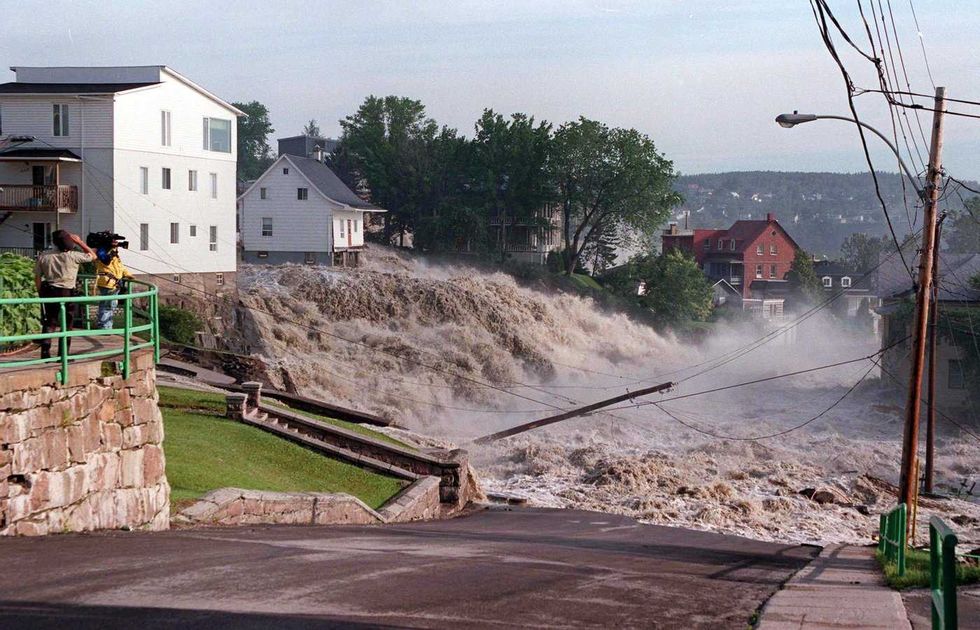 Floodwaters flow in downtown Chicoutimi, Que., on Monday, July 22, 1996, after heavy rains caused flooding and forced more than 14,000 from their homes.THE CANADIAN PRESS/Jacques Boissinot
Boivin experienced the disaster firsthand. He was 20 years old when a road beneath his truck collapsed as he drove toward his cottage.
“I barely had time to get out before the truck was swept away,” he said.
He later volunteered as an amateur radio operator, helping relay information, locate stranded residents and assist evacuations.
Boivin said he hopes younger generations understand that the devastation of 1996 helped prepare the region for future disasters.
“There will be other events, but because we lived through that flood, we're well-prepared when things happen, and we’re ready to face the future.”
For Roy, however, the lasting impact has been emotional.
“For many years, whenever I saw flooding on the news, I would cry.”
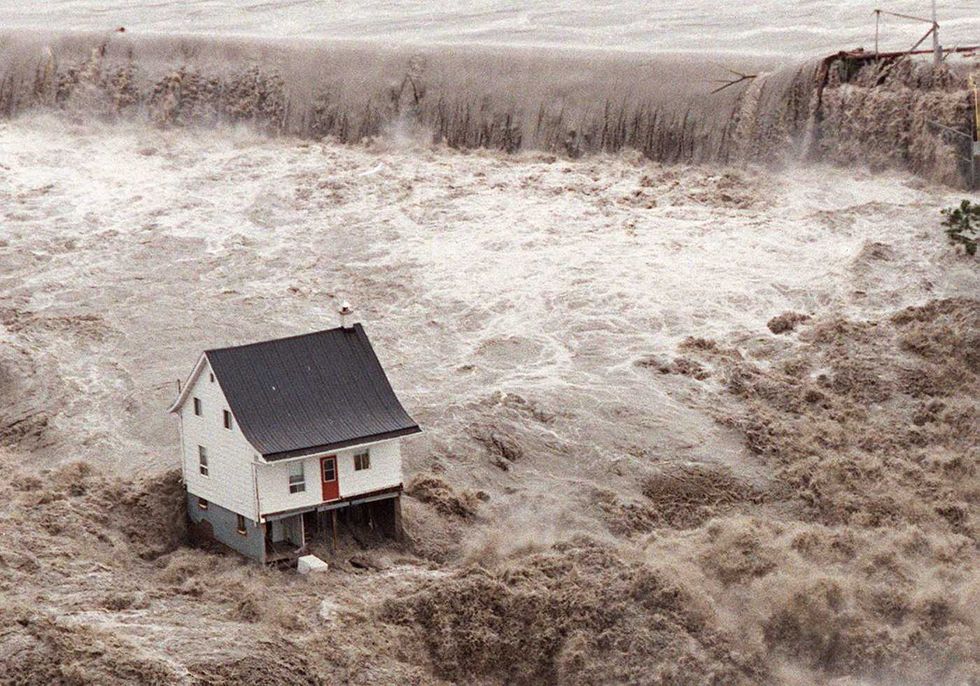 An aerial view of an overflooded dam on the Chicoutimi river July 21, 1996; shows a house resisting a major flood in downtown Chicoutimi. Every house around it was taken as major floods hit the Saguenay region Sunday. (CP PHOTO/Jacques Boissinot)
One image from the disaster has since become a symbol of the region’s resilience: a little white house in Chicoutimi, which survived despite being surrounded by raging floodwaters. The home was later preserved as a museum commemorating the flood.
Roy said visiting the museum years later reminded her not only of the destruction, but also of the solidarity that emerged across the region.
“People helped each other,” she said. “That’s what stayed with me.”
This report by The Canadian Press was first published July 20, 2026.
By Charlotte Glorieux | Copyright 2026, The Canadian Press. All rights reserved.